Mismatching machine capacity and production demand presents a major operational risk. Under-specifying your equipment creates immediate factory bottlenecks. Over-specifying restricts your available capital before production even begins. You often see impressive nameplate capacity numbers printed on supplier brochures. However, these theoretical figures rarely match sustained real-world production. Daily plant conditions fluctuate constantly. True production rates rely on specific mechanical, operational, and material variables. We will explore the core equipment factors below. You will learn exactly what dictates actual daily output. We will examine automation levels, heating efficiency, and chilling requirements in detail. Understanding these dynamics helps you make informed purchasing decisions. You can align your machinery accurately with your target volume. Properly sizing your system prevents costly downtime. It ensures consistent product quality across every shift. By analyzing both the blowing unit and the auxiliary equipment, you gain a transparent view of real capabilities.
Key Takeaways
- Theoretical output (BPH - Bottles Per Hour) relies on the number of cavities and automation level, but *sustained* output depends on auxiliary equipment synergy (compressors, chillers).
- Semi-automatic machines introduce human-operator bottlenecks, capping output regardless of machine cycle speeds.
- Preform material and thickness—especially when switching between a 3-gallon 5-gallon PC bottle machine setup and standard PET—drastically alter heating and cooling cycle times.
- Proper evaluation requires sizing the high-pressure air system precisely to the blowing machine's peak consumption rate.
The Baseline: Theoretical Capacity vs. Sustained Output
You must define the exact difference between maximum BPH and actual plant efficiency. Maximum Bottles Per Hour represents a perfect mathematical scenario. Overall Equipment Effectiveness (OEE) reflects daily operational reality. Manufacturers calculate max BPH using an ideal cycle time. Real factories deal with maintenance pauses, material variations, and ambient changes. You must understand how cycle time dictates this baseline theoretical capacity.
Every single blow molding cycle involves five distinct phases. The duration of these combined phases determines your maximum speed.
- Heating: Infrared lamps soften the thick plastic preform to a pliable state.
- Stretching: A mechanical rod pushes the preform downward to orient the material structurally.
- Blowing: High-pressure air expands the plastic outward into the mold cavity.
- Cooling: Chilled water circulates through the mold body to freeze the plastic shape in place.
- Exhaust: Heavy-duty valves release residual air pressure before the mold safely opens.
Suppliers assume perfect conditions when quoting maximum output. They expect an ideal ambient factory temperature. They assume you process flawless preforms every time. They calculate zero operator fatigue during an eight-hour shift. They bank on optimal, uninterrupted chiller performance. You rarely experience all these perfect conditions simultaneously. Factories face humidity spikes. Preforms suffer from slight weight variations. Operators naturally slow down as shifts progress. Acknowledging these transparent assumptions helps you discount brochure claims realistically.
Common Mistakes in Baseline Planning
Buyers often build production schedules around the theoretical max BPH. They ignore the inevitable 10% to 15% efficiency loss native to physical manufacturing. This oversight leads to unmet delivery schedules and strained supply chains.
Automation Levels: Semi-Automatic vs. Fully Automatic Equipment
The level of automation you select dictates your hard output ceiling. Semi-automatic machines require manual preform loading. An operator pulls hot preforms from the infrared oven manually. They place them directly into the open blow mold. They then initiate the blowing cycle by pressing dual safety buttons. Operator fatigue becomes a major bottleneck here. Manual transfer inherently limits production speed. You can expect around 100 to 300 BPH. This output depends largely on cavity count and human endurance. Even if the machine cycle triggers instantly, human hands can only move so quickly safely.
Fully automatic linear machines eliminate manual loading completely. They use a continuous chain or servo-driven transfer system. This mechanization stabilizes cycle times entirely. It scales output significantly. Facilities typically achieve 400 to 1,000+ BPH using these systems. Servo motors provide precise, repeatable movements. They never tire. They ensure the preform reaches the mold at the exact optimal temperature every single time.
When analyzing your 5 gallon bottle blowing machine output, you must map your production goals to realistic operational frameworks. Manual intervention serves low-volume, regional production well. Servo-driven automation becomes mandatory for high-volume, continuous output targets.
Automation Decision Matrix
| System Type | Operator Input Requirement | Typical Output (BPH) | Best Suited For |
| Semi-Automatic | High (Manual Loading/Unloading) | 100 - 300 | Regional setups, short customized runs |
| Fully Automatic (Linear) | Low (Supervisory Only) | 400 - 1,000+ | Large-scale, continuous distribution |
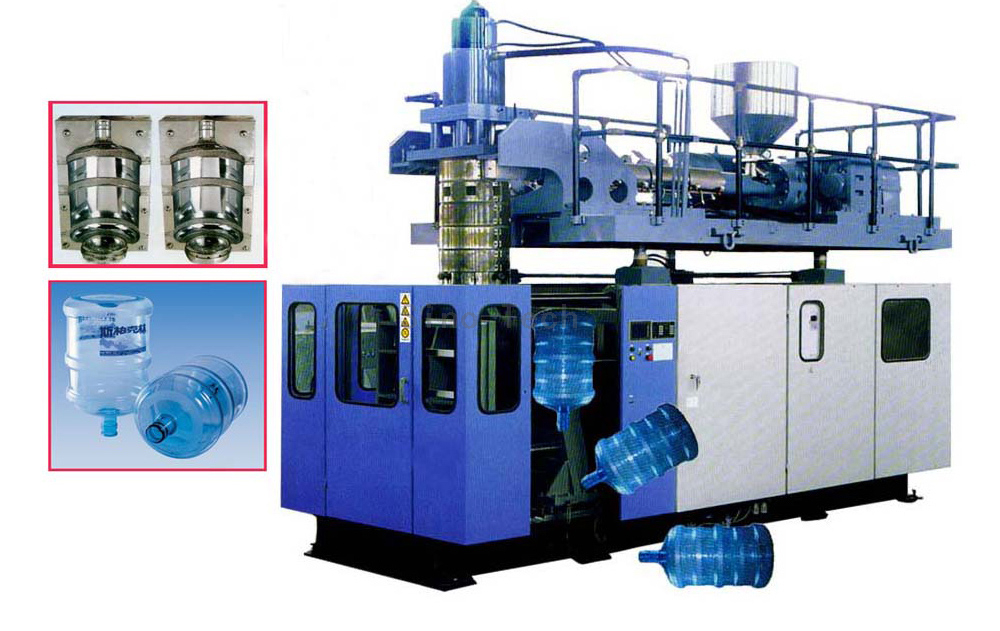
Core Mechanical Variables Dictating 5 Gallon Bottle Blowing Machine Output
Beyond automation, specific machine mechanics govern how fast a bottle can form. You usually evaluate 1-cavity versus 2-cavity setups. Adding a second cavity doubles the geometric scaling of your theoretical output. However, it also doubles the immediate volume demand on your high-pressure air system. You cannot upgrade a 1-cavity frame to a 2-cavity frame later. You must define this mechanical requirement upfront based on your volume forecast.
Infrared heating furnace efficiency plays a massive role. Thick 5-gallon preforms, often weighing over 700 grams, need deep thermal penetration. The physical distance between the infrared heaters and the preform surface matters greatly. Preform rotation speed also dictates heating quality. Fast, consistent rotation ensures even heat distribution across the thick wall. This process preps thick plastic faster without burning the exterior layer. Efficient furnaces use specialized reflective boards. These boards maximize infrared energy usage. They bounce stray heat back into the plastic, reducing the total heating time by several critical seconds.
Mold clamping systems also impact cycle duration. You can generally choose among hydraulic, pneumatic, or servo-driven toggle systems. Hydraulic systems offer immense clamping force but stroke slowly. Pneumatic systems consume valuable compressed air to move heavy platens. Servo-driven clamping operates much faster and with greater precision. It shaves critical fractions of a second off the dry cycle time. Faster dry cycles mean higher hourly yields. Servo systems also provide cleaner operation on the factory floor. They eliminate the risk of hydraulic oil leaking near food-grade containers.
Material and Mold Dynamics: PET vs. PC Preforms
The type of plastic you run drastically alters your production rhythm. Processing temperatures differ vastly between polymer chains. Polyethylene Terephthalate (PET) processes at lower temperatures. It softens quickly and cools relatively fast inside the chilled mold. Polycarbonate (PC) resists heat aggressively. PC requires much higher processing temperatures to become pliable. It also demands longer in-mold cooling times to set properly before ejection.
If you operate a dual-purpose 3-gallon 5-gallon PC bottle machine, you must adjust operational settings frequently. PC’s distinct heat resistance requires longer heating profiles in the furnace. You must apply highly specific mold temperature control. You will see reduced raw BPH compared to running thinner, single-use PET preforms. Operators must purposefully lengthen the blowing and cooling phases for PC materials. Rushing this process causes the heavy PC bases to warp. A warped base prevents the final bottle from standing upright on a flat surface.
Mold design directly combats these cooling delays. Bottom-mold cooling channels accelerate the cooling phase significantly. Heavy 5-gallon bases hold intense, concentrated heat. Specialized water channels remove this heat quickly. This targeted extraction reduces overall cycle time. The faster you extract heat, the faster you can safely eject the bottle. Advanced mold designs include baffled cooling channels. These precise channels force chilled water intimately close to the hot plastic. It optimizes thermal transfer efficiency and prevents base deformities.
Implementation Realities: The Auxiliary Equipment Bottleneck
The blowing machine itself rarely causes production delays. Auxiliary equipment constraints represent the most common failure point in achieving target yields. The blowing unit, compressor, and chiller must function as a perfectly balanced ecosystem.
To maximize your 5 gallon bottle blowing machine output, your high-pressure air compressor must keep pace. Expanding a 5-gallon preform requires a massive volume of air delivered at 30 to 35 Bar pressure. If the compressor recovery time lags behind the blow cycle time, output simply halts. The machine waits for air pressure to rebuild. You must size the compressor to handle peak intermittent flow. Do not just look at average consumption rates.
Water chillers play an equally critical role. Inadequate chilling causes major product defects. Heavy 5-gallon bases deform easily when ejected too hot. If the chiller underperforms, operators have no choice but to slow down the machine cycle. They do this manually to allow longer in-mold cooling. Undersized chillers struggle immensely during summer months. High ambient factory heat overwhelms them. You must over-spec your chiller capacity slightly. This guarantees consistent, rapid cycle times year-round, regardless of seasonal temperature spikes.
Power supply stability is a hidden factor. Voltage fluctuations severely hurt infrared heater consistency. Inconsistent heating leads to misformed shapes and rejected bottles. This directly lowers your net yield. Thick preforms require stable infrared wave penetration. A sudden voltage drop leaves the inner preform wall too cold. The mechanical stretching rod will then puncture the unyielding plastic. Installing heavy-duty voltage regulators protects your heating profile. It ensures every preform receives identical thermal energy.
Best Practices for Auxiliary Integration
Always install a high-capacity buffer air tank between the compressor and the blowing machine. This tank smooths out sudden pressure drops. It guarantees the machine's blowing valves receive consistent Bar pressure exactly when they need it most.
Shortlisting Logic: How to Evaluate Machine Quotes
Selecting the right equipment requires a strict, evidence-based approach. You must look past the headline numbers. Use the following actionable evaluation framework to assess supplier quotes.
- Verify Cycle Times: Ask suppliers for the exact cycle time breakdown. Request it measured in seconds. See exactly how they calculate their quoted BPH. Question the cooling time specifically. Cooling time often dictates the true bottleneck for heavy, thick-walled bottles.
- Check Auxiliary Matching: Ensure the quoted compressor delivers enough volume. It should supply at least 15% to 20% more CFM (Cubic Feet per Minute) at 30+ Bar than the blowing machine mathematically requires. Do not accept a compressor system sized exactly to the machine's absolute limit.
- Request FAT (Factory Acceptance Testing) Terms: Factory Acceptance Testing proves actual machine capabilities before shipment. Stipulate a continuous two-hour run test at the supplier's factory. Prove sustained output before making your final payment. Ensure they test using your specific preform weight. Testing with lighter preforms yields artificially high BPH numbers.
Conclusion
Achieving optimal 5-gallon output functions as a comprehensive, system-wide metric. It is not just a standalone machine specification. The primary blowing unit, high-pressure compressor, industrial chiller, and factory power supply must act in complete synergy. If one component underperforms, the entire line slows down.
Before purchasing, audit your current auxiliary infrastructure thoroughly. Check your high-pressure air availability. Assess your chilling capacity critically. Evaluate your local labor availability before finalizing a machine configuration. Do not purchase a fully automatic system if your downstream packaging cannot handle the increased volume.
Contact our engineering and sales team today. We can provide a custom BPH calculation tailored precisely to your specific preform weights and materials. We also offer expert auxiliary equipment sizing consultation. Let us help you build a reliable, high-yield production line.
FAQ
Q: How many 5-gallon bottles can a semi-automatic machine produce per hour?
A: A standard semi-automatic setup typically produces between 100 and 250 BPH. This range depends heavily on operator speed and endurance. The manual transfer of hot preforms into the mold creates an inherent bottleneck. Operator fatigue naturally lowers output during longer shifts.
Q: Does bottle weight affect the output speed of a 5-gallon blowing machine?
A: Yes, bottle weight significantly impacts output. Heavier preforms, such as 750g compared to 680g, require deeper thermal penetration. They need longer heating profiles in the furnace. They also require extended in-mold cooling times to prevent base deformation. This slightly lowers your maximum hourly output.
Q: Can the same machine run both 3-gallon and 5-gallon molds at the same speed?
A: You can easily swap molds, but speeds will differ. The 3-gallon bottles typically run slightly faster. They possess lower mass and require faster air evacuation. Assuming you adjust the heating profile correctly, the smaller bottles heat and cool quicker, yielding a higher BPH.

