Upgrading or establishing a production line for large-capacity containers represents a significant capital expenditure. Whether you manufacture industrial chemical drums, heavy-duty jerry cans, or agricultural spray tanks, scaling up to 30-liter volumes introduces complex manufacturing challenges. At this specific capacity, your margin for error shrinks drastically. Slight miscalculations in parison control, cooling cycles, or overall structural integrity often lead to costly production failures. Selecting the wrong equipment directly generates excessive scrap, inflates energy consumption, and causes poor wall thickness distribution across your containers. You need highly reliable machinery to ensure consistent output quality and maintain competitive profit margins. This guide provides procurement teams and production engineers an objective, evidence-based evaluation framework. You will learn how to assess critical technical specifications, benchmark system performance, and ultimately shortlist the perfect 30L blow molding machine for your demanding large-format applications.
Key Takeaways
- Process Matching: 30L production often requires specific accumulator head technology or highly optimized continuous extrusion to prevent parison sag.
- Critical Specs: Precise wall thickness control (e.g., 100-point radial control) and adequate clamping force (typically 200kN+) are non-negotiable for large-format durability.
- Total Cost of Ownership (TCO): Procurement must evaluate energy consumption (servo-driven systems) and material recovery integration, not just initial CAPEX.
- Validation: Never finalize a purchase without a rigorous Factory Acceptance Test (FAT) utilizing your specific mold and resin (typically HDPE or HMWPE).
The Engineering Realities of 30-Liter Container Production
Large-format blow molding operates under different physical rules than small bottle production. Understanding these engineering realities prevents expensive procurement mistakes.
The Parison Sag Challenge
Unlike small consumer bottles, a 30-liter container requires a remarkably heavy parison. Physics dictate gravity will pull this molten plastic downward aggressively. We call this phenomenon parison sag. If the machine extrudes the plastic too slowly, the parison stretches unevenly. Thin spots develop near the top. Material pools wastefully at the bottom. Rapid extrusion becomes strictly necessary. It maintains the structural integrity of the plastic tube before the mold closes. You must ensure the equipment delivers high-speed extrusion to counter these gravitational forces effectively.
Cycle Time vs. Cooling Constraints
Cycle times introduce major operational bottlenecks. Cooling massive volumes of plastic takes significant time. Plastic naturally acts as an excellent insulator. You cannot simply speed up the machine movements if the container remains too hot to demold. We must evaluate how specific machine designs impact realistic Bottles Per Hour (BPH). Specialized cooling pins inject sub-zero air directly into the blown container. Advanced mold cooling channels remove heat rapidly from the exterior. These integrated cooling technologies determine your actual production speed.
Material Distribution & Compliance
Industrial containers face incredibly strict regulatory standards. A 30-liter chemical drum must survive rigorous drop tests. It requires massive stacking strength for vertical warehouse storage. Machine precision directly influences material distribution. Excellent distribution ensures compliance with UN packaging standards for hazardous materials. Poor distribution creates weak corners. Weak corners shatter upon impact, causing immediate test failures and safety hazards.
Core Evaluation Criteria for a 30L Blow Molding Machine
When you evaluate a modern 30L blow molding machine, specific technical criteria separate capable equipment from inadequate options. You must assess these core systems rigorously.
Extrusion Systems: Continuous vs. Accumulator Head
Engineers often debate continuous extrusion versus accumulator head technology. Continuous extrusion pushes a constant, steady tube of plastic. It works exceptionally well for lighter 30-liter designs. However, heavier containers demand accumulator head systems. An accumulator head stores molten resin in a holding chamber. A hydraulic ram then pushes the resin out rapidly in one massive shot. This rapid deployment prevents the severe parison sag associated with heavy target weights. You must choose the extrusion type based on your specific resin flow rates and final container mass.
Clamping Unit Specifications
Large-format molds exert tremendous internal pressure during the blow phase. Your clamping unit requires extreme frame rigidity. High-quality linear guide rails keep the massive platens perfectly aligned. You must calculate the necessary clamping force accurately. A 30-liter mold typically demands at least 200kN of force. Proper clamping force prevents flashing along the mold seams. It also ensures a clean, strong pinch-off on large-diameter necks and base areas. Weak clamping units flex under pressure, ruining container aesthetics.
Wall Thickness Control (WTC) Systems
Material costs dominate your ongoing production expenses. You cannot afford to manufacture containers unnecessarily thick. Advanced servo-hydraulic Wall Thickness Control (WTC) systems solve this fundamental issue. Industry-standard MOOG systems offer precise 100-point radial control. They profile the parison thickness dynamically as it drops. They put thick plastic exactly where the critical corners will form. They thin the straight side walls to save resin. You use less material while still passing rigorous drop and stacking tests.
Deflashing and Automation Integration
Manual trimming wastes labor hours and introduces severe safety risks. Modern machines must feature built-in auto-deflashing capabilities. The machinery removes excess plastic from the neck, tail, and handle automatically. High-quality deflashing leaves clean, safe edges ready for capping. You also need seamless compatibility with downstream equipment. The machine should easily connect to automated conveyor lines. It must integrate flawlessly with robotic leak-testing systems to guarantee product integrity.
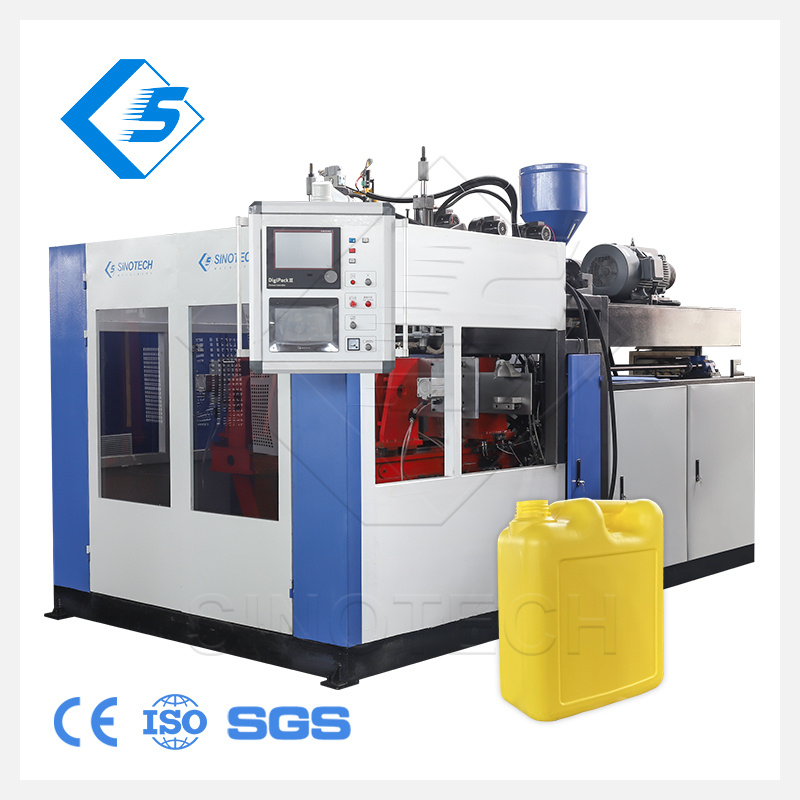
Benchmarking Performance: Analyzing the STBII-30L Extrusion Blow Molding Machine
To make informed procurement decisions, we need a reliable technical reference point. We can use the STBII-30L extrusion blow molding machine as our primary baseline for commercial evaluation.
Performance Baselines
Evaluating commercial capability requires clear, objective metrics. The STBII-30L provides a strong standard for extrusion capacity, mechanical stability, and cycle efficiency. By establishing hard baselines around this model, you can effectively compare and contrast other vendor quotes.
Drive Systems
Traditional hydraulic setups consume massive amounts of electricity. They run pumps continuously, generating excess heat and wasting valuable power. Modern units utilize hybrid or fully servo-driven systems. Servo motors only draw power when actively moving mechanical components. They stop completely during cooling phases. This intelligent technology yields 30-40% energy savings compared to legacy systems. Lower power consumption directly improves your operational profit margins year over year.
Die Head Design
Die head architecture determines final product consistency. You need flow channel configurations designed strictly to prevent material degradation. Dead spots inside older die heads cause plastic to burn and degrade. Advanced spiral mandrel designs keep the polymer melt flowing smoothly. They eliminate internal weld lines. They also allow for significantly faster color or resin changeovers. Quick material changeovers maximize your available production uptime.
HMI and Controls
Operators need intuitive, responsive tools to manage complex molding processes. Open-architecture Programmable Logic Controllers (PLCs) offer superior factory flexibility. They integrate easily into existing digital networks. Remote diagnostic capabilities allow engineers to troubleshoot software issues from off-site locations. User-friendly touchscreen interfaces reduce operator error. Clear visual feedback ensures consistent container quality across different working shifts.
Extrusion Drive System Comparison
| System Feature | Traditional Hydraulic System | Servo-Driven System (STBII-30L Standard) |
| Energy Efficiency | Low (Pumps run continuously) | High (Motors only draw power when moving) |
| Heat Generation | High (Requires large oil chillers) | Low (Minimal oil heating) |
| Movement Precision | Moderate (Prone to valve drift) | Exceptional (Digital position feedback) |
| Noise Levels | High (Constant mechanical hum) | Low (Silent during cooling phases) |
Implementation Risks and Hidden Operational Costs
Capital expenditure only tells part of the story. Hidden operational expenses often catch manufacturers off guard during machine commissioning.
Facility Infrastructure Limits
Large-tonnage machines demand substantial factory infrastructure. You must assess peak electrical power draw during machine startup and heavy cycles. Chiller capacity requirements scale up dramatically for 30-liter molds. You need high-volume water flow to maintain optimal mold temperatures. Ceiling height often becomes an unexpected constraint. You must ensure adequate vertical clearance for tall accumulator heads and overhead mold removal hoists.
Scrap Rates and Regrind Loops
Startup scrap remains an operational reality in blow molding. Every time you start the machine, the first several containers usually fail dimensional quality checks. You must recover this expensive material efficiently. Assess how easily the new machine integrates with automated granulators. Proportional dosing units mix the shredded regrind back into virgin resin automatically. Efficient, automated regrind loops prevent expensive material waste and reduce handling labor.
Maintenance Downtime
Complex machinery requires routine, systematic service. We must evaluate the physical accessibility of critical machine components. Technicians need easy access to hydraulic proportional valves, extruder heater bands, and centralized lubrication points. If a machine remains difficult to service, routine maintenance takes much longer. Extended maintenance downtime incurs higher operational expenses and lost daily revenue.
Operator Learning Curve
Transitioning to large-format blow molding demands highly specialized skills. Operators used to 5-liter bottles will face a steep learning curve. The physics of heavy parisons require totally different temperature profiles and timing adjustments. Acknowledge this reality early in the procurement phase. Invest heavily in comprehensive vendor training programs. Proper training ensures smooth factory integration and reduces early scrap rates.
Shortlisting Logic and Procurement Next Steps
Moving from technical evaluation to final procurement requires structured logic. We outline the critical steps to secure reliable, high-performance equipment.
RFP Development
Standardize your Request for Proposal (RFP) immediately. Vague requests yield incomparable vendor quotes. You must include specific, measurable output guarantees. Demand the following details in your RFP:
- Guaranteed cycle time for a precisely specified container weight.
- Required clamping force based on your mold dimensions.
- Mandatory inclusion of servo-driven hydraulic systems.
- Integration capabilities for your specific downstream conveyors.
This strict format forces vendors to engineer their proposals accurately.
After-Sales SLA Evaluation
A machine offline costs thousands of dollars daily. Scrutinize the manufacturer’s Service Level Agreement (SLA) before signing. Verify their regional spare parts inventory carefully. Ensure they guarantee rapid response times for technical support. Excellent after-sales service separates tier-one suppliers from unreliable vendors. Ask for references from current clients regarding their breakdown response times.
Designing the Factory Acceptance Test (FAT)
Never finalize a machinery purchase without a rigorous Factory Acceptance Test. Follow these specific FAT design rules to protect your investment.
- Require a continuous minimum run-time. The machine must run flawlessly for 8 to 12 hours without alarms.
- Mandate testing with your exact production mold. Do not accept tests using the vendor's generic demo molds.
- Supply your exact resin grade. High-Density Polyethylene (HDPE) behaves differently than other plastics. Use the exact material intended for final production.
- Verify energy consumption data. Use external electrical metering during the FAT to confirm the vendor's efficiency claims.
Conclusion
Sourcing a heavy-duty blow molding machine requires deep technical diligence. You must look past theoretical maximum speeds presented in glossy sales brochures. Instead, focus entirely on structural stability, precise thickness control, and long-term energy efficiency. The right equipment guarantees consistent parison management and robust clamping force. These factors directly dictate final container quality and regulatory compliance.
For your immediate next step, draft a comprehensive technical requirement matrix. Document your necessary clamping force, required extrusion capacity, and preferred control system type. Complete this objective matrix before engaging any vendors for initial quotes. This structured approach ensures you procure machinery designed specifically for your long-term operational success.
FAQ
Q: What is a realistic cycle time for a 30L blow molding machine?
A: Cycle times depend heavily on container weight, specific resin characteristics, and installed cooling systems. For a standard 30-liter container, realistic industry cycle times typically range between 60 and 120 seconds. Advanced internal cooling pins and optimized mold channels push performance toward the faster end of this spectrum.
Q: Do I need an accumulator head machine for 30-liter containers?
A: Often yes, you need one to prevent parison sag. Heavy containers weighing over 1.5kg typically require accumulator heads to drop the plastic rapidly. However, highly advanced continuous extrusion systems can successfully process lighter-weight 30L designs.
Q: How much floor space is required for a standard 30L machine?
A: Buyers must account for more than just the physical machine footprint. You must allocate additional space for die head clearance, overhead mold removal hoists, safety fencing, and downstream cooling or conveyor equipment. A dedicated area of at least 8 by 5 meters is generally recommended.
Q: What resins are most compatible with 30-liter extrusion blow molding?
A: High-Density Polyethylene (HDPE) and High Molecular Weight Polyethylene (HMWPE) remain the industry standards. Manufacturers prefer these resins due to their exceptional melt strength during extrusion and their superior environmental stress-cracking resistance (ESCR) for chemical storage.

