You are here: Home / BLOGS / Why Is Injection Blow Molding Suitable for Pharmaceutical and Cosmetic Bottles?
Why Is Injection Blow Molding Suitable for Pharmaceutical and Cosmetic Bottles?
Views: 0 Author: Site Editor Publish Time: 2026-08-14 Origin: Site
Packaging failures in the pharmaceutical and cosmetic industries create unacceptable business risks. Compromised container seals ruin product efficacy rapidly. Material contamination often triggers highly expensive market recalls. Aesthetic defects immediately erode carefully built brand trust among consumers. The manufacturing method you choose acts as the root determinant of final container integrity. Rigid compliance guidelines dictate modern packaging operations. Your chosen equipment must therefore deliver absolute reliability every single day. While multiple molding methods exist, the injection blow molding (IBM) process stands apart entirely. Engineers specifically designed this process to meet stringent zero-tolerance standards. These heavily regulated sectors demand extreme precision at every production stage. In this article, you will discover exactly why IBM eliminates core production risks. We will explore essential dimensional tolerances, material handling rules, and cleanroom compatibility requirements. You will learn how to evaluate specific equipment features against strict industry regulations effectively.
Key Takeaways
Injection blow molding guarantees exact neck finish tolerances, preventing leakage in high-value cosmetic liquids and moisture ingress in sensitive pharmaceuticals.
The inherent "scrap-free" nature of the IBM process eliminates the need for trimming, drastically reducing particulate contamination risks in cleanroom environments.
Investing in a specialized Injection Blow Molding Machine yields a lower total cost per unit for high-volume, small-to-medium rigid containers (under 250ml) despite higher initial tooling costs.
Selecting the right equipment requires balancing cleanroom compatibility, material versatility (HDPE, PP, PET), and long-term automation potential.
Evaluating the Stringent Demands of High-Stakes Packaging
High-stakes packaging environments tolerate absolutely zero physical defects. Consumer goods often accept minor dimensional variations during mass production. However, these same variations fail pharmaceutical standards instantly. You must understand the specific demands placed on medical and cosmetic containers.
Tolerance and Sealing
Pharmaceutical packaging relies entirely on strict moisture-vapor transmission rate (MVTR) standards. Active medical ingredients degrade quickly when exposed to humidity. A container must form an absolute barrier against the outside environment. The neck finish dictates the success of this barrier. Slight dimensional warping prevents the closure from seating properly. Medical regulations require precision down to the micro-millimeter. If threads vary, the seal fails. IBM technology secures this exact tolerance requirement consistently.
Aesthetic and Brand Equity
The cosmetic industry enforces unique physical demands on rigid packaging. High-end brands require flawless surface finishes to project premium quality. Consumers often judge a product by its external container clarity. High-clarity transparency remains non-negotiable for luxury serums and lotions. Furthermore, uniform wall thickness impacts light refraction significantly. Uneven walls create visual distortions. They make premium liquids look inconsistent or cheap. Your manufacturing process must guarantee absolute aesthetic uniformity.
Regulatory Compliance
Medical and cosmetic facilities operate under severe regulatory frameworks. You must align production with Good Manufacturing Practice (GMP) guidelines continuously. The FDA dictates strict rules regarding raw material handling. Plastics must not degrade or off-gas during the molding process. Cleanroom environments demand rigorous particulate control. Airborne plastic dust ruins entire production batches immediately. Equipment must operate cleanly to maintain required ISO certifications. These compliance factors narrow your equipment choices down significantly.
How an Injection Blow Molding Machine Eliminates Core Production Risks
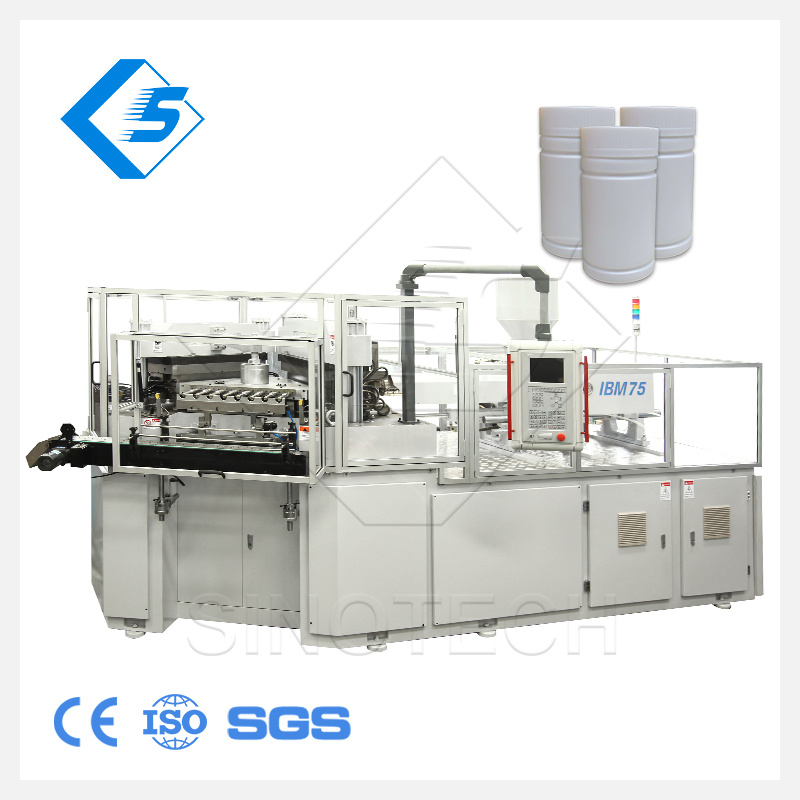
Production leaders constantly seek ways to mitigate manufacturing risks. Utilizing a specialized Injection Blow Molding Machine directly addresses the most critical points of failure. The mechanics of the process inherently protect container integrity.
Injection-Molded Neck Precision
The IBM process begins by injecting molten plastic into a precision cavity. This first step forms the preform and the final neck finish simultaneously. The neck threads never undergo subsequent blowing or stretching. They retain the exact dimensions of the steel injection mold. This guarantees a perfect thread match for complex closures. Child-resistant closures (CRC) depend entirely on exact thread engagement. Tamper-evident seals also require perfect neck geometry to function securely. The injection stage locks in this essential precision before blowing occurs.
Scrap-Free Production and Particulate Control
Extrusion Blow Molding (EBM) introduces significant contamination risks. EBM relies heavily on pinch-off and trimming actions. These steps generate scrap material, flash, and microscopic plastic dust. This dust floats easily into sterile cleanroom air. IBM completely eliminates trimming. The container emerges from the mold fully finished. This scrap-free production cycle removes the threat of internal plastic dust. You eliminate a primary cause of medical compliance failures.
Best Practices for Contamination Control
Audit your molding floor for airborne flash and scrap debris weekly.
Transition small medical containers entirely to scrap-free IBM processes.
Use enclosed material feeding systems to prevent resin dust exposure.
Superior Wall Thickness Uniformity
Wall thickness consistency dictates a container's structural strength. IBM utilizes a rigid steel core pin during the injection phase. The plastic melt flows evenly around this precisely centered pin. When the preform transfers to the blow station, it inflates uniformly. This prevents dangerous weak spots in pill bottles. Cosmetic jars also benefit from this even material distribution. Consistent walls prevent structural failure during rough transportation. You avoid costly product damage during shipping.
Feature-to-Outcome: Specifying a Pharmaceutical Bottle Making Machine
Procurement teams must match machine features to desired production outcomes. Specifying a Pharmaceutical Bottle Making MachinePlastic Pill Bottle Machine involves detailed technical evaluations. The right specifications secure long-term operational success.
Cleanroom Integration Capabilities
Medical manufacturing requires certified ISO cleanroom environments. Standard machinery often sheds lubricants or generates heat inconsistently. You must look for fully enclosed machine designs. Localized HEPA filtration above the mold area provides crucial protection. Specify non-lubricated tie-bars to prevent grease contamination. If lubrication remains necessary, mandate certified food-grade options only. These specific features maintain the integrity of your cleanroom certification seamlessly.
Material Versatility
Packaging lines rarely run a single resin type indefinitely. Equipment must handle various plastics efficiently. High-density polyethylene (HDPE) remains the standard for rigid medicine bottles. It provides excellent durability and opacity. Polypropylene (PP) offers superior moisture resistance for sensitive capsules. Cosmetic applications often demand specific clear resins for visual appeal. Your equipment needs robust thermal controls to switch materials safely. Processing varying molecular weights requires precise barrel heating configurations.
Advanced Control Systems and QA
Modern production relies heavily on data-driven quality assurance. Closed-loop controllers track real-time variables constantly. They monitor injection pressure, melt temperature, and blow speeds. If a parameter shifts, the system adjusts itself instantly. Automated inline inspection systems add another layer of security. High-speed cameras check neck finishes and detect visual flaws. Defective units face immediate rejection before reaching the final packaging line. This automation protects your brand reputation fiercely.
IBM vs. Alternatives: Decision Framework for Production Leaders
Engineering teams frequently debate between different molding technologies. Understanding the technical boundaries of each method prevents expensive missteps. You must evaluate IBM against other prominent blowing techniques objectively.
IBM vs. Extrusion Blow Molding (EBM)
EBM handles large commodity containers exceptionally well. It produces milk jugs and large chemical drums efficiently. However, EBM introduces unacceptable tolerance variations at the neck finish. The process extrudes a continuous parison tube. The mold pinches this tube, creating inherently weaker seams. Medical-grade seals cannot survive these structural inconsistencies. Furthermore, the mandatory trimming stage generates dust. EBM simply fails the stringent demands of zero-defect medical packaging.
IBM vs. Injection Stretch Blow Molding (ISBM)
ISBM adds a stretching rod to the process. This creates bi-axial strength. Premium cosmetic lines often require this specific strength. ISBM also delivers exceptional glass-like clarity, particularly when processing PET. You should choose ISBM when aesthetics demand absolute transparency. Conversely, IBM remains optimal for highly precise, small-volume rigid containers. Think of eyedroppers, roll-on deodorants, and standard pill packers. IBM dominates the under 250ml size range securely.
Capacity and Volume Thresholds
Machine capacity directly influences your technological choice. You must analyze cycle times alongside cavitation limits. IBM molds typically accommodate high cavitation for small bottles. An IBM tool might hold 12 to 24 cavities easily. This creates massive output for tiny medical vials. You must determine the exact volume where IBM cycle speeds outpace alternative methods.
Criteria
Injection Blow Molding (IBM)
Extrusion Blow Molding (EBM)
Injection Stretch Blow Molding (ISBM)
Neck Precision
Absolute (Injection Molded)
Variable (Pinched & Blown)
High (Injection Molded)
Scrap Generation
Zero (Scrap-free)
High (Requires trimming)
Zero (Scrap-free)
Ideal Container Size
Under 250ml
250ml to large drums
50ml to 2 Liters
Primary Industry Use
Pharmaceutical, Small Cosmetics
Household, Industrial, Dairy
Beverage, Premium Cosmetics
Implementation Realities and Production Efficiency
Transitioning to IBM technology requires careful operational planning. You must understand the mechanical and logistical realities of the equipment. Successful deployment relies on proactive facility preparation and maintenance strategy.
High Initial Tooling Expenditures
IBM requires a highly complex tooling setup. Unlike EBM, IBM utilizes two distinct molds per product. First, the injection mold creates the preform. Next, the blow mold shapes the final container. You also need a specialized transfer mechanism (the core rod). This dual-mold requirement raises the initial engineering complexity. Fabricating these precise steel tools demands significant upfront capital. However, the exact precision gained prevents future product recalls entirely.
Common Tooling Mistakes
Failing to specify hardened steel for high-wear injection gates.
Ignoring the cooling channel design within the core rods.
Rushing the mold validation phase during factory acceptance testing.
Energy Consumption and Cycle Efficiency
Utility demands vary drastically across different machine architectures. Older hydraulic machines consume substantial baseline energy. They run pumps continuously, generating excess heat. Modern hybrid machines combine hydraulic power with targeted electric servo motors. Fully electric IBM machines offer the highest efficiency levels. They draw power only during active movements. Electric variants also eliminate hydraulic oil leaks completely. This makes them ideal for strict pharmaceutical cleanrooms. You must evaluate your facility's power infrastructure before installation.
Operator Expertise and Maintenance
IBM technology requires specific operator expertise. Technicians must understand both injection molding and blow molding principles simultaneously. Transitioning a team accustomed only to EBM takes dedicated time. Vendor-supplied training remains absolutely critical. Your team must master mold-changeover ergonomics safely. Complex IBM tools are heavy and require careful handling. Additionally, secure a reliable supply of spare parts. High-wear items like heated nozzles and core rod seals require regular replacement.
Conclusion
The fundamental suitability of injection blow molding lies in its unmatched marriage of precision and cleanliness. Medical and cosmetic industries simply cannot compromise on container integrity. By utilizing a scrap-free process with injection-molded neck finishes, you eliminate the root causes of packaging failure. Moisture barriers remain intact. Cleanroom environments stay pristine.
To implement this technology successfully, take immediate action. First, audit your current production scrap rates and particulate contamination events. Next, clearly define the exact neck-finish tolerances required by your most sensitive closures. Finally, request a detailed cycle-efficiency analysis from machine manufacturers. Reviewing these mechanical specifications allows you to finalize your equipment shortlist confidently.
FAQ
Q: Why is an IBM machine preferred over an EBM machine for a plastic pill bottle machine?
A: Medical compliance requires absolute precision. Child-resistant caps only function correctly on perfectly formed neck threads. IBM injection-molds these threads, guaranteeing exact dimensions. Furthermore, IBM is entirely scrap-free. EBM creates flash and plastic dust during the trimming process. Eliminating this internal plastic dust is critical to prevent contamination in pill bottles.
Q: Can a single Injection Blow Molding Machine run both pharmaceutical HDPE and cosmetic PET?
A: Yes, but it requires careful configuration. While you can run both, they process very differently. Processing PET often requires specialized screws, different barrel designs, and distinct thermal controls. Optimal quality usually dictates dedicated setups. Discuss specific resin architectures and screw geometries with your manufacturer before committing.
Q: What is the typical tooling lead time and lifespan for an IBM mold?
A: Fabricating high-precision IBM tools typically takes 8 to 14 weeks. Because IBM uses significantly lower clamping forces than standard injection molding, the tools experience less mechanical stress. Consequently, IBM molds often have highly extended lifespans. With proper maintenance, these tools operate reliably for many millions of cycles.
We are a professional manufacturer of plastic machines and we have devoted ourselves to the development, research, and production of plastic machinery for more than 20 years.