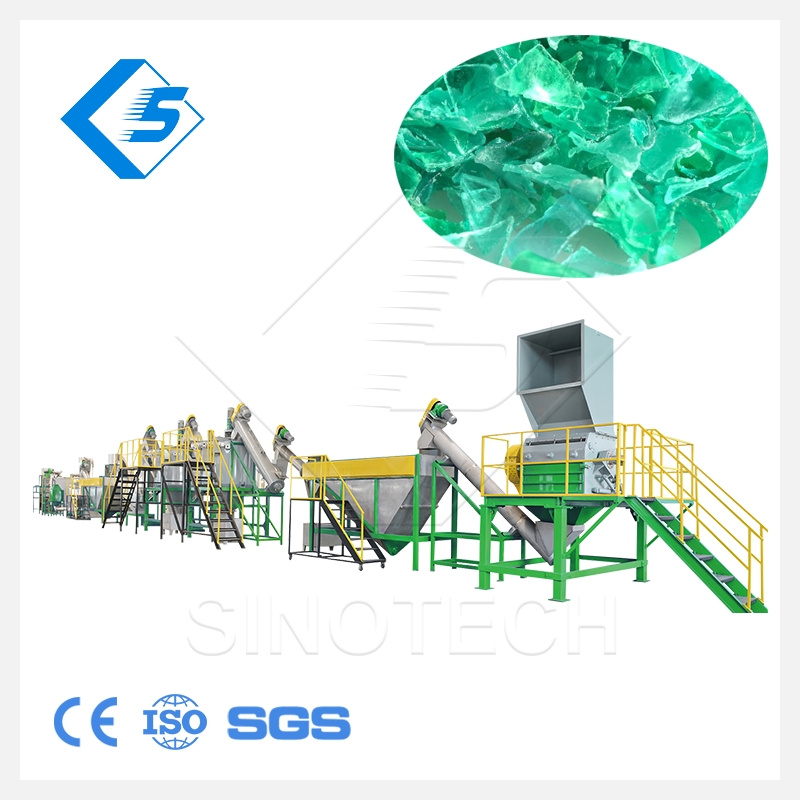
Sizing industrial equipment is a high-stakes capital expenditure decision. Over-sizing drains operational budgets through underutilized utility consumption. Conversely, under-sizing creates severe processing bottlenecks in your facility. Selecting the right PET bottle recycling line requires balancing realistic raw material collection volume with targeted flake output parameters. You must align your processing capabilities directly to your specific municipal or commercial supply chains. This ensures consistent operation rather than wasteful start-stop cycles. Start-stop operations severely damage profit margins over time. This guide provides a detailed framework to evaluate throughput requirements, footprint realities, and utility constraints. You will learn how to confidently shortlist the ideal system for your operational needs. We explore standard capacity tiers, hidden operational bottlenecks, and essential manufacturer guarantees. Making the correct initial sizing choice dictates your long-term commercial success in the plastics recovery sector.
Key Takeaways
Throughput should be based on consistent raw material supply, factoring in a 15-20% buffer for maintenance downtime and contamination loss.
The 1000 kg/h PET recycling line serves as the industry baseline for commercial viability, balancing automation costs with output yield.
Selecting a vendor requires evaluating their ability to integrate sorting, crushing, and hot washing into a cohesive, compliant layout.
Assessing Your Input Realities and Target Output
You must calculate your consistent monthly bale supply versus aspirational targets. Many plant managers overestimate their incoming material volumes initially. Equipment must run continuously to achieve a strong return on investment. Start-stop operations waste massive amounts of energy during heat-up phases. If you only secure enough bales to run three days a week, scaling down makes sense. A smaller capacity system running continuously often proves much more profitable. Assess your municipal contracts and private collection networks closely. Seasonal fluctuations in beverage consumption also impact bottle availability heavily. Summer months typically yield higher volumes than winter months. You need a system capable of handling these seasonal supply variations without sitting idle.
Always factor in significant yield loss when planning capacities. Incoming post-consumer bales never contain purely usable materials. High levels of PVC, moisture, or organic waste reduce net throughput significantly. These contaminants typically reduce efficiency by 10 to 30 percent. A machine rated for two tons per hour of input might only yield 1.5 tons of clean flakes. You need to adjust your capacity expectations based on local collection quality. Heavily soiled agricultural plastics or poorly sorted municipal bales require slower processing speeds. The washing tanks need more residence time to break down heavy soil and adhesives. Plan your nominal capacity slightly higher than your required output to absorb these unavoidable losses.
Define the exact target buyer for your final output early in the planning phase. Producing standard fiber-grade flakes requires a very different configuration than food-grade applications. Bottle-to-bottle food-grade processing demands extended optical sorting and intensive thermal treatment. Fiber-grade output often allows faster throughput on the exact same physical equipment. Knowing your end-market dictates how much processing time each batch requires. Food-grade FDA compliance requires longer hot washing residence times to remove volatile organic compounds. This effectively lowers the hourly throughput of the entire processing line. Always size your equipment based on the most stringent quality standard your buyers demand.
Evaluating Standard Capacity Tiers for a PET Bottle Washing Line
These smaller setups, typically processing 300 to 500 kg/h, serve pilot programs and startup ventures excellently. They fit regional material recovery facilities located in developing collection zones perfectly. You can also use them for specialized single-stream processing or post-industrial scrap. However, they carry distinct long-term commercial limitations. You will face a higher manual labor ratio per processed ton of plastic. Reaching true economies of scale proves difficult without heavy automation integration. Small operations struggle to absorb sudden spikes in utility costs or labor rates. They simply lack the throughput volume to justify expensive optical sorting technology.
The 1000 kg/h capacity represents standard commercial operations globally. Investing in a 1000 kg/h PET recycling line typically justifies integrating automated optical sorters. It also supports continuous hot washing systems highly efficiently. The main advantage is the optimal balance of footprint, energy draw, and automated efficiency. Most medium-sized enterprises find this capacity matches their growth trajectory perfectly. It produces enough volume to satisfy large polyester fiber manufacturers consistently. The machinery remains compact enough to fit comfortably inside standard industrial warehouse buildings.
Established waste management firms favor massive industrial systems processing 2000 to 3000+ kg/h. They require guaranteed municipal contracts to secure adequate raw materials constantly. Consider the extreme utility infrastructure demands carefully before selecting this high-volume tier. You will need heavy power grids and industrial-grade water treatment systems installed. Large buffer silos become mandatory to prevent downstream jams during temporary stoppages. Operating at this scale requires highly trained maintenance teams on shift continuously. A single hour of downtime costs thousands of dollars in lost processing revenue.
Evaluate both electricity and water usage rigorously during early planning stages. Look closely at kilowatts and liters consumed per ton of final output. High-capacity lines require robust closed-loop water filtration to operate economically over time. Without recycling your process water, environmental compliance becomes nearly impossible in modern jurisdictions. High continuous water usage also destroys profit margins in regions facing scarcity. Audit your local grid capacity before ordering heavy crushing machinery. Motor start-up sequences draw massive amperage spikes. Older local grids often cannot handle these sudden electrical surges safely. You must ensure your local transformer can support multiple extruders and heaters running simultaneously.
Assess the complete integration of your PET flakes washing line meticulously. Ensure the system includes necessary high-speed friction washers. Thermal washing tanks remain crucial for removing stubborn glues, oils, and organic residues. These components must operate effectively without slowing down the rated nominal capacity. If your hot washer runs too slowly, the entire downstream line bottlenecks quickly. Chemical dosing systems must automatically adjust caustic soda levels based on contamination. Consistent pH monitoring ensures the glue breakdown process remains optimal throughout the shift. Proper rinsing steps prevent hazardous chemical carryover into the final drying phase.
Analyze your physical building space carefully before finalizing equipment orders. Choose strategically between a linear setup, a U-shape, or an L-shape layout. Each configuration impacts forklift traffic and daily maintenance access quite differently. Ensure your facility ceiling height accommodates tall vertical equipment safely. Zig-zag separators and buffer silos often exceed standard industrial roof limits. Measure twice before committing to a final CAD design alongside your vendor. A cramped layout makes routine blade changes dangerous and excessively time-consuming. Leave ample room around hot washers to prevent operator heat exhaustion during shifts.
Hidden Bottlenecks in Plastic Recycling Machine Rollouts
A high-capacity plastic recycling machine will underperform drastically if upstream stages fail consistently. Bale-breaking, trommel screening, and manual sorting must match the main extruder speed. If your sorting team cannot feed the belt fast enough, you lose valuable throughput. Automation in the early stages prevents these frustrating and costly feed delays. Mechanical de-balers handle highly compressed material much faster than manual labor. Overlooking the speed of your infeed conveyors creates a permanent artificial ceiling on production capacity.
Knives blunt rapidly when processing rigid plastics containing abrasive dirt. Factor in the regular downtime required for blade sharpening and replacement schedules. Dull blades create excess fine dust and reduce overall usable plastic yield. They also force the motor to work harder, increasing energy consumption drastically. You must calculate how this daily maintenance impacts your total weekly capacity. Quick-change blade mechanisms are essential features for machines exceeding commercial capacities. If a blade swap takes four hours, you lose massive daily processing volume.
Moving one or more tons of plastic flakes per hour requires serious infrastructure. You need robust pneumatic conveying systems designed for specific flake densities. High-capacity thermal drying systems are equally critical to final material quality. Undersized centrifugal dryers result in moisture levels exceeding the standard one percent limit. Wet flakes cause massive processing issues during the final downstream pelletizing process. Pipes must feature wear-resistant elbows to prevent dangerous blowouts from abrasive flake friction.
To mitigate hidden bottlenecks, follow these critical steps directly:
Synchronize belt speeds across all upstream and downstream equipment continuously.
Maintain a strict, documented schedule for crusher blade inspection and replacement.
Install highly sensitive moisture sensors at the dryer exit to monitor flake quality.
Keep redundant spare parts on-site for all high-wear mechanical components.
Implement automated buffer silos between the washing and drying phases to balance material flow.
Shortlisting Logic: Choosing the Right Manufacturer
Demand strict contractual guarantees from your chosen equipment vendor initially. These parameters should cover both hourly throughput and final flake quality clearly. Specify acceptable PVC content strictly in parts per million. Mandate final moisture content well below the standard one percent threshold. If a manufacturer refuses to guarantee these operational metrics in writing, look elsewhere immediately. A trustworthy vendor knows exactly what their equipment can achieve under real-world conditions. Handshake promises hold zero value when your line fails to hit production targets.
Reputable vendors always offer practical, hands-on equipment demonstrations. They will test a sample of your specific local bales through their test facility. This proves actual continuous capacity and expected yield highly accurately. Testing reveals hidden issues in your raw material supply before permanent installation. Never buy a complex system based purely on a glossy marketing brochure. Seeing your own heavily soiled bales successfully processed builds immense confidence in the engineering. Pay for the shipping costs to send your bales; it remains cheap insurance.
Assess the domestic stock of high-wear replacement parts thoroughly. Look for immediate availability of crusher blades, screen meshes, and friction washer paddles. Downtime waiting for overseas parts destroys your annualized capacity metrics completely. Choose a partner offering rapid dispatch for critical mechanical and electrical components. Remote PLC troubleshooting support represents a massive advantage for complex automated processing lines. The ability for factory engineers to diagnose sensor faults remotely saves days of idle downtime.
Common Mistakes in Vendor Selection:
Relying solely on the lowest initial purchase price while ignoring equipment longevity.
Failing to request references from plants operating the exact capacity tier you plan to purchase.
Ignoring the vendor's PLC programming interface, which must be user-friendly for local operators.
Accepting electrical components from obscure brands rather than globally recognized, easily replaceable brands.
Conclusion
Sizing your equipment requires a delicate balance of current supply constraints and realistic growth ambitions. Purchasing excessively large systems locks up vital capital and wastes daily energy. Small systems restrict your ability to secure lucrative municipal contracts and scale quickly. You must match physical footprint, utility limits, and local bale quality directly to the equipment design. Success depends entirely on a pragmatic assessment of your operational realities rather than aspirational guesswork.
Do not buy machinery directly off a generic specification sheet. Audit your utility capacities rigorously before engaging vendors seriously. Map out your exact water treatment capabilities and electrical grid power limits. Next, request bespoke CAD plant layouts from two or three vetted manufacturers. Compare how their proposed capacities fit your physical reality and specific material workflows. This systematic approach ensures your investment yields profitable, high-quality material for years.
FAQ
Q: Can I upgrade a 500 kg/h line to a 1000 kg/h line later?
A: It is generally difficult. While you can add modular sorting steps, core components like the crusher, hot washer, and thermal dryers are engineered for specific flow rates. Scaling usually requires replacing these central units or adding a parallel line.
Q: How much physical space does a standard 1000 kg/h capacity line require?
A: A standard setup typically requires a minimum of 600 to 800 square meters for the equipment alone, excluding raw bale storage and finished super-sack staging areas. Ceiling heights must generally exceed 6 meters.
Q: Does nominal capacity equal actual hourly output?
A: No. Nominal capacity refers to the maximum input. After accounting for moisture, labels, caps, and contamination removal, the actual clean flake output is typically 75% to 85% of the input weight.
We are a professional manufacturer of plastic machines and we have devoted ourselves to the development, research, and production of plastic machinery for more than 20 years.