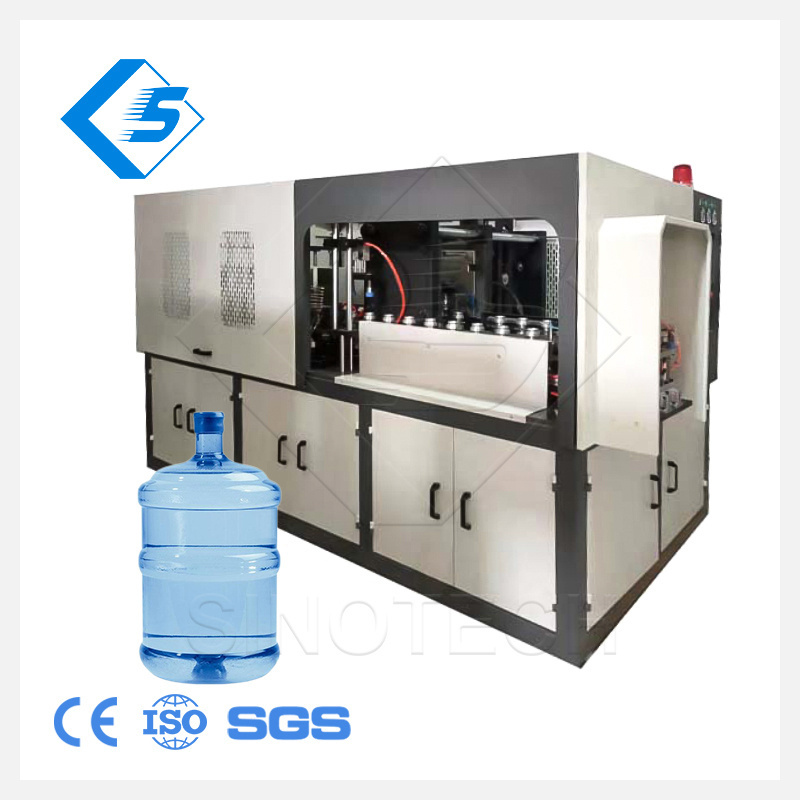
Choosing the right PET blow molding machine is one of the most practical decisions in bottle production, because the equipment must match the factory’s output target, labor structure, investment level, and long-term production plan. A semi-automatic PET blow molding machine is often chosen when budget control and flexible production are priorities, while a full automatic PET blow molding machine is more often selected for higher output, more stable cycle control, and lower labor dependence. Since both machine types can produce PET bottles for water, beverages, edible oil, and daily-use packaging, the comparison usually focuses on capacity, labor, energy use, line layout, and overall operating efficiency.
Key Takeaways
● A semi-automatic PET blow molding machine is often suitable for lower investment and smaller production runs.
● A full automatic PET blow molding machine is usually preferred for higher output and continuous production.
● The right PET blow molding machine depends on bottle type, daily capacity, labor cost, and expansion plans.
● Semi-automatic models are commonly used in start-up factories and flexible workshop production.
● Full automatic models are more common in beverage, water, and large-scale packaging operations.
● A PET blow molding machine should be selected based on total production requirements rather than purchase price alone.
Introduction to Semi and Full Automatic Blow Molding Machines
What Is a Semi-Automatic PET Blow Molding Machine?
A semi-automatic PET blow molding machine usually requires manual or partly assisted handling during the production cycle. Operators often load preforms, transfer heated preforms, or remove finished bottles depending on the machine structure. This type of PET blow molding machine is widely used when production volume is moderate and the factory can allocate labor to support the process.
Its main strength lies in flexibility and lower initial investment. For smaller businesses or early-stage bottle production projects, a semi-automatic PET blow molding machine can offer a practical balance between affordability and stable output. It is also suitable for factories that produce multiple bottle types in shorter runs.
What Is a Full Automatic PET Blow Molding Machine?
A full automatic PET blow molding machine integrates preform feeding, heating, blowing, and bottle discharge into a more continuous system. Manual intervention is reduced, which allows the machine to maintain a more consistent cycle and support higher production speeds. In larger factories, this type of PET blow molding machine is often part of a more complete bottling or packaging line.
The main advantage of a full automatic PET blow molding machine is operational efficiency at scale. When a plant needs continuous production for water, carbonated drinks, juice, or edible oil packaging, automation reduces dependence on manual handling and improves repeatability. This machine type is therefore better suited to factories with long production runs and stronger daily output targets.
Key Differences Between Semi and Full Automatic Machines
Labor Requirement
The most obvious difference between the two machine types is labor involvement. A semi-automatic PET blow molding machine usually needs more operator participation in loading, transferring, or unloading tasks. A full automatic PET blow molding machine reduces this dependence by linking the major stages of production into one coordinated cycle.
This difference directly affects staffing plans. In areas where labor is available and wage pressure is manageable, a semi-automatic model can still be commercially reasonable. In factories where labor cost is rising or workforce stability is a concern, a full automatic PET blow molding machine often becomes the stronger option.
Output and Production Speed
Production speed is another core distinction. A semi-automatic PET blow molding machine can maintain stable output, but it is usually limited by manual coordination and handling time. A full automatic PET blow molding machine is designed for faster and more continuous bottle production, especially when multiple cavities and integrated conveying are involved.
This does not mean semi-automatic equipment lacks value. It simply means each PET blow molding machine fits a different production rhythm. Small and medium bottle runs may work well with semi-automatic equipment, while high-volume beverage lines usually require the speed of a full automatic system.
Initial Investment and Operating Cost
A semi-automatic PET blow molding machine usually comes with a lower initial purchase cost. That makes it easier for smaller factories to begin production without a heavy upfront financial commitment. For new market entrants, this lower threshold can be a deciding factor.
A full automatic PET blow molding machine usually requires a larger initial investment, but the operating economics may become more attractive in high-volume production. Lower labor dependence, stronger throughput, and more continuous production can offset the higher starting cost over time. The better choice depends on production scale rather than equipment price alone.
Differences of Semi-Automatic and Full Automatic PET Blow Molding Machine
Factor | Semi-Automatic PET Blow Molding Machine | Full Automatic PET Blow Molding Machine |
Labor involvement | Higher | Lower |
Output level | Low to medium | Medium to high |
Initial investment | Lower | Higher |
Automation level | Partial | High |
Line continuity | Limited | Strong |
Best fit | Flexible small runs | Continuous mass production |
Factors to Consider When Choosing Between Semi and Full Automatic Machines
Choose Based on Budget
Budget remains the first filter in many equipment decisions. A semi-automatic PET blow molding machine is often selected when capital needs to be controlled at the early stage of a project. It allows a factory to begin production with a more manageable investment while still entering the PET bottle market.
A full automatic PET blow molding machine becomes more attractive when the project budget is tied to long-term scale rather than minimum entry cost. Factories planning stronger production growth often prefer to invest earlier in higher automation to avoid a short upgrade cycle. The budget decision therefore needs to reflect both present and future production strategy.
Choose Based on Output Target
Output target should be evaluated in daily, monthly, and seasonal terms. If the required output is relatively modest, a semi-automatic PET blow molding machine can often cover production needs without unnecessary capital pressure. This is especially true in smaller plants producing local water, juice, or custom bottle orders.
If the output target is high and the production schedule is continuous, a full automatic PET blow molding machine is generally more suitable. At that level, machine speed, repeatability, and line integration become essential. Capacity planning should therefore be based on actual production demand rather than simple preference for one machine type.
Choose Based on Labor Availability and Plant Layout
Labor availability is often overlooked during early planning. A semi-automatic PET blow molding machine depends more heavily on operator support, so it fits factories with stable staffing and lower labor pressure. Where labor turnover is frequent or management wants a more streamlined production structure, full automation becomes more attractive.
Plant layout should also be considered. A full automatic PET blow molding machine often requires a more organized line structure and enough space for integrated movement and downstream connection. A semi-automatic system can be easier to place in smaller workshops or flexible production environments.
Quick Selection Table
Production Situation | Recommended Machine Type |
Start-up bottle production | Semi-automatic |
Limited investment budget | Semi-automatic |
High daily bottle output | Full automatic |
Continuous beverage production | Full automatic |
Labor-intensive workshop model | Semi-automatic |
Automation upgrade plan | Full automatic |
Applications of Semi Automatic Blow Molding Machines
Small Batch Bottle Production
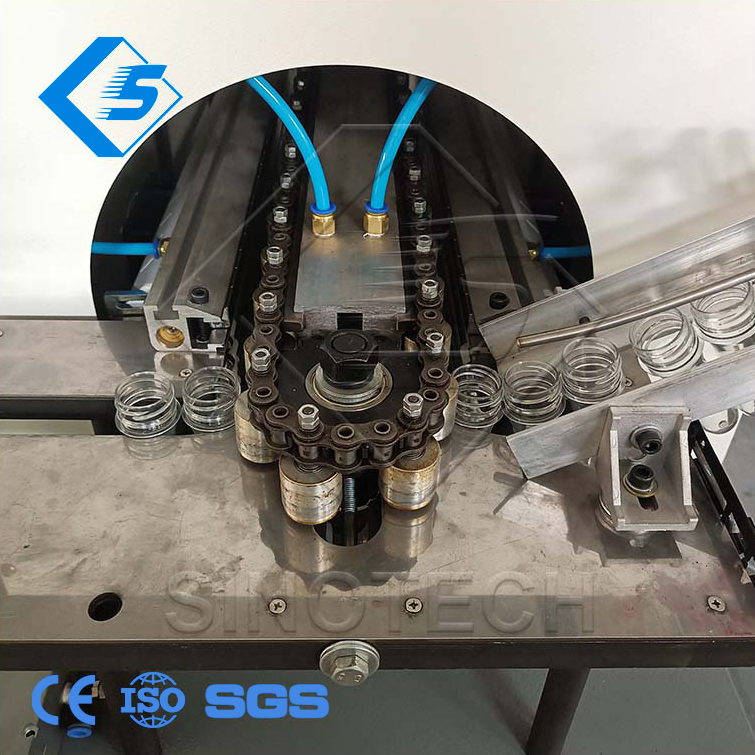
A semi-automatic PET blow molding machine is well suited to small batch production where order variety is relatively high. Factories producing different bottle sizes in changing quantities often prefer this setup because it offers more operational flexibility. In such conditions, maximum speed is less important than adaptable production control.
This type of PET blow molding machine is also useful when the production schedule is not fully fixed. Seasonal packaging orders, regional bottle supply, and lower-volume custom production often align well with semi-automatic equipment. It supports manufacturing without forcing the factory into a large automation commitment too early.
Start-Up and Trial Production Projects
Start-up projects often begin with tighter financial limits and uncertain order volume. A semi-automatic PET blow molding machine can support trial production, market testing, and early channel development without placing too much pressure on capital recovery. It is a practical option when the business is still validating bottle demand.
The same applies to factories entering a new bottle category. When management wants to test a product line before expanding, semi-automatic production offers a more cautious path. In this stage, the right PET blow molding machine is the one that supports controlled growth rather than immediate scale.
Applications of Full Automatic Blow Molding Machines
High-Volume Water and Beverage Production
A full automatic PET blow molding machine is commonly used in large water and beverage production because these operations depend on speed, continuity, and stable bottle quality. Continuous output is essential when the bottle production line is linked to filling, labeling, and packaging systems. Under these conditions, manual handling becomes a bottleneck.
A high-output PET blow molding machine also supports more predictable cycle timing. This improves coordination with downstream equipment and reduces interruptions across the production line. For large packaging plants, consistency is just as important as speed.
Large Packaging Operations and Expansion-Oriented Factories
Factories with long-term growth plans often move toward a full automatic PET blow molding machine even if their current capacity could still be covered by a smaller system. The reason is that future expansion usually favors integrated automation over repeated manual handling. Equipment planning becomes more efficient when the production structure is designed for growth from the beginning.
A full automatic PET blow molding machine is also more suitable where management wants tighter production control across multiple shifts. In larger operations, the value of automation appears not only in bottle output but also in labor organization, line coordination, and production stability.
SINOTECH Semi and Full Automatic PET Blow Molding Machines
Matching Machine Type to Production Needs
When selecting a PET blow molding machine, buyers often need more than a simple machine comparison. They need to consider bottle design, cavity requirement, target output, workshop conditions, and long-term line planning. This is why machine selection should be based on the production scenario rather than on automation level alone.
A manufacturer that offers both semi-automatic and full automatic solutions can better match equipment to different factory stages. In practical procurement, this gives buyers more room to align the PET blow molding machine with actual operating needs instead of forcing one standard model onto every project.
Equipment Selection in Practice
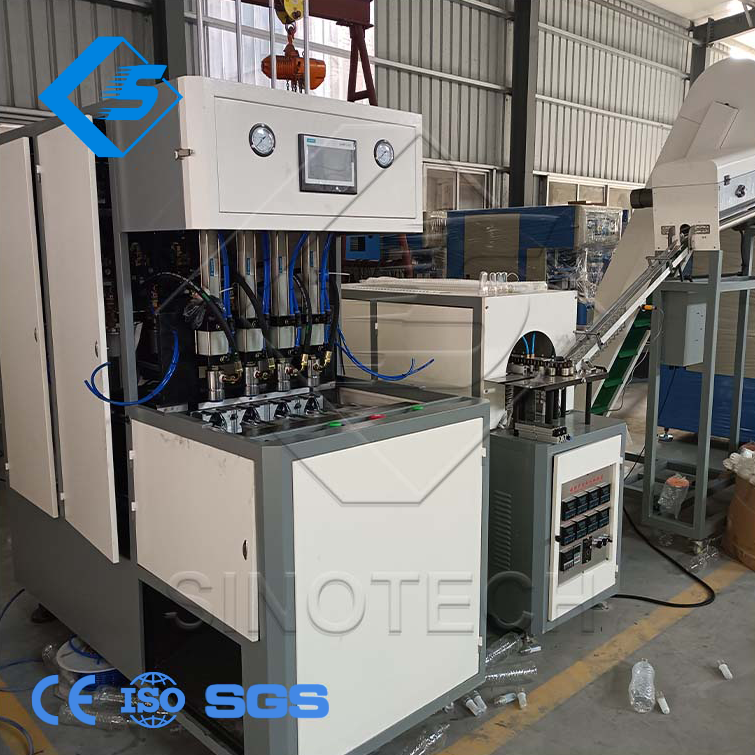
At the practical level, a semi-automatic PET blow molding machine is often suitable for lower-volume production, entry-stage factories, and businesses that need flexibility. A full automatic PET blow molding machine is more suitable for higher output, line integration, and continuous bottle supply. The key is to define the production target clearly before deciding the machine type.
For factories comparing these options, product range and expansion expectations should be reviewed together. A machine that fits current demand but cannot support the next growth stage may create a second investment too soon. A more suitable PET blow molding machine should match both immediate output and near-future expansion.
Conclusion
The choice between semi-automatic and full automatic equipment depends on how the factory plans to produce, staff, and expand. A semi-automatic PET blow molding machine is generally more suitable for smaller budgets, flexible batch production, and early-stage manufacturing. A full automatic PET blow molding machine is generally more suitable for higher output, continuous operation, and lower labor dependence.
A good buying decision comes from matching machine type to bottle design, output demand, labor structure, and investment rhythm. In real production planning, the best PET blow molding machine is the one that fits the factory’s operating model rather than the one with the highest automation level. In this context, SINOTECH Machinery Co., Ltd. is closely associated with blow molding equipment and PET bottle production solutions for different manufacturing requirements.
FAQ
Is a semi-automatic PET blow molding machine enough for a start-up factory?
A semi-automatic PET blow molding machine is often enough for a start-up factory when production volume is still moderate and budget control is important. It allows the business to begin bottle production without a large automation investment. This type of PET blow molding machine is frequently used in early-stage operations and controlled expansion plans.
When should a factory choose a full automatic PET blow molding machine?
A factory should usually consider a full automatic PET blow molding machine when production volume is rising, labor dependence needs to be reduced, and bottle supply must remain continuous. It becomes especially suitable when the bottle line is connected with filling and packaging equipment. In those situations, the full automatic PET blow molding machine supports stronger production stability.
Which machine type is better for water bottle production?
Both types can produce water bottles, but the better choice depends on output target. A semi-automatic PET blow molding machine can work well for smaller-scale or local bottle production, while a full automatic PET blow molding machine is usually preferred for large water bottling plants. The decision should be based on capacity and operating structure rather than bottle type alone.
Does a full automatic machine always reduce total cost?
Not in every case. A full automatic PET blow molding machine can reduce labor dependence and improve high-volume efficiency, but the investment is also higher. If output demand is limited, a semi-automatic PET blow molding machine may remain the more economical option for the factory.


