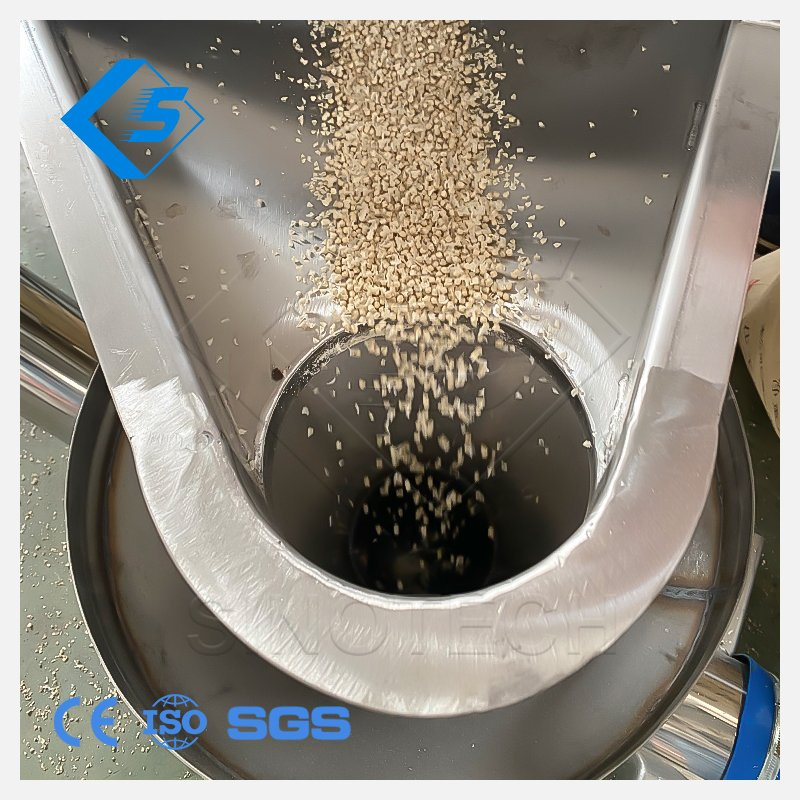
Expanded Polystyrene (EPS) consists almost entirely of air. This material profile creates a highly unsustainable logistics problem. Facilities literally pay heavy fees to transport and landfill empty space. Unprocessed foam steals valuable warehouse footprint. Shipping loose scrap forces companies into exorbitant freight contracts. However, implementing an industrial EPS Recycling Machine flips this narrative completely. It turns waste management from a net cost into a potential revenue stream. You can also establish a sustainable, circular material source.
This guide provides operations managers and procurement teams a clear, vendor-neutral framework. You will learn how to evaluate and implement EPS Recycling equipment based on volume, facility constraints, and downstream goals. We will help you confidently shortlist the perfect system. You can then transform your facility operations.
Key Takeaways
EPS volume can be reduced by ratios of 50:1 to 90:1, turning 50 truckloads of loose waste into a single truckload of dense material.
The choice of machine—compactor, densifier, or shredder—depends entirely on your material's contamination level and your intended end-use (internal reuse vs. external resale).
Facility constraints, particularly regarding ventilation and power, are just as critical to machine selection as throughput capacity.
Regulatory pressures (like Extended Producer Responsibility or EPR acts) are accelerating the need for verifiable, in-house recycling documentation.
The Operational Cost of Unprocessed EPS Waste
The Spatial Liability
Unprocessed EPS consumes disproportionate warehouse square footage. It piles up quickly and disrupts daily workflows. Forklift drivers often navigate around mounting piles of loose foam. This staging area generates zero financial return. It requires excessive disposal pickups. Facility managers find themselves scheduling daily or weekly dumpsters. They do this simply to clear floor space. This spatial liability severely limits operational efficiency.
The Transportation Trap
Shipping loose EPS forces you to pay exorbitant freight rates. You essentially pay to ship air. A standard 53-foot trailer holds a massive volume of loose foam. However, the actual weight of that foam is negligible. Haulers charge you for the trip, not the tonnage. Processing this waste on-site solves this transport trap. You can compress fifty trucks of loose foam into just one truck of dense material.
Compliance and ESG Factors
Growing legislative pressure targets packaging waste. Corporate sustainability targets make landfilling a high-risk strategy. Extended Producer Responsibility (EPR) acts are spreading globally. These laws force companies to track and manage their packaging footprint. Landfilling EPS harms your corporate Environmental, Social, and Governance (ESG) profile. In-house processing provides verifiable data. You can prove exactly how many tons you diverted from local landfills.
Types of EPS Recycling Machines: Technology & Applications
Selecting the right equipment dictates your operational success. Various systems handle specific contamination levels and output goals. Here is a breakdown of the core technologies available today.
Cold Compactors (Screw-Drive Systems)
Cold compactors use intense physical pressure to compress foam. An internal auger screw squeezes the air out of the material. This creates solid, stackable blocks. These blocks are highly valued in secondary markets.
Mechanism: Uses physical auger pressure to squeeze air out of the foam.
Reduction Ratio: Typically around 50:1.
Pros: Low energy consumption, no heat, no odors, maintains polymer structure.
Cons: Not ideal for heavily soiled or wet materials.
Best Practice: Use this EPS Recycling Machine for clean, dry retail packaging. Keep moisture levels low for optimal block density.
Common Mistake: Feeding wet fish boxes into a cold compactor. Moisture prevents the foam from binding properly under pressure.
Thermal Densifiers (Heat-Melt Systems)
Thermal densifiers take a different approach. They shred the material first. Next, they melt it down using specialized heating elements. The machine extrudes the liquid plastic. It cools into heavy, rock-solid ingots.
Mechanism: Shreds the foam, uses heat to melt it, and extrudes it into highly dense, solid ingots.
Reduction Ratio: Up to 90:1.
Pros: High density maximizes shipping efficiency; heat acts as a sterilizer for contaminated foam (e.g., agricultural or seafood packaging).
Cons: Higher energy draw; requires exhaust/ventilation management for off-gassing.
Best Practice: Deploy this EPS Recycling Machine in agricultural or seafood sectors. The high temperatures naturally sterilize organic residues.
EPS Shredders (Volume Reduction for Internal Reuse)
Shredders do not compress or melt the material. They simply tear it apart. The output consists of small, loose beads. This process suits facilities looking to reuse the material internally.
Mechanism: Tears foam down to 5–10mm granular beads without compression.
Use Case: Best when the end goal is not resale, but internal reuse. You can mix it into lightweight concrete. You can also use it as filler for bean bags and cushions.
Pelletizing & Bead Recovery Systems
This is a highly specialized micro-process. It reintegrates waste directly into virgin manufacturing lines. It demands precise sizing and clean inputs.
Mechanism: A micro-process involving crushing, de-dusting through 2mm screens, collecting, and mixing. It reintegrates waste back into virgin manufacturing.
Industry Standard: Reintroducing 6-20% recycled beads into new molds. This effectively lowers raw material costs.
Technology Comparison Chart
Technology Type | Primary Mechanism | Volume Reduction | Ideal Material Input | Primary End-Use |
Cold Compactor | Physical Auger Pressure | 50:1 | Clean, dry retail packaging | Sale to plastic recyclers |
Thermal Densifier | Heat / Melting | 90:1 | Wet, soiled, organic packaging | Sale to plastic recyclers |
EPS Shredder | Tearing / Grinding | None (Size Reduction) | Clean industrial scrap | Internal reuse (concrete, filler) |
Pelletizing System | Crushing & De-dusting | Micro-sizing (2mm) | Clean manufacturing scrap | Reintegration into new molds |
A 4-Point Framework for Evaluating EPS Recycling Equipment
Selecting the correct system requires careful analysis. You cannot simply buy the largest machine available. You must match equipment capabilities to your daily operational realities. Use this four-point framework to guide your procurement process.
1. Volume and Capacity Matching (Throughput Validation)
Your annual foam generation dictates your machine size. Overestimating volume leads to wasted capital. Underestimating volume causes severe operational bottlenecks. Measure your output strictly in weight, not visual volume.
Low Volume (Under 10 tons/year): Hand-fed machines fit perfectly here. They have a smaller footprint. They suit retail backrooms or small logistics hubs.
Medium to High Volume (10-50+ tons/year): You need automated systems. Look for twin-screw systems. They offer continuous feed capabilities. You should integrate conveyor belts to reduce manual labor.
2. Contamination Realities
Assess your material condition honestly. Clean retail packaging behaves differently than wet, organic-soiled packaging. Fish boxes contain moisture and fish oils. Agricultural boxes carry dirt and organic matter. Cold compaction fails with wet materials. The moisture prevents the foam from fusing. Dirty material typically mandates thermal densification. The intense heat evaporates moisture. It also prevents organic decay and foul odors during storage.
3. The "End-Use" Requirement
Your intended final destination determines your technology choice. Do not buy a machine before knowing where the output goes.
Selling to plastic recyclers: You want dense blocks or ingots. Choose a Compactor or a Densifier. Recyclers prefer these dense formats for injection molding.
Reintegrating into your own product: You want loose, manageable particles. Choose a Shredder or Bead system. This allows you to mix scrap into concrete or protective cushions.
4. Financial Returns & ROI Modeling
Calculate your precise financial returns before purchasing. Start by auditing your current hauling invoices. Identify exactly how much you spend removing loose foam. Next, contact local plastic brokers. Determine the current commodity rate for compressed blocks or melted ingots.
Your ROI calculation should include two primary pillars. First, calculate the immediate savings from eliminated waste-hauling fees. Second, add the revenue generated from selling compacted logs or ingots. Facilities often achieve positive returns within twelve to eighteen months. Track these metrics monthly to validate your investment.
Implementation Realities and Facility Risks
Procuring the machine is only the first step. Installing it introduces new logistical challenges. You must prepare your facility for the physical and mechanical demands of industrial processing.
Footprint and Workflow Bottlenecks
Machines require dedicated staging areas. You cannot feed foam directly from the unloading dock to the hopper continuously. Workers need space to stage loose foam before processing. High-volume operations face unique challenges. Manual feeding cannot keep up with large machines. These operations often require integrated silo systems. Silos buffer the material. They store ground foam and feed it steadily into the compactor. This prevents operator idle time and maximizes throughput.
Ventilation and Safety Compliance
Safety remains paramount. Thermal densifiers release fumes when melting plastic. You cannot operate them in closed, unventilated rooms. Facilities must account for Localized Exhaust Ventilation (LEV). You must capture fumes directly at the extrusion point. This ensures you meet occupational safety standards. Failing to install proper LEV systems violates OSHA guidelines. It also creates a hazardous environment for your operators.
Power Requirements
Industrial machines draw massive amounts of electricity. Assess your existing facility electrical infrastructure early. Thermal densifiers rely on industrial heating elements. Cold compactors use heavy-duty auger motors. Most machines require dedicated 3-phase power. Standard warehouse wall outlets cannot support these loads. Consult a certified electrician before finalizing your equipment purchase. You may need to upgrade your electrical panels.
Downstream Economics: Who Buys Processed EPS?
Many facility managers wonder what happens to the output. Compressed foam is not trash. It serves as a highly valuable feedstock for global manufacturing.
The Commodity Value
Compressed EPS logs and melted ingots hold significant value. They are highly sought-after raw materials in global plastic commodity markets. Buyers purchase these ingots by the truckload. The market price fluctuates based on virgin plastic costs. However, demand remains consistently strong. Brokers actively seek reliable suppliers of clean, compressed foam.
Secondary Market Applications
Recyclers purchase your ingots and process them further. They grind the dense plastic into standardized pellets. Manufacturers then use these pellets for injection molding. Recycled EPS is routinely transformed into familiar consumer goods. It becomes picture frames. It turns into architectural crown molding. Cities use it for park benches. Electronics companies mold it into hard plastic casings. This creates a true closed-loop lifecycle.
Environmental Impact Validation
Processing waste on-site creates massive environmental benefits. Every pound of EPS recycled saves approximately 90,000 BTUs of energy. This compares favorably against virgin material production. You should leverage this metric directly in corporate ESG reporting. Stakeholders value verifiable carbon reductions. Your equipment transforms a disposal problem into a celebrated sustainability achievement.
Conclusion
Implementing an in-house processing system fundamentally changes your operational logistics. You eliminate the absurd practice of shipping air. You reduce your warehouse footprint and lower your carbon emissions.
Shortlisting logic: Start by auditing your monthly EPS waste weight. Track your current disposal costs strictly. Do not guess your volume.
Vendor validation: Request material testing from vendors. Reputable manufacturers will run a sample of your specific facility waste through their machines.
Final proof: Use this material test to prove throughput and density claims before you authorize the purchase. Demand video evidence of your exact material being processed.
FAQ
Q: What is the difference between an EPS compactor and a densifier?
A: A compactor uses physical auger pressure to squeeze air out of the foam without heat. It creates stackable blocks. A densifier uses intense heat to melt the foam down. It then extrudes it into a dense, heavy solid ingot. Compactors maintain polymer structure, while densifiers maximize density.
Q: Can dirty or wet EPS be recycled?
A: Yes, but it requires specific thermal machinery. Cold compaction struggles with moisture, as water prevents the foam from compressing tightly. Thermal densifiers easily process dirty, wet fish or agricultural boxes. The intense heat evaporates the moisture and sterilizes organic residue.
Q: How much space does an EPS recycling machine require?
A: Space requirements scale drastically. Small, hand-fed retail compactors require only a few square feet. They fit easily into backroom corners. However, industrial systems with grinding hoppers, buffering silos, and automated conveyors require dedicated warehouse zones. Always plan for extra space to stage incoming loose foam.
Q: Is the off-gassing from melting EPS dangerous?
A: The fumes from thermal densification contain volatile organic compounds. They pose health risks if inhaled in enclosed spaces. Facilities must install Localized Exhaust Ventilation (LEV) systems above the melting and extrusion points. Proper ventilation ensures full compliance with OSHA standards and keeps workers completely safe.


