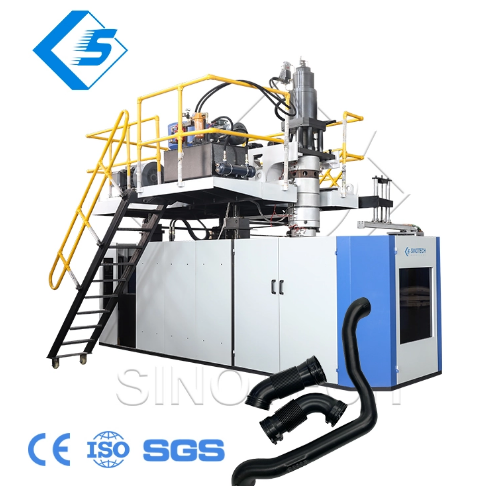
When manufacturers compareextrusion blow molding and injection blow molding, they are usually trying to determine which process is better suited for a specific bottle, container, or hollow plastic part. Although both methods can produce hollow products, their strengths differ significantly in areas such as product size, neck finish, dimensional consistency, material handling, and production efficiency. A large lubricant bottle, for example, may require a very different molding approach from a small pharmaceutical container. For that reason, extrusion blow molding vs injection blow molding is best understood as a practical manufacturing decision rather than a simple technical comparison, especially in packaging, industrial container, personal care, and medical bottle production.
Key Takeaways
● Extrusion blow molding vs injection blow molding is mainly a choice between large-part flexibility and small-part precision.
● Extrusion blow molding is widely used for jerrycans, lubricant bottles, tanks, ducts, and industrial containers.
● Injection blow molding is commonly used for pill bottles, cosmetic containers, and other small precision packaging.
● In extrusion blow molding vs injection blow molding, the starting form is different: parison for extrusion and preform for injection.
● Extrusion blow molding is often more suitable for cost-efficient, high-volume production of larger hollow products.
● Injection blow molding is often more suitable when neck finish, dimensional consistency, and appearance carry greater weight.
What Is Extrusion Blow Molding?
How the Process Works
In extrusion blow molding vs injection blow molding, extrusion blow molding begins when molten plastic is extruded into a hollow tube known as a parison. The parison is captured between mold halves, and compressed air is introduced so the plastic expands and takes the shape of the cavity. After cooling, the part is removed and trimmed where necessary.
This process is valued for its adaptability across a wide range of hollow products. It can be used for simple bottle designs as well as larger industrial parts, making it highly practical for volume production. In many manufacturing environments, extrusion blow molding is chosen because it combines productivity with shape flexibility.
Typical Products and Production Range
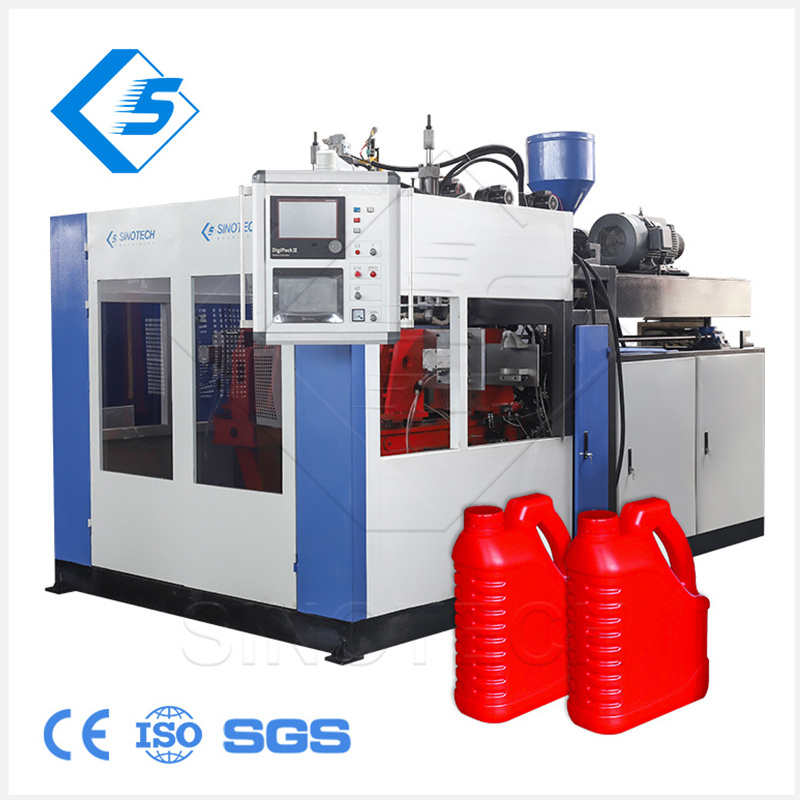
Extrusion blow molding is commonly used for detergent bottles, lubricant bottles, jerrycans, chemical containers, drums, tanks, and automotive ducts. These products usually require a hollow body with functional strength and efficient production rather than extremely refined neck precision. That is one of the main reasons extrusion blow molding vs injection blow molding often becomes a product-selection question before it becomes a machine-selection question.
The process also supports a broad size range. It is well suited to applications where the container body is large, the wall structure matters, and high-volume output is expected. For industrial and transport packaging, extrusion blow molding remains one of the most practical routes in hollow plastic manufacturing.
Where Extrusion Blow Molding Performs Best
Extrusion blow molding performs best when the part is relatively large, the output target is high, and the finished product does not depend on ultra-precise neck geometry. It also performs well where shape flexibility matters, since the process can accommodate many practical container forms used in industrial packaging. These advantages explain why the extrusion side of extrusion blow molding vs injection blow molding is closely associated with real-world production efficiency.
Another strong point is cost performance at scale. When manufacturers need many large bottles or containers over long production runs, extrusion blow molding often offers a very favorable balance between throughput and cost. That makes it especially relevant in sectors built around transportation, storage, chemicals, and lubricant packaging.
What Is Injection Blow Molding?
How the Process Works
In extrusion blow molding vs injection blow molding, injection blow molding follows a different route. It starts with injection molding a preform around a core rod, after which the preform is transferred to a blow mold and expanded with air into the final shape. Because the neck and opening are formed in the injection stage, the process is known for excellent repeatability in those critical dimensions.
This sequence introduces a higher degree of control in small-format packaging. It is particularly valuable when the finished bottle must show a consistent neck finish, accurate threads, and stable dimensions. For that reason, injection blow molding is often selected for applications where precision is built into the product requirement.
Typical Products and Precision Applications
Injection blow molding is widely used for pharmaceutical bottles, eye-drop bottles, cosmetic containers, and other small packaging items. These products often require a smooth visual finish, strong dimensional consistency, and reliable cap fit. In the broader comparison of extrusion blow molding vs injection blow molding, this is the area where injection blow molding shows its clearest advantage.
The process is especially suited to packaging sectors where appearance and closure accuracy are central to product performance. A bottle used in medical or personal care packaging must often meet a stricter standard than a large industrial container. That difference strongly shapes process selection.
Where Injection Blow Molding Performs Best
Injection blow molding performs best when the product is small, the neck finish must be highly controlled, and the overall appearance needs to remain consistent from part to part. It is a strong option when the final container depends on precise thread geometry or a clean, well-defined mouth. These are the conditions under which the injection side of extrusion blow molding vs injection blow molding becomes particularly compelling.
It also performs well in applications where part quality is judged at a fine-detail level. A slight variation in bottle opening may be acceptable in some industrial uses, but it is far less acceptable in pharmaceutical or cosmetic packaging. That is why injection blow molding is typically tied to more precision-driven production goals.
Extrusion Blow Molding vs Injection Blow Molding: Key Differences
Process Principle
The first major difference in extrusion blow molding vs injection blow molding lies in the starting form of the part. Extrusion blow molding uses an extruded parison, while injection blow molding uses an injection-molded preform. This difference influences mold structure, cycle sequence, wall distribution control, and final-part precision.
Because the two processes begin differently, they also behave differently during production. Extrusion blow molding gives greater flexibility for larger hollow bodies, whereas injection blow molding offers stronger control at the neck and opening. A serious evaluation should always begin with this process-level distinction.
Products and Applications
Product type is one of the most direct ways to compare extrusion blow molding vs injection blow molding. Larger bottles, jerrycans, drums, and industrial containers are usually aligned with extrusion blow molding. Smaller bottles for pharmaceuticals, cosmetics, and specialty packaging are more commonly aligned with injection blow molding.
This is not just a matter of size alone. It is also a matter of function, precision, and production logic. A container designed for chemical storage has different priorities from one designed for measured dispensing or premium shelf presentation.
Process and Product Fit
Molds and Tooling Logic
Mold design is another significant point in extrusion blow molding vs injection blow molding. In extrusion blow molding, the mold must capture the parison and allow it to expand into the cavity, often with trimming included as part of the production cycle. In injection blow molding, the tooling sequence is built around forming the preform first and preserving a highly accurate neck finish during transfer and blowing.
This difference changes how each process is optimized. Extrusion tooling is often associated with practical container production and larger shape range, while injection tooling is associated with precision in the bottle mouth and consistent part geometry. The mold is therefore not just a forming tool but a reflection of the product requirement itself.
Types of Materials
Material choice also shapes the comparison of extrusion blow molding vs injection blow molding. Extrusion blow molding is widely used with common resins such as PE and PP, especially for industrial packaging and daily-use containers. Injection blow molding can also process a range of materials, but it is more often selected where resin performance must work together with fine-detail precision and appearance.
Resin behavior affects how the plastic forms, cools, and stabilizes in each process. A material that performs well in one method may behave differently in the other depending on wall distribution, preform behavior, or finish requirements. That is why material selection should never be separated from process planning.
Precision and Surface Finish
Precision is one of the clearest dividing lines in extrusion blow molding vs injection blow molding. Injection blow molding generally provides better neck accuracy, more stable threads, and a cleaner surface finish because the neck is defined at the injection stage. This gives it a clear advantage where closure fit and visual consistency are closely monitored.
Extrusion blow molding can still deliver strong commercial quality, especially for functional industrial packaging. However, it is not typically selected for applications where the smallest neck variation can create downstream issues. The difference here is not whether one process is good and the other is bad, but whether the product demands high precision or practical volume efficiency.
Production Speed and Cost
Production economics remain central to extrusion blow molding vs injection blow molding. Extrusion blow molding is often the more economical choice for larger parts and high-volume production, especially when trimming is already an accepted part of the process. Injection blow molding may involve greater emphasis on precision and part consistency, which can justify its use in smaller, higher-value packaging.
The right comparison must include output rate, mold complexity, scrap handling, resin use, and tolerance requirements. Looking only at machine cost gives an incomplete picture. The more reliable approach is to evaluate the cost of producing the actual part at the required standard.
Which Process Should You Choose?
Choose Based on Product Geometry
The most practical starting point in extrusion blow molding vs injection blow molding is product geometry. If the part is larger, heavier, and designed for industrial storage or transport, extrusion blow molding is often the stronger match. If the part is small and depends on a precise opening or thread, injection blow molding usually deserves closer consideration.
Geometry affects much more than appearance. It influences cycle design, mold logic, wall behavior, and quality tolerance. That is why product drawings often reveal the better process long before equipment selection is finalized.
Choose Based on End-Use Requirements
End use is equally important when judging extrusion blow molding vs injection blow molding. A lubricant bottle, chemical container, or air duct faces a very different service environment from a cosmetic bottle or pharmaceutical package. These applications cannot be evaluated by shape alone because each one places different demands on finish, strength, and consistency.
If the final product enters a precision-sensitive market, injection blow molding often stands out. If the final product is driven by volume, storage function, or industrial practicality, extrusion blow molding often becomes the more efficient option. The manufacturing decision should follow the operational purpose of the part.
Choose Based on Production Economics
Production economics should be measured across the full program rather than at the machine quotation stage alone. Extrusion blow molding is often highly competitive for large containers and long production runs. Injection blow molding can make more sense where small-part consistency has a direct relationship to product value and acceptance.
A sound decision on extrusion blow molding vs injection blow molding should include hourly output, reject risk, neck-finish requirements, resin consumption, and tooling expectations. The lowest starting cost does not always produce the best long-term manufacturing result. The stronger process is the one that fits both the product and the production model.
Quick Selection Table
Conclusion
Final Comparison
The core difference in extrusion blow molding vs injection blow molding lies in how each process balances flexibility, precision, and production efficiency. Extrusion blow molding is generally more suitable for larger hollow products, industrial containers, and cost-effective high-output manufacturing. Injection blow molding is generally more suitable for small bottles that require better neck finish, tighter tolerances, and a cleaner overall appearance.
A meaningful comparison depends on product size, end use, resin behavior, and quality expectations. Once those conditions are defined clearly, the choice between the two methods becomes far more practical and far less abstract.
Process Selection in Practice
For manufacturers developing bottles, containers, or industrial hollow parts, the most effective next step is to match the process to the actual product requirement rather than relying on general assumptions. That is where an application-based view of extrusion blow molding vs injection blow molding becomes most useful in real production planning.
In this context, SINOTECH Machinery Co., Ltd. stands out as a manufacturer closely associated with blow molding equipment, particularly in extrusion blow molding applications and related packaging production scenarios.
FAQ
Is extrusion blow molding better for large containers?
Extrusion blow molding is usually the better fit for large containers, especially where industrial use, storage capacity, and high-volume output are part of the project. It is widely used for jerrycans, tanks, and lubricant bottles because the process adapts well to larger hollow shapes. In extrusion blow molding vs injection blow molding, this is one of the clearest product-based distinctions.
Is injection blow molding better for pharmaceutical bottles?
Injection blow molding is often preferred for pharmaceutical bottles because it offers stronger neck precision and a cleaner finish on small parts. Those qualities are important where cap fit, dosing accuracy, and consistent bottle geometry are required. In extrusion blow molding vs injection blow molding, medical and personal care packaging are among the most common reasons to choose the injection route..
Can the same material be used in both processes?
Some common thermoplastics can be used in both processes, but performance depends on the product and the way the material behaves during molding. Material choice should be reviewed together with wall distribution, neck detail, appearance requirements, and output targets. In extrusion blow molding vs injection blow molding, resin selection is part of process design, not a separate decision.


