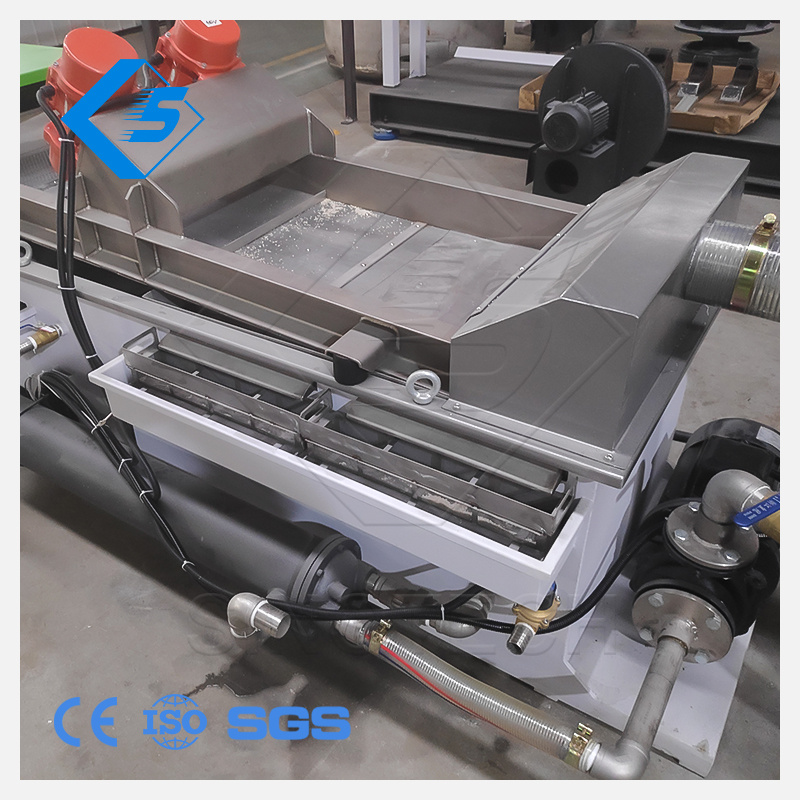
Expanded Polystyrene (EPS) presents a fascinating paradox in modern waste management. It is technically 100% recyclable. Yet, municipal systems highly penalize its disposal. Regulators also actively restrict its use due to its tricky physical properties. People often mistakenly refer to this material by the brand name Styrofoam. The fundamental issue comes down to basic physics. EPS is roughly 98% air and only 2% plastic polymer. This extreme lightweight nature makes it an excellent protective packaging material but a terrible item to throw away.
For businesses generating massive volumes of foam waste—like manufacturing hubs, logistics centers, and retail operations—paying to haul away loose foam means you are essentially paying to ship air. Standard waste collection services drain profits rapidly. The only reliable way to transition EPS from a costly waste liability into a revenue-generating asset requires localized, on-site densification. Proper processing solves the transportation barrier and unlocks new revenue streams. In this guide, we break down exactly how commercial densification transforms your waste management strategy.
Key Takeaways
The Density Problem: Loose EPS is economically unviable to transport; a 50:1 volume reduction is required to make EPS recycling profitable.
The Equipment Solution: An industrial EPS recycling machine (compactor or densifier) is the critical bridge between facility waste and commercial recycling rebates.
ROI Potential: When properly compacted and kept free of contaminants, processed EPS blocks can yield rebates of $300–$500 per ton, offsetting landfill fees and achieving a 4–5 year payback period.
Implementation Rule: Food-grade contamination ruins batches. Successful EPS recycling requires strict source separation before compaction.
The EPS Recycling Paradox: Why "Shipping Air" Kills Margins
Handling loose EPS creates a logistical nightmare for most commercial facilities. You toss a few large appliance buffers into a standard dumpster. Suddenly, the bin is entirely full. You must schedule frequent pickups. Haulers charge you per collection, causing your waste management expenses to skyrocket. You pay exorbitant fees simply because the bulky foam takes up valuable space, leaving no room for denser waste types.
Trying to be environmentally friendly without proper equipment often leads to "wish-cycling." Employees might toss foam packaging into standard curbside recycling bins. They hope local facilities will somehow process it. Instead, this action turns the foam into a severe contaminant. The fragile material shatters during transport. Tiny beads mix into paper and glass bales, often ruining entire batches of otherwise viable recyclables. Municipal sorting facilities simply lack the specific machinery to capture it safely.
Furthermore, the regulatory landscape shifts rapidly. Over 11 US states and numerous local municipalities recently enacted strict foam bans. They also introduced stringent disposal regulations. Relying on the status quo of landfilling your foam waste becomes increasingly risky. Landfill tipping fees continue to climb worldwide. Businesses face immense pressure to find sustainable alternatives before new penalties disrupt their operations.
How an EPS Recycling Machine Solves the Volume Equation
To fix this logistical headache, you need specialized equipment. Deploying a commercial EPS Recycling Machine serves as the mandatory first step for industrial recovery. These compactors and densifiers act as the critical bridge. They transform unwieldy, loose waste into a manageable, highly desired commodity.
The on-site process generally follows three clear steps:
Shredding: Operators feed large, awkward foam pieces into a hopper. These pieces include items like fish coolers or thick packaging inserts. Internal heavy-duty blades break the foam down into small, uniform beads.
Densification: The machine forces the shredded material through a robust screw press or thermal extruder. This intense pressure or heat removes the trapped air entirely.
Extrusion and Palletizing: The system outputs stackable, high-density blocks or solid ingots. Facility staff can efficiently stack these heavy blocks onto standard pallets. Secondary buyers then purchase them directly for pelletizing.
The core metric here revolves around the incredible 50:1 compaction ratio. Think about the transportation math. A standard 53-foot trailer could previously hold only 1 ton of loose foam. After processing, that exact same trailer can easily transport up to 20 tons of compacted blocks. This massive volume reduction makes localized EPS Recycling economically viable on a commercial scale.
Cold Compaction vs. Thermal Densification: Evaluating Your Options
When you evaluate options for an industrial densifier, you must match the technology to your operational realities. The industry primarily relies on two different technologies. Each brings specific advantages and limitations to different facility environments.
Cold screw compactors use continuous physical pressure to bind the foam. A heavy steel auger pushes the shredded material through a restricted channel. Friction generates enough localized heat to fuse the beads together safely. These units are highly energy-efficient because they lack external heating elements. They offer continuous operation and usually require a smaller facility footprint. However, operators might need to tune the machine settings occasionally, depending on the specific density of the input foam.
Thermal densifiers, commonly called melters, take a different approach. They use external heat to melt the foam into a taffy-like resin. The machine then extrudes this resin, which cools quickly into extremely dense ingots. Thermal units handle mixed foam densities effortlessly. They produce a heavier final product. The downside involves much higher energy consumption. Facilities also must manage exhaust ventilation, and the machines require longer start-up and shut-down times.
Technology Comparison Chart
Evaluation Dimension | Cold Screw Compactor | Thermal Densifier (Melter) |
Core Mechanism | Physical pressure and friction heat | External electrical heating elements |
Energy Efficiency | High (Lower total power draw) | Lower (Requires sustained high heat) |
Facility Footprint | Compact, easy to position near docks | Larger, often requires ventilation systems |
Output Density | Medium-High (Logs or square blocks) | Extremely High (Solid heavy ingots) |
Ideal Use Case | Warehouses prioritizing energy savings | Facilities handling heavily mixed densities |
The verdict depends heavily on your priorities. Cold compaction generally wins out for standard warehouse and logistics environments. Decision-makers prefer the energy savings and improved safety profiles. However, if your operation processes heavily mixed or wet foams, investing in a thermal-based EPS Recycling Machine might suit your workflow better.
The Commercial ROI: Rebates, Compliance, and Landfill Avoidance
Deploying compaction equipment delivers a powerful, dual-sided economic benefit. First, you experience a drastic cost avoidance. Your facility immediately sees a sharp reduction in landfill tipping fees. You no longer need specialized waste hauling schedules just to remove empty air. This initial cost reduction alone often justifies the equipment purchase.
Beyond simply saving money, you generate new revenue streams. Clean, compacted blocks represent a globally traded commodity. Secondary processors actively purchase this dense material. Your facility can often secure rebates ranging from $300 to $500 per ton. The exact price fluctuates based on regional market demand and your material quality.
On-site processing also provides exact weight metrics. This traceability proves crucial for modern ESG reporting. Companies can accurately track their packaging reduction mandates. You can prove to stakeholders exactly how many tons of plastic you diverted from local landfills.
However, you must manage specific implementation risks carefully. High commercial rebates require absolute purity. Food-grade contamination ruins batches entirely. Consider these best practices to protect your revenue:
Keep all incoming material clean and completely dry.
Train staff to remove all packing tape, paper labels, and mixed plastics.
Never process food-soiled EPS, such as used takeout containers or dirty meat trays.
Store finished blocks indoors to prevent weather degradation.
Common mistakes usually involve poor source separation. If food oils or residues slip into the machine, they ruin the chemical integrity of the entire batch. Strict employee training guarantees you produce premium, high-value blocks every single time.
How to Size and Select the Right EPS Compactor for Your Facility
Selecting the correct equipment prevents operational bottlenecks. You must match machine specifications directly to your daily volume. Buying an undersized unit leads to warehouse backups. Buying an oversized unit wastes valuable capital. Use the following logic to shortlist your options.
Equipment Sizing Guide
Volume Category | Annual Tonnage | Processing Speed | Best Fit Environment |
Low Volume | Under 10 tons/year | 15–20 kg/hr | Retail backrooms, small testing labs |
Medium Volume | 10–30 tons/year | 40–50 kg/hr | Regional distribution centers, light manufacturing |
High Volume | 50+ tons/year | 100–200+ kg/hr | Massive logistics hubs, appliance manufacturers |
Entry-level units work perfectly for a small retail store unpacking white goods. Regional distribution centers benefit greatly from mid-range models. They handle daily returns and inbound shipments effectively without overwhelming staff. Massive logistics hubs demand heavy-duty, automated systems. These large units process well over 200 kilograms per hour and often integrate directly with conveyor belts.
You must also check facility integration constraints before purchasing any EPS Recycling Machine. Most industrial setups require reliable 3-phase electricity. Ensure you have adequate floor space for both the machine and your palletized block storage. Evaluate your manual labor needs as well. Someone must physically feed the hopper unless you plan to install automated feeding silos.
Conclusion
Asking "What is EPS in recycling?" ultimately leads to an infrastructure question. This material is a valuable commodity disguised as a costly nuisance. It only becomes a financial burden when you lack the tools to manage its physical volume properly. By eliminating the air, you eliminate the waste problem entirely.
We urge decision-makers to take immediate action. Start by auditing your monthly waste volume. Review your current waste hauling invoices to pinpoint the exact costs of frequent pickups. Compare those expenses against the potential revenue from selling compacted blocks. You will quickly determine the exact payback timeline for bringing an in-house densifier into your operations. Transitioning to localized compaction protects your margins and drastically improves your corporate sustainability footprint.
FAQ
Q: Does the "Number 6" recycling symbol mean EPS can go in normal recycling bins?
A: No. While EPS is made of #6 plastic (Polystyrene), standard sorting facilities lack the specialized equipment to separate and compact it. If you throw it into curbside bins, facilities treat it as a contaminant. It often breaks apart and ruins other valuable recyclables.
Q: Can an EPS recycling machine process food-contaminated foam?
A: Generally, no. High-value recycling requires clean, pure material. Food oils and residues ruin the chemical integrity of the melted batch and attract pests. Food-soiled containers must usually go to a landfill unless processed by advanced chemical recycling plants.
Q: What happens to the EPS blocks after they are sold?
A: They are shipped to secondary processors, melted down, and extruded into general-purpose polystyrene (GPPS) pellets. Manufacturers then use these recycled pellets to create durable goods like picture frames, insulation boards, baseboards, and composite outdoor decking.


