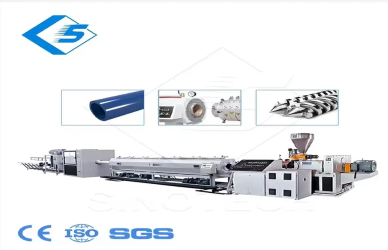
In any Plastic Profile Extrusion Line project, the extrusion die is a key investment. It shapes the profile cross-section and directly affects dimensional accuracy, surface quality, startup stability, and long-term production efficiency. Even with a high-quality line, poor die design or low machining precision can cause unstable output, high scrap, and repeated adjustments.
For manufacturers, die cost affects budgeting, quotations, and ROI. It is not only a tooling expense—it also influences production speed, labor efficiency, maintenance, and customer acceptance. A lower initial die price may seem attractive, but if it leads to long trials or frequent corrections, total production cost can increase quickly.
That is why there is no single fixed die price. In a Plastic Profile Extrusion Line, extrusion die cost depends on profile complexity, material, precision requirements, and service scope. The key question is not only “How much does the die cost?” but also “What lifecycle value does it deliver?”
1.What Is Included in the Cost of a Plastic Profile Extrusion Die?
Die Design and Engineering Cost
The first part of die cost is design and engineering. Before machining begins, the die maker must review the profile drawing, evaluate manufacturability, and design the internal flow channels. This stage may also include suggestions for wall thickness balance, flow optimization, and tolerance feasibility.
For a Plastic Profile Extrusion Line, engineering quality is critical because a profile that looks simple on paper may still be difficult to extrude stably. Complex geometries, hollow sections, and tight tolerances usually require more design time and more detailed analysis. In some cases, additional design revisions are needed before the die is approved for production.
Tool Steel and Material Cost
Die steel selection is another major part of cost. Different steel grades offer different levels of wear resistance, corrosion resistance, and service life. The right choice depends on the material being processed, expected output volume, and required maintenance interval.
For example, a Plastic Profile Extrusion Line running abrasive fillers or corrosive compounds may require higher-grade die steel to reduce wear and improve long-term stability. Higher-quality steel increases upfront cost, but it can reduce repair frequency and extend die life.
Machining and Precision Processing Cost
After design and material selection, the die must be machined with high precision. This can include CNC machining, EDM, grinding, polishing, heat treatment, and finishing processes. The complexity of internal channels and the required tolerance level strongly affect machining time and cost.
In a Plastic Profile Extrusion Line, die machining quality affects melt flow balance and profile surface finish. If machining accuracy is poor, the die may require repeated rework during trial runs, increasing both cost and delivery time.
Testing and Trial Adjustment Cost
Die cost often includes trial production and adjustment. During the trial stage, the die is installed on a Plastic Profile Extrusion Line and tested under actual processing conditions. The goal is to verify profile dimensions, surface quality, and process stability.
Most dies need some level of tuning before they reach stable mass production. This may involve dimensional corrections, flow balancing, or surface improvements. Trial and tuning are not optional extras in many cases—they are an essential part of die development.
2.Main Factors That Affect Extrusion Die Cost for Plastic Profiles
Profile Shape Complexity
Profile shape complexity is one of the biggest cost drivers. Simple solid strips are generally easier and faster to design and machine, while hollow, multi-cavity, asymmetrical, or snap-fit profiles require more complex flow paths and tighter tooling control.
For a Plastic Profile Extrusion Line, complex profiles also usually need more trial adjustment, which increases total project cost. Even small details such as thin fins, locking features, or cosmetic edges can raise machining difficulty significantly.
Profile Size and Wall Thickness
Profile size also affects die cost. Larger cross-sections may require larger die bodies, more material, and more machining time. Thick-wall and thin-wall profiles create different challenges: thick walls increase melt demand and cooling-related stability concerns, while thin walls require more precise flow control.
In a Plastic Profile Extrusion Line, profiles with uneven wall thickness often need additional design effort to improve balance and reduce distortion risk. This engineering effort is reflected in die pricing.
Material Type to Be Processed
The target resin also matters. PVC, PP, ABS, PC, and PMMA behave differently during extrusion, and die design may need to be adjusted for melt flow, shrinkage, or surface quality requirements. Some materials may also increase wear or require better corrosion resistance.
A die designed for one material on a Plastic Profile Extrusion Line may not deliver the same results with another material without modification. Material-specific design considerations can therefore affect die cost.
Tolerance and Surface Quality Requirements
Profiles used for decorative, assembly-fit, or technical applications often have tighter tolerance and higher surface quality requirements. Achieving these targets requires better design precision, tighter machining control, and more careful trial adjustment.
In a Plastic Profile Extrusion Line, high-cosmetic products can be especially sensitive to die marks or flow imbalance. As quality expectations increase, die development and inspection costs usually increase as well.
Single-Layer vs. Co-Extrusion Die Design
Co-extrusion dies are usually more expensive than standard single-layer dies because they require multiple material channels, better alignment, and more complex flow control. If a Plastic Profile Extrusion Line is used for multi-material or decorative-functional profiles, the die system becomes more advanced and the project cost rises accordingly.
3.Typical Cost Structure of an Extrusion Die Project
The table below shows a practical cost structure framework for evaluating an extrusion die project for a Plastic Profile Extrusion Line. It does not give fixed prices, because actual cost varies by project and supplier.
Cost Category | What It Usually Includes | Cost Impact Drivers |
Design & Engineering | Drawing review, flow design, revisions | Profile complexity, tolerance, revision cycles |
Die Material (Steel) | Die steel selection and raw material prep | Steel grade, corrosion/wear resistance needs |
Machining & Processing | CNC, EDM, grinding, polishing, heat treatment | Precision level, internal channel complexity |
Assembly & Fit Check | Die assembly, alignment, internal matching | Multi-part structure, co-extrusion design |
Trial Run & Tuning | Sample extrusion, correction, optimization | Dimensional stability, surface quality targets |
Delivery & Documentation | Inspection reports, technical records, packaging | QC requirements, export packaging, service scope |
Long-Term Maintenance | Polishing, repair, refurbishment | Material abrasiveness, production volume |
This view helps manufacturers compare quotations more fairly. In a Plastic Profile Extrusion Line project, two suppliers may quote different prices because they include different levels of trial support, correction work, or documentation.
4.Why Die Cost Can Differ Greatly Between Suppliers
Tooling Capability and Experience
Supplier experience in profile extrusion die design can significantly affect cost and value. A skilled tooling supplier may charge more, but can reduce trial time, startup scrap, and repeated corrections. In many cases, this improves the overall performance of the Plastic Profile Extrusion Line.
Manufacturing Standards and Quality Control
Differences in machining equipment, inspection standards, and process control also affect die cost. A supplier with stronger quality control may provide better consistency and traceability, which is especially important for repeat orders or technical profiles.
Service Scope and Hidden Cost Risks
Some quotations include trial support, tuning, and after-sales assistance, while others only cover basic die manufacturing. A lower upfront price may lead to extra charges later for modifications or technical support. For a Plastic Profile Extrusion Line, it is important to confirm what is included before comparing suppliers.
5.How to Evaluate Whether the Die Cost Is Reasonable
A reasonable die cost should be evaluated by total value, not just the initial purchase price. Manufacturers should consider die life, production stability, startup time, scrap rate, maintenance frequency, and the supplier’s support capability. A more expensive die may reduce downtime and improve quality consistency, making it more economical over time.
It is also important to review deliverables clearly: die specifications, steel grade, tolerance targets, trial plan, correction terms, and acceptance criteria. In a Plastic Profile Extrusion Line, clear technical agreement reduces misunderstanding and helps control total project cost.
6.How to Reduce Die Cost Without Sacrificing Quality
Manufacturers can reduce die cost by optimizing profile design for manufacturability, avoiding unnecessary complexity, and balancing wall thickness where possible. Standardizing product families can also reduce the number of unique die projects.
Another key method is to clarify requirements early, including material type, tolerance, surface finish, and application conditions. Better preparation reduces design revisions and shortens trial time on the Plastic Profile Extrusion Line, lowering both direct and indirect tooling costs.
FAQ
Q1: Is a cheaper extrusion die always more cost-effective?
Not necessarily. A low-cost die may increase scrap, setup time, correction work, or maintenance cost, which can raise total production cost over time.
Q2: Does one profile always need only one die?
Usually one profile cross-section uses one die, but some projects may also need different calibration tooling, co-extrusion tooling, or additional setups for different materials.
Q3: Can an existing die be modified instead of making a new one?
Sometimes. Minor changes may be possible, but large geometry changes, tighter tolerances, or different material requirements often need a new die for stable results.
Q4: Should die cost be evaluated separately from trial and tuning cost?
No. Trial and tuning are often necessary to achieve stable production on a Plastic Profile Extrusion Line, so they should be included in the total die project evaluation.
Conclusion
The cost of an extrusion die for plastic profiles can vary widely, because it depends on profile complexity, size, material type, precision requirements, and service scope. In a Plastic Profile Extrusion Line project, die cost should not be judged by the initial quote alone. Engineering quality, machining precision, trial support, and long-term durability all influence the real value of the die.
For most manufacturers, the best approach is to evaluate total lifecycle value: startup efficiency, stable production, lower scrap, and die service life. A well-designed die can improve the performance and profitability of a Plastic Profile Extrusion Line, making it a strategic investment rather than just a tooling expense.


