
Views: 0 Author: Site Editor Publish Time: 2026-06-19 Origin: Site


Plastic waste looks simple, but it is not ready for reuse. It may contain labels, dirt, mixed polymers, color differences, and moisture. A PET flakes Granulator machine helps turn clean PET flakes into reusable pellets through feeding, melting, filtering, cooling, and cutting. In this guide, you will learn how plastic waste is processed into granules and what affects final pellet quality.
● Plastic waste must be sorted, washed, crushed, dried, melted, filtered, and pelletized before it becomes recycled granules.
● PET flakes need careful moisture and temperature control because poor drying can weaken pellet quality.
● A PET flakes Granulator machine is used after PET bottles or sheets are cleaned and crushed into flakes.
● Stable feeding, strong filtration, and proper degassing help reduce bubbles, black spots, and unstable output.
● The right plastic recycling granulation line should match the material type, contamination level, output target, and final pellet use.
Plastic waste cannot go straight into manufacturing because it is rarely clean or uniform. Used bottles, sheets, films, and rigid scraps may contain paper labels, glue, sand, oil, food residue, metal, and mixed plastic types. If these materials enter the extruder without preparation, the recycled granules may have weak strength, poor color, bubbles, or visible black spots.
The goal of the plastic waste granulation process is simple: turn unstable waste into stable raw material. To do this, recyclers must control purity, flake size, moisture, melt quality, and pellet shape. When each step is controlled, recycled granules can be used again in plastic sheets, profiles, packaging materials, and other plastic products.
Note: Clean input material usually creates fewer extrusion problems and better recycled granules.
The process starts with collection and inspection. Recyclers check the source of the waste, the plastic type, color, contamination level, and general condition. PET, PP, PE, and other materials should be separated because different plastics melt in different ways.
Next comes sorting. PET bottle flakes should not be mixed with PVC or other unsuitable plastics. Even a small amount of wrong material can affect melt stability and final pellet quality. Color sorting also matters when the final granules need a cleaner appearance.
After sorting, the waste is washed. This may include pre-washing, hot washing, friction washing, and rinsing. The aim is to remove labels, adhesives, oil, dust, and small impurities. Cleaner flakes melt more evenly and reduce defects during pelletizing.
Then the plastic is crushed or shredded. Bottles, sheets, and rigid waste are reduced into smaller flakes. Uniform plastic flakes feed more smoothly into the recycling granulator and help the extruder run with stable pressure.
Drying is especially important for PET bottle flakes recycling process. PET is sensitive to moisture. If too much water remains, it may cause bubbles, strand breakage, or lower material strength. Proper drying helps protect melt quality before extrusion.
The dried flakes then enter the extruder. Heat and screw movement melt the plastic and make the material flow more evenly. During this stage, filtration removes solid impurities, while degassing helps remove moisture and volatile substances. Finally, the molten plastic is cooled and cut into recycled granules.
Process Step |
Main Purpose |
Quality Risk If Poorly Controlled |
Sorting |
Separate plastic type and color |
Mixed polymers and weak pellets |
Washing |
Remove labels, dirt, and oil |
Black spots and odor |
Crushing |
Create stable flake size |
Unstable feeding |
Drying |
Reduce moisture |
Bubbles and strand breakage |
Extrusion |
Melt and homogenize plastic |
Uneven melt quality |
Filtration |
Remove impurities |
Dirty or low-value granules |
Pelletizing |
Cut plastic into granules |
Irregular pellet size |
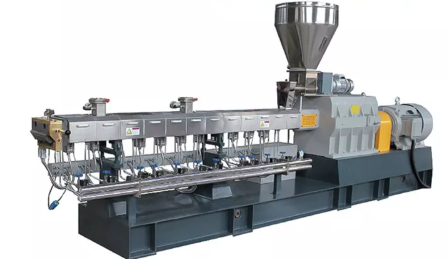
A PET flakes Granulator machine is designed for cleaned PET flakes or PET scraps. It usually works with feeding, extrusion, filtration, cooling, cutting, drying, and collection systems. The flakes are first conveyed into the hopper. A stable feeding system helps avoid sudden material shortage or overload.
Inside the extruder, the PET flakes are heated and plasticized. For PET recycling, the system must control temperature carefully because overheating can damage material performance. Filtration is also important. A screen filter changer helps remove unmelted particles and small impurities before pellet cutting.
After extrusion, the plastic is cooled and cut into pellets. The final granules should be dry, uniform, and easy to pack or transport. A complete plastic recycling granulation line may also include crushers, washing equipment, dryers, blowers, storage hoppers, and an electric control system.
Tip: When selecting a PET granulator, check the full process flow, not only the machine name.
Moisture is one of the biggest quality factors. PET flakes must be dried well before melting. Too much moisture can create foaming, weak pellets, and unstable extrusion.
Temperature control is another key point. The extruder should melt the plastic fully but avoid excessive heat. Good zone control helps maintain a stable melt and protect material properties.
Filtration and degassing also affect quality. Filtration removes solids, while degassing removes moisture and volatiles. Together, they help produce cleaner recycled PET granules with fewer bubbles and less odor.
Pellet size should also be consistent. Uniform pellets are easier to feed into downstream production equipment. They also help manufacturers keep stable production results.
Mixed plastic contamination is a common issue. When PET is mixed with unsuitable plastics, the final pellets may become weak or unstable. Poor sorting often leads to low-value output.
High moisture can also create defects. It may cause bubbles, cracks, strand breakage, and unstable melt pressure. This is why drying should never be treated as a minor step.
Unstable feeding is another problem. Irregular flakes, light materials, or low-bulk-density waste may bridge inside the feeding system. This reduces output and creates pressure changes in the extruder.
Note: Many pellet defects start before extrusion, often during sorting, washing, or drying.
The first rule is to match the equipment to the material. PET flakes, plastic films, rigid scraps, and mixed materials may need different feeding systems, screw structures, filters, and pelletizing methods.
Recyclers should also test the final granules. Common checks include moisture content, pellet size, color consistency, density, and melt flow. These tests help confirm whether the recycled granules are ready for reuse.
Regular maintenance matters too. Clean filters, sharp cutting blades, stable heaters, and smooth feeding systems help reduce downtime and improve production consistency.
SINOTECH Machinery Co., Ltd. provides plastic machinery solutions for recycling and pelletizing applications. Its PET flakes Granulator machine is built to process washed PET bottle flakes, PET sheet flakes, and PET scraps into reusable granules.
The system can include screw feeding, twin screw extrusion, screen filtration, water cooling, strand cutting, drying, storage, and electric control. This helps users build a more complete plastic recycling granulation line instead of buying isolated equipment.
The company also supports customized configurations based on material condition, production target, plant layout, and final pellet requirements. Services may include process consultation, plant planning, machine installation guidance, training, technical support, and after-sales service.
Tip: Before ordering, prepare sample material details, moisture level, target output, and final pellet use.
Plastic waste becomes granules through a controlled process. It must be sorted, washed, crushed, dried, melted, filtered, and pelletized. Each step affects final quality. A suitable PET flakes Granulator machine can improve feeding, melt stability, filtration, and pellet consistency. Before choosing a system, recyclers should review material type, contamination level, capacity needs, and product goals.
A: It turns sorted, washed, dried, and melted plastic flakes into reusable granules.
A: A PET flakes Granulator machine melts, filters, cools, and cuts PET flakes into pellets.
A: Drying reduces moisture, helping prevent bubbles, cracks, and weak pellets.
A: Yes. A PET flakes Granulator machine is configured for PET flake processing needs.


