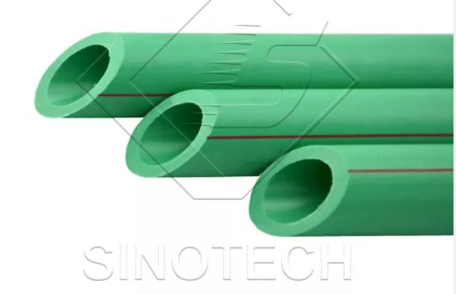
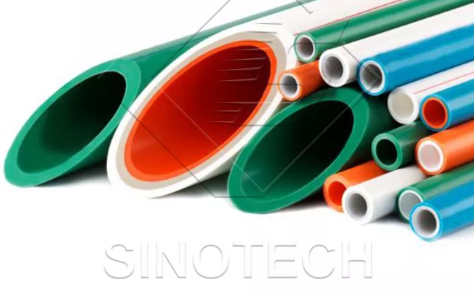
A good PPR pipe does not happen by chance. It comes from controlled material handling, stable extrusion, accurate cooling, and strict cutting. A PPR Pipe Extrusion Production Line connects these steps into one continuous process. In this article, you will learn how PPR pipes are made, what machines are used, and which details affect final pipe quality.
Key Takeaways
●PPR pipes are mainly made from polypropylene random copolymer, color masterbatch, stabilizers, and other additives.
●A PPR Pipe Extrusion Production Line turns raw material into finished pipe through feeding, melting, extrusion, calibration, cooling, cutting, and stacking.
●Raw material quality affects pipe strength, surface finish, wall thickness, and long-term use.
●The extruder, mould, vacuum calibration tank, cooling tank, haul-off unit, cutter, printer, and stacker all play important roles.
●Good pipe calibration helps control outside diameter, roundness, and shape stability.
●Quality checks should cover size, appearance, pressure resistance, cutting accuracy, and batch traceability.
●Buyers should evaluate both machine configuration and technical service before choosing a pipe extrusion line.
1. What Materials Are Used to Make PPR Pipes?
Polypropylene Random Copolymer as the Main Material
PPR pipes are made from polypropylene random copolymer, usually called PP-R. It is a thermoplastic material used for hot water, cold water, heating, and fluid transport systems. It is chosen because it can handle heat, pressure, and chemical contact better than many ordinary plastic materials.
For pipe production, the material must be clean and stable. If the resin quality changes too much, the pipe may show poor surface finish, unstable dimensions, or weak pressure performance. This is why material control is the first step in the PPR pipe manufacturing process.
Additives, Color Masterbatch, and Stabilizers
PPR pipe raw material is not only base resin. Manufacturers may add color masterbatch, stabilizers, antioxidants, and other additives. These materials help improve pipe color, processing stability, aging resistance, and appearance.
Color masterbatch also helps make the pipe easier to identify. Stabilizers help protect the pipe during heating and extrusion. The goal is not to add more materials, but to add the right materials in the right ratio.
Why Raw Material Consistency Affects Extrusion Quality
The PPR pipe extrusion process is sensitive to material condition. Wet pellets, poor mixing, dust, or uneven feeding can affect the molten material inside the extruder. Once this happens, the pipe may have bubbles, rough surface, uneven wall thickness, or poor roundness.
Tip: Before starting production, check material drying, mixing uniformity, and feeding stability. Small problems at this stage can become larger defects after extrusion.
2. Step-by-Step: How PPR Pipes Are Made on a PPR Pipe Extrusion Production Line
Raw Material Preparation and Drying
The process starts with PPR granules, color masterbatch, and additives. They are measured, mixed, and prepared before entering the extruder. Drying may be needed when moisture could affect the pipe surface or internal structure.
This step looks simple, but it supports the whole production line. Stable material preparation helps the PPR pipe production line keep a steady output.
Feeding the Material into the Extruder
After preparation, the material is sent into the extruder hopper. A stable feeding system helps the extruder receive material at a constant rate. If feeding is unstable, the output pressure may change, and the pipe size may also change.
In a PPR Pipe Extrusion Production Line, feeding must match the screw speed and downstream speed. Good matching keeps the process continuous.
Melting and Plasticizing Inside the Extruder
Inside the PPR extruder, the screw moves the material forward while heat turns it into a molten state. The screw also mixes the material, so the melt becomes more uniform before it reaches the pipe mould.
Temperature control is very important here. If the temperature is too low, the material may not melt fully. If it is too high, the material may degrade. Both problems can reduce pipe quality.
Die Forming and Pipe Shaping
The molten PPR material then passes through the extrusion mould. The mould forms the pipe shape and controls the basic diameter and wall thickness. A well-designed mould helps create a smooth inner wall and consistent pipe structure.
This step is the heart of pipe extrusion. If the mould is not matched to the pipe size, material flow, or output target, the finished pipe may not meet production requirements.
Vacuum Calibration and Initial Sizing
After leaving the mould, the pipe is still hot and soft. It enters a vacuum calibration tank or sizing system. The calibration sleeve helps fix the outside diameter, while vacuum support helps prevent the pipe from shrinking or becoming oval.
Pipe calibration directly affects installation quality. If the pipe is not round or the diameter is unstable, it may be harder to connect, weld, or test later.
Cooling and Haul-Off Control
The pipe then passes through cooling tanks. Cooling allows the pipe to keep its shape and gain enough strength before cutting. At the same time, a haul-off unit pulls the pipe forward at a controlled speed.
The haul-off speed must match the extrusion output. If it pulls too fast, the pipe wall may become thinner. If it pulls too slowly, the wall may become too thick or unstable.
Cutting, Marking, and Final Handling
When the pipe reaches the required condition, it is printed, cut, and stacked. The printer may mark size, batch, or production information. The cutter cuts the pipe into set lengths. The stacker or rack helps collect finished pipes for inspection and packaging.
Note: Accurate cutting is not only about appearance. Smooth and even pipe ends can support better handling, storage, and later installation.
3. What Main Equipment Is Used in a PPR Pipe Extrusion Production Line?
Single Screw Extruder
The single screw extruder is the main machine in the plastic pipe extrusion line. It melts, mixes, and pushes the material forward. For PPR pipe production, it must provide stable heating, pressure, and output.
A good PPR pipe extruder machine should be easy to control and maintain. Stable screw design and temperature control help reduce production fluctuation.
Pipe Die Head and Calibration System
The die head shapes the pipe. The calibration system helps fix the size after extrusion. Together, they affect pipe diameter, wall thickness, roundness, and surface finish.
If the pipe die and calibration parts are not suitable for the pipe range, the production line may suffer from size error or unstable forming.
Cooling Tank, Haul-Off Machine, Cutter, and Printer
Downstream equipment completes the pipe forming process. The PPR pipe cooling tank cools and stabilizes the pipe. The haul-off unit controls pulling speed. The PPR pipe cutting machine cuts pipes to required length. The printer supports traceability.
Production Stage
Main Equipment
Main Purpose
Material feeding
Feeding system
Send material into the extruder steadily
Melting
Single screw extruder
Melt and plasticize PPR material
Shaping
Pipe mould
Form diameter and wall thickness
Calibration
Vacuum calibration tank
Control pipe size and roundness
Cooling
Cooling tank
Stabilize pipe shape
Pulling
Haul-off unit
Keep line speed stable
Cutting
Cutter
Cut pipe to set length
Handling
Stacker
Collect finished pipe safely
4. How Quality Control Works During PPR Pipe Manufacturing
In-Line Dimensional Inspection
Quality control should happen during production, not only after it. Operators need to check outside diameter, wall thickness, ovality, surface finish, and line speed. These checks help find problems before too much material is wasted.
For example, if wall thickness starts drifting, the team can check haul-off speed, extrusion pressure, or mould condition.
Pressure and Strength Testing
Finished PPR pipes may need pressure testing, impact testing, or heat resistance checks. These tests help confirm whether the pipe can work safely in hot and cold water supply systems.
The testing method depends on the pipe standard, application, and customer requirement. The key point is simple: a good-looking pipe still needs performance testing.
Traceability Through Marking and Batch Records
Marking helps users know the pipe size, batch, and production information. Batch records help the manufacturer trace raw materials, production time, machine settings, and inspection results.
Note: Traceability is useful when a project needs repeat orders, quality review, or after-sales support.
5. How Manufacturing Choices Affect Final PPR Pipe Performance
Wall Thickness Accuracy and Pressure Rating
Wall thickness is one of the most important pipe quality factors. If the wall is too thin in some areas, pressure resistance may drop. If the wall is uneven, the pipe may not perform consistently.
Stable extrusion, correct mould design, and matched haul-off speed all help keep wall thickness under control.
Cooling Quality and Pipe Shape Stability
Poor cooling can cause pipe bending, shrinkage, ovality, or internal stress. Good cooling is not just fast cooling. It must be balanced and controlled.
A strong calibration and cooling system helps the pipe keep its shape after it leaves the production line.
Smooth Inner Surface and Water Flow Performance
A smooth inner surface supports better water flow and reduces friction. It also helps keep the pipe cleaner during use. Smoothness depends on material quality, melting control, mould design, and stable extrusion pressure.
Tip: When evaluating a PPR pipe making machine, do not only ask about output. Ask how the line controls pipe size, cooling, cutting, and surface finish.
6. Our PPR Pipe Extrusion Production Line Products and Services
Complete PPR Pipe Extrusion Production Line Solutions
SINOTECH Machinery Co., Ltd. provides plastic machinery solutions, including PPR Pipe Extrusion Production Line equipment for producing PPR pipes used in hot water supply, cold drinking water supply, heating systems, and industrial fluid transport. The line can include material mixing, feeding, single screw extrusion, extrusion mould, vacuum calibration cooling tank, spray cooling tank, printer, haul-off unit, dust-free cutter, and stacker.
Equipment Support for Stable Pipe Manufacturing
The production line is designed to help manufacturers control key steps in pipe production. It supports stable extrusion, accurate calibration, efficient cooling, controlled traction, automatic cutting, and organized stacking. These features help improve pipe consistency and reduce manual handling during production.
The line can also be configured for different pipe diameter ranges and production needs. For manufacturers planning new capacity or upgrading old equipment, this flexibility can make the line easier to match with real factory conditions.
Custom Configuration and Technical Service
SINOTECH can provide technical support for equipment selection, production planning, line layout, installation guidance, operation training, and after-sales service. This is valuable because pipe production is not only about buying machines. It also depends on machine matching, process control, and operator understanding.
A suitable line helps reduce trial-and-error time. It also helps manufacturers produce pipes with more stable size, better surface finish, and more reliable cutting quality.
Conclusion
PPR pipes are made through a controlled extrusion process. Each step matters. Raw material affects pipe strength. Extrusion shapes the pipe. Calibration controls size. Cooling keeps the shape stable. Cutting and marking finish the product. A suitable PPR Pipe Extrusion Production Line helps make this process more stable, efficient, and easier to manage.
FAQS
Q: What is a PPR Pipe Extrusion Production Line?
A: A PPR Pipe Extrusion Production Line makes PPR pipes through feeding, extrusion, calibration, cooling, cutting, and stacking.
Q: How does a PPR Pipe Extrusion Production Line shape pipes?
A: It melts PPR material and pushes it through a pipe mould to form the required size.
Q: Why is pipe calibration important?
A: It controls outside diameter, roundness, and pipe shape after extrusion.
Q: What affects PPR pipe quality most?
A: Material quality, extrusion control, cooling, haul-off speed, and cutting accuracy affect final quality.
Q: Does a PPR Pipe Extrusion Production Line affect cost?
A: Yes. A stable PPR Pipe Extrusion Production Line can reduce waste and improve production consistency.
We are a professional manufacturer of plastic machines and we have devoted ourselves to the development, research, and production of plastic machinery for more than 20 years.