Commercial facilities constantly face the operational friction of handling Expanded Polystyrene (EPS) waste. Storing and transporting a material consisting of up to 98% air demands significant physical space. It also requires immense logistical effort. This trapped air quickly turns a simple packaging byproduct into a severe logistical headache for facility managers.
A widespread misconception insists EPS remains entirely non-recyclable. Curbside municipal programs frequently reject this material. They label it a contaminant because their collection logistics remain highly inefficient for lightweight foams. However, pure EPS is completely recyclable at the industrial level. Commercial operators can easily process it when they bypass standard single-stream municipal systems.
Turning this high-cost liability into a revenue-generating asset requires a clear understanding of the mechanical densification process. Facilities must invest in the right processing equipment to effectively condense the foam onsite. Doing so fundamentally alters the financial dynamic of industrial waste management.
Key Takeaways
EPS consists of 95–98% air; raw transport is economically unviable, making on-site volume reduction mandatory for commercial recycling.
The industrial EPS recycling process relies on mechanical densification, typically utilizing an EPS recycling machine to achieve compression ratios between 50:1 and 90:1.
Recycled EPS (regranulate) has high secondary market value and is repurposed into architectural molding, insulation boards, and composite materials.
Adopting a closed-loop recycling model (densifying on-site and selling to buyers) dramatically reduces hauling costs and landfill fees while improving facility ESG metrics.
Understanding the EPS Lifecycle: Why Traditional Disposal Fails
The Logistical Nightmare
Throwing EPS into standard commercial dumpsters drains facility budgets rapidly. Waste haulers base their standard collection charges on physical container volume rather than pure material weight. Consequently, businesses pay premium transport rates simply to move trapped air across town to a disposal site. In some regional markets, loose EPS currently consumes up to 30% of available landfill space. This massive spatial footprint accelerates landfill depletion. It also triggers escalating disposal fees for commercial operators trying to manage high-volume packaging waste.
Clarifying the Terminology
Many industry professionals incorrectly use the term "Styrofoam" as a catch-all phrase for any foam packaging. "Styrofoam" is actually a registered trademark owned by Dow Chemical. It refers exclusively to extruded polystyrene (XPS). XPS serves primarily in rigid building insulation applications. Conversely, EPS refers to the expanded bead foam commonly used in appliance packaging and protective shipping coolers. Precision in terminology ensures facilities sort the correct materials. It prevents operators from confusing completely different plastic recycling streams.
The Curbside Contamination Factor
Loose EPS breaks apart easily without proper on-site compaction. When businesses throw it into single-stream municipal recycling bins, the brittle foam crumbles into thousands of tiny, static-charged beads. These beads readily attach themselves to paper, glass, and other valuable cardboard materials. Material recovery facilities (MRFs) then view the shattered EPS as a severe system contaminant. This high contamination risk drives the absolute necessity for specialized B2B handling and dedicated on-site consolidation efforts.
The 4-Step Commercial EPS Recycling Process
Step 1: Collection and Decontamination
Diligent sorting represents the most critical requirement for successful material recovery. EPS must remain completely free of packing tape, concrete dust, and biological contaminants. Food residue severely compromises the chemical recycling process. Cleanliness dictates the final market value of the processed plastic material. Some advanced secondary processing facilities employ sophisticated interventions like melt filtration to handle minor post-consumer impurities. However, commercial generators must still prioritize strict upstream separation to maintain operational viability.
Step 2: Shredding and Densification
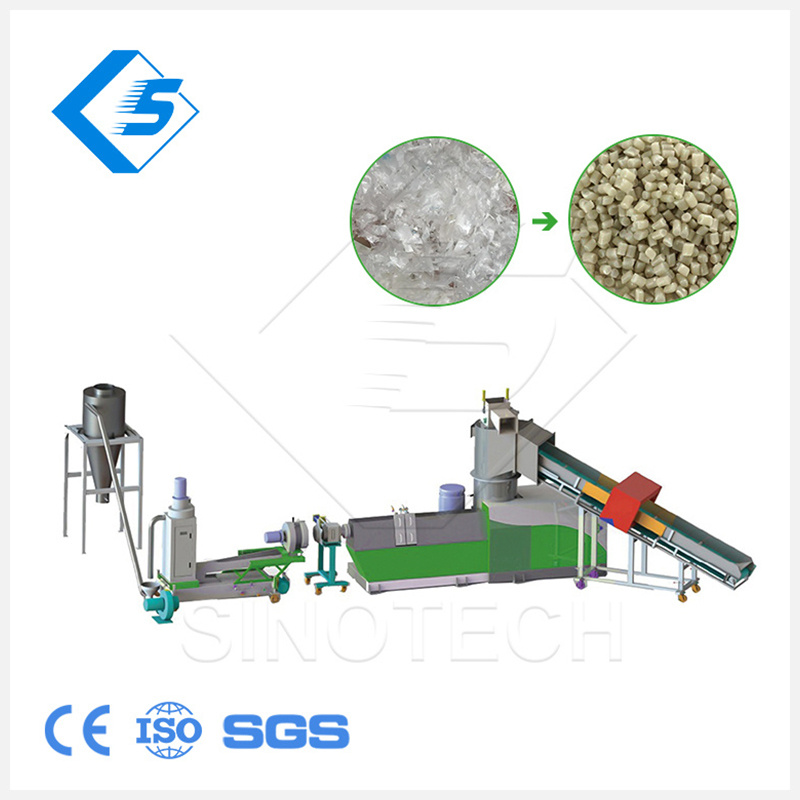
The core mechanical phase begins when operators feed sorted material into an EPS Recycling Machine. This specialized equipment first shreds the bulky foam blocks into smaller manageable fragments. Next, it rapidly compresses the shredded pieces to eliminate the trapped air. This aggressive densification step drastically reduces the overall volume. It prepares the rigid plastic blocks for highly efficient commercial transport.
Step 3: Granulation (Regranulate)
Facilities ship the newly densified blocks or solid ingots to specialized extrusion plants. At these secondary facilities, manufacturers heat and thoroughly melt the compacted plastic. They then reform the thick liquid material into solid polystyrene pellets known as regranulate. This dense granular form serves as the standard raw material format for modern plastic manufacturing across multiple industries.
Step 4: Downstream Repurposing
The entire global system relies on a remarkably strong economic driver. Manufacturing new commercial products from EPS Recycling outputs costs significantly less than processing virgin petroleum. Industrial buyers eagerly purchase regranulate for diverse downstream manufacturing applications.
Common repurposed products include:
Lightweight concrete additives for commercial construction.
Architectural crown molding and decorative picture frames.
Durable park benches and municipal seating.
Weather-resistant outdoor composite decking materials.
Evaluating EPS Recycling Machine Technologies: Cold Press vs. Hot Melt
Solution Category 1: Cold Press Compactors (Screw Compactors)
This technology uses heavy-duty steel augers and immense mechanical pressure. The physical friction generates the necessary internal heat to bind the foam together. It operates entirely without dedicated electrical heating elements.
Pros: Cold press systems are highly energy-efficient. They maintain a significantly lower operational footprint. They preserve material integrity exceptionally well and reliably achieve compression ratios around 50:1.
Cons: These units can struggle when processing highly rigid industrial foams. They also face noticeable difficulties handling extremely wet materials compared to thermal alternatives.
Solution Category 2: Hot Melt Densifiers
Hot melt systems utilize robust electrical heating elements. They safely melt shredded EPS into a dense, workable paste. The machine then extrudes this hot paste into solid, brick-like blocks commonly called ingots.
Pros: This method achieves extreme volume reduction. It routinely reaches compression ratios up to 90:1. It proves ideal for facilities managing massive daily throughput. It also perfectly suits operations facing strict space limitations for storing processed waste.
Cons: Thermal densification requires higher baseline energy consumption. Facilities must install proper exhaust and ventilation infrastructure to manage routine melting odors. The internal heating components also require slightly more complex routine maintenance schedules.
Volume-to-Equipment Matching Framework
To guide facility capacity requirements, managers should evaluate their estimated annual foam tonnage. You must select an EPS Recycling Machine based on actual generated volume.
Annual EPS Tonnage | Facility Type Profile | Recommended Technology Focus | Expected Output Format |
< 10 Tons | Small retail, regional distribution, local furniture stores | Small-scale Cold Press (Entry level screw compactor) | Lightly compressed logs (approx. 50:1 ratio) |
10 – 30 Tons | Mid-sized logistics centers, appliance warehouses, electronic assembly | Medium-duty Cold Press or entry-level Hot Melt | Dense logs or small ingots |
> 50 Tons | Large-scale manufacturing, national distribution hubs, major fish markets | High-capacity Hot Melt Densifier system | Heavy, uniform ingots (up to 90:1 ratio) |
The Business Case: ROI, Buy-Back Models, and Circular Economy
Cost Deflection
Facilities notice immediate operational savings upon implementing on-site densification. Compacting foam drastically reduces the frequency of commercial dumpster pulls. Businesses successfully avoid the heavy financial burden of rising landfill tipping fees. Redirecting this bulky material away from general waste bins instantly slashes monthly hauling invoices. You stop paying logistics companies to haul empty air across your municipality.
The "Buy-Back" Revenue Stream
Implementing a closed-loop commercial model transforms a traditional waste line item into an active profit center. Many equipment manufacturers and third-party commodity brokers offer guaranteed buy-back programs. They purchase the densified EPS ingots directly from your loading dock at competitive market rates. This reliable secondary revenue stream rapidly accelerates the equipment payback period. It effectively subsidizes your initial capital investment in processing technology.
Sustainability & Compliance Leverage
On-site processing delivers highly quantifiable environmental impacts. For example, successfully recycling just one kilogram of EPS saves roughly two liters of crude petroleum. Companies can proudly frame this exact metric as a powerful asset for corporate ESG (Environmental, Social, and Governance) reporting. Furthermore, establishing this infrastructure provides a secure hedge against emerging state-level EPS disposal bans. It ensures your operations remain fully compliant as environmental legislation tightens globally.
Implementation Realities: Operational Risks and Rollout
The Contamination Risk
Commercial operators must heed a transparent and critical warning. Downstream buyers will immediately reject contaminated foam ingots. Facilities must establish exceptionally strict upstream sorting protocols to protect their investment. Employees cannot mix food-grade foam containers, cardboard, or other plastic types into the dedicated foam stream. Maintaining strict material purity guarantees the ongoing financial viability of the entire recycling program.
Labor and Workflow Integration
Management must accurately assess the actual labor hours required to operate this machinery. Workers need dedicated time to manually feed the hopper safely. They must monitor the compression cycle during shifts. Staff must also safely stack the heavy output blocks onto shipping pallets. Routine maintenance tasks, such as cleaning steel augers or replacing filter screens, demand scheduled downtime. You must designate trained personnel to handle these specific ongoing operational duties.
Facility Footprint & Safety
Proper physical implementation requires careful spatial planning on your warehouse floor. You must allocate ample space not just for the machine itself, but also for staging incoming loose foam. You also need dedicated, safe storage areas for the outgoing densified blocks. If your operation utilizes hot-melt systems, you must install appropriate overhead ventilation. This ensures worker safety and helps maintain indoor air quality compliance during melting phases.
Conclusion
Effective commercial EPS management relies entirely on eliminating the trapped air volume before transport. When you remove the air, you eliminate the primary logistical bottleneck destroying your waste budget. Choosing the right compaction equipment fundamentally changes the financial equation of industrial waste management.
We recommend taking these immediate action steps to begin your transition:
Conduct a thorough one-month audit of your facility's EPS waste volume, measuring by cubic yard or estimated weight.
Identify the exact source areas of your foam waste to pinpoint where sorting bins should reside.
Use your audit data to solicit accurate equipment quotes and initial buy-back appraisals from certified vendors.
Evaluate your available warehouse floor space and electrical infrastructure to prepare for machine installation.
FAQ
Q: Can food-contaminated EPS be recycled?
A: Generally no. Organic residue severely degrades the final regranulate quality during the extrusion process. Cleaning it requires specialized, cost-prohibitive washing systems. Therefore, commercial recycling facilities must strictly isolate clean packaging EPS from food service foam to maintain material value.
Q: What is the difference between EPS and Styrofoam?
A: Styrofoam is a trademarked extruded polystyrene (XPS) used largely in rigid building construction and insulation. EPS is the expanded bead foam used commonly in protective packaging and shipping coolers. Their chemical structures and recycling processing streams often differ significantly.
Q: How long does it take to see ROI on an EPS compactor?
A: Depending on your specific waste volume, current hauling costs, and regional buy-back rates, ROI typically ranges from 12 to 24 months. High-volume logistics centers and manufacturing facilities often achieve faster payback periods due to massive reductions in daily dumpster fees.


