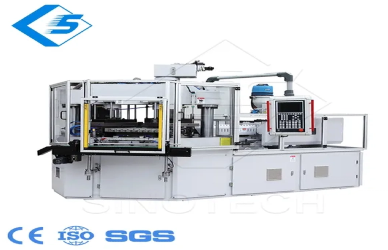
Blow molding is a widely used manufacturing process in the plastic industry, primarily employed to create hollow plastic products such as bottles, containers, and automotive parts. This process involves melting plastic and inflating it inside a mold using air pressure, allowing manufacturers to produce products with complex shapes and consistent wall thicknesses. Blow molding plays a crucial role in various industries, including packaging, automotive, and consumer goods, due to its cost-effectiveness, efficiency, and ability to produce large volumes of products quickly. There are several types of blow molding machines, each designed for specific applications. Extrusion blow molding is commonly used for large containers, injection blow molding is ideal for producing small, high-precision items, stretch blow molding is used for creating strong and transparent PET bottles, and injection stretch blow molding combines both processes to achieve high-strength, biaxially oriented plastic products. Understanding the different types of blow mold machines and their applications helps manufacturers select the right machine based on production needs, material requirements, and product specifications.
Types of Blow Mold Machines
Blow molding machines are essential for manufacturing a wide range of hollow plastic products. Each type of blow molding machine is suited to specific applications, depending on product size, material, and required precision. Below are the main types of blow mold machines and their characteristics:
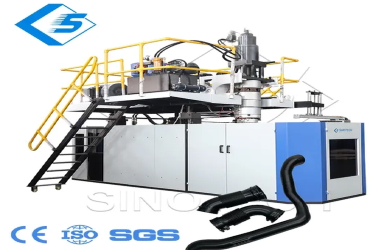
1. Extrusion Blow Molding Machine
Process Overview:
In extrusion blow molding, molten plastic is extruded through a die to form a hollow tube called a parison. This parison is then inflated inside a mold using air to create the desired product shape.
Applications:
This method is commonly used to produce large products such as bottles, containers, and automotive parts. It is ideal for high-volume production of simple and medium-sized hollow plastic items.
Key Advantages:
High Efficiency: Once set up, extrusion blow molding offers fast cycle times, making it ideal for large-scale production.
Low Cost for High-Volume Production: The process is cost-effective, especially for producing large quantities of similar products.
2. Injection Blow Molding Machine
Process Overview:
Injection blow molding begins with injection molding to create a preform (a small, solid plastic part). This preform is then placed in a blow mold where air is injected to expand it into the final shape.
Applications:
This method is widely used for producing small, high-precision items such as medical bottles, pharmaceutical packaging, and small containers where high levels of accuracy are required.
Key Advantages:
Precision: The injection molding step provides high control over the dimensions of the preform, resulting in a highly accurate and uniform final product.
Uniformity & High-Quality Products: The process ensures uniform thickness and high-quality products, making it ideal for applications that require tight tolerances.
3. Stretch Blow Molding Machine
Process Overview:
Stretch blow molding involves heating a preform and then stretching it mechanically or with air before blowing it into the final shape. This process enhances the strength and clarity of the product.
Applications:
Stretch blow molding is predominantly used for producing PET bottles for beverages, food packaging, and other consumer products that require transparency and strength.
Key Advantages:
Improved Strength and Clarity: Stretching the preform during molding increases the strength of the product while improving its optical clarity, making it ideal for transparent packaging.
Ideal for PET Bottles: This process is especially beneficial for manufacturing high-quality, transparent plastic bottles used in beverage and food packaging.
4. Injection Stretch Blow Molding Machine
Process Overview:
Injection stretch blow molding combines the injection molding process for creating preforms with the stretching and blowing processes. The preform is injected and then stretched both mechanically and by air, producing strong, biaxially oriented plastic products.
Applications:
This machine is used for manufacturing high-strength, durable bottles, typically for high-performance applications such as beverage bottles, sports drink bottles, and specialty containers.
Key Advantages:
Superior Strength: The biaxial orientation of the plastic gives the finished product superior strength and durability.
Clarity & Stress Resistance: The process enhances the clarity of the product and makes it more resistant to stress, making it ideal for products that require high durability and transparency.
Key Differences Between Blow Mold Machines
Blow molding machines are used for producing hollow plastic products, but each type has specific strengths depending on the production needs. Understanding the key differences can help manufacturers choose the right machine for their requirements. Here are the main factors that differentiate blow mold machines:
1. Production Speed
Extrusion Blow Molding: This method is typically faster and more efficient for high-volume production. It is ideal for producing large quantities of products quickly, making it a go-to choice for industries that need bulk production, such as packaging.
Injection Blow Molding: While injection blow molding is slower, it provides much higher precision and is best suited for smaller, high-precision items. The initial injection molding process requires more time, but the result is a more accurate and consistent product.
2. Material Types
Extrusion Blow Molding: This machine works well with a wide range of materials, including PE (Polyethylene), PP (Polypropylene), and PVC. It is particularly suited for thicker-walled products or larger items that don’t require the tight tolerances achieved by injection blow molding.
Injection Blow Molding: This method is more suitable for precise, high-quality materials like PET (Polyethylene Terephthalate), which is commonly used in beverage bottles. It works best with materials that need to be shaped with greater precision and uniformity, such as smaller, high-clarity items.
3. Product Range
Extrusion Blow Molding: Ideal for larger products such as containers, bottles, and automotive parts. The process is versatile, enabling the creation of large products with consistent wall thickness, though it’s generally more suited for less complex designs.
Injection Blow Molding: This method is used for producing small, high-precision items like medical bottles, pharmaceutical containers, and small consumer goods. It offers the accuracy needed for items requiring fine details and uniformity.
Stretch Blow Molding: Stretch blow molding is the go-to option for producing PET bottles used in the beverage industry, providing excellent clarity, strength, and a more uniform shape for transparent plastic products.
4. Cost and Efficiency
Extrusion Blow Molding: Generally more cost-effective for high-volume production due to its faster cycle times and simpler setup. The cost per unit decreases significantly as production quantities increase, making it ideal for large-scale, low-cost manufacturing.
Injection Blow Molding: While it provides better precision and product quality, it is typically more expensive and slower, due to the complexity of the injection molding step. As a result, it’s best suited for high-quality, low-to-medium volume production where precision is critical.
Applications & Industries of Blow Mold Machines
Below is an overview of the industries and products best suited for each type of blow molding machine. The table outlines the ideal applications based on the type of blow molding machine used, from packaging to automotive parts.
Blow Molding Machine Type | Industries | Applications & Products |
Extrusion Blow Molding Machine | Packaging, Consumer Goods | - Bottles, containers for beverages, household products, and chemicals
- Automotive parts (larger parts like air ducts)
- Industrial packaging |
| Automotive | - Larger hollow parts (fuel tanks, bumpers, etc.) |
Injection Blow Molding Machine | Pharmaceuticals, Cosmetics | - Small, high-precision items like medical bottles, pharmaceutical containers, and cosmetic packaging |
| Consumer Goods | - High-quality packaging for small consumer products like cosmetics and personal care items |
Stretch Blow Molding Machine | Beverage, Food Packaging | - PET bottles for soft drinks, water, juice, and other beverages
- Food packaging (e.g., trays and containers) |
| Packaging | - Transparent, strong containers with high clarity for beverage and food industries |
Injection Stretch Blow Molding Machine | Beverage, Packaging | - Durable, high-strength bottles for juices, water, and sports drinks
- High-quality, biaxially oriented plastic containers |
| Consumer Goods | - High-performance packaging (e.g., tough containers for chemicals and oils) |
Frequently Asked Questions (FAQ) about Blow Mold Machines
1.Which blow molding machine is best for large-scale production?
Extrusion blow molding machines are ideal for large-scale production due to their fast cycle times and cost-effectiveness, making them perfect for high-volume runs.
2.Can blow molding machines produce complex shapes?
Yes, blow molding machines can produce complex shapes with uniform wall thickness. However, the complexity of the design depends on the type of machine used, with some types being better suited for intricate details.
3.What is the difference between extrusion and injection blow molding?
Extrusion blow molding creates products by inflating an extruded tube of plastic. In contrast, injection blow molding first forms a preform through injection molding, then blows it into the final shape within the mold.
4.What materials can be used in blow molding?
Common materials used in blow molding include polyethylene (PE), polypropylene (PP), and polyethylene terephthalate (PET). Each material is best suited for specific applications and different blow molding machines.
Conclusion
In conclusion, blow molding is a versatile and efficient process for producing a variety of hollow plastic products, with each type of blow molding machine offering distinct advantages based on production needs, material requirements, and product specifications. Extrusion blow molding is ideal for high-volume production of simpler, larger products like containers and bottles, offering fast cycle times and cost-effectiveness. Injection blow molding, on the other hand, provides high precision, making it perfect for small, high-quality items such as medical or cosmetic bottles. Stretch blow molding is commonly used for creating durable and transparent PET bottles, especially for beverages and food packaging, while injection stretch blow molding combines injection molding with stretching, producing high-strength, biaxially oriented products with superior clarity and durability. Ultimately, the choice of machine depends on the specific requirements of the product, including material type, complexity, and scale of production, ensuring manufacturers can select the most suitable machine for their needs.


