You are here: Home / BLOGS / What Should Manufacturers Check Before Buying an Automatic PET Bottle Blow Molding Machine?
What Should Manufacturers Check Before Buying an Automatic PET Bottle Blow Molding Machine?
Views: 0 Author: Site Editor Publish Time: 2026-08-08 Origin: Site
Purchasing capital equipment for PET bottle production is a high-stakes decision. Miscalculating machine specifications often leads to severe operational bottlenecks. These errors can quickly erode your profit margins. Buyers frequently focus solely on the initial capital expenditure. They tend to underestimate hidden integration costs and high energy consumption rates. Unplanned downtime caused by incompatible preforms or substandard components also damages overall efficiency.
This guide provides an evidence-based evaluation framework to vet equipment. It ensures your chosen machinery aligns seamlessly with specific production targets. You will also learn how to meet local compliance standards effectively. We will explore ways to match realistic capacity requirements and secure long-term scalability. By following these steps, you safeguard your investment. Our analysis helps you navigate vendor claims confidently. You can make purchasing decisions grounded in factual performance data instead of marketing promises.
Key Takeaways
Capacity vs. Yield: Always evaluate machines based on guaranteed effective yield (Bottles Per Hour - BPH) rather than theoretical maximum speeds.
Energy Efficiency is Paramount: High-pressure air compressors and heating ovens account for the majority of ongoing operating costs; demand verifiable data on air recovery systems.
Component Standardization: Machines utilizing globally recognized PLC and pneumatic components drastically reduce maintenance delays and simplify troubleshooting.
Factory Acceptance Testing (FAT): Never bypass a rigorous FAT protocol using your specific preforms and molds before final sign-off.
Defining Realistic Capacity and Output Requirements
Aligning machine specifications with actual production line realities requires careful analysis. Vendors often advertise absolute maximum capabilities. You must translate these theoretical numbers into practical daily output metrics. This prevents you from under-sizing or over-sizing your facility's infrastructure.
Nominal Speed vs. Effective Yield
You must differentiate between the manufacturer's rated speed and the continuous operational output. Rated speed indicates how fast the machine cycles under perfect laboratory conditions. Effective yield calculates what the machine actually produces during a standard shift. This yield accounts for micro-stoppages, mold changes, and routine maintenance pauses.
You should always factor in standard scrap rates during this calculation. An acceptable industry standard for scrap is typically below 1%. If a vendor promises zero scrap, they are likely exaggerating. You must also calculate the necessary cavity count based on upstream and downstream line speeds. For example, matching a PET Bottle Making Machine to your filling line capacity prevents costly bottlenecks. If your filler processes 12,000 bottles per hour, your blowing equipment must sustainably output 12,500 bottles to maintain a safe buffer.
Best Practices for Calculating Yield
Request continuous 24-hour run data from the vendor, not 1-hour sprint data.
Include expected daily maintenance windows in your math.
Factor in the specific weight and shape of your heaviest bottle design.
Preform Quality and Weight Variations
No two batches of preforms are completely identical. You must evaluate how the machine handles minor inconsistencies in preform wall thickness. Superior machinery utilizes advanced heating algorithms. These systems adapt to slight resin variations without producing warped bottles.
You need to determine the maximum and minimum bottle volumes the system can reliably blow. Many factories require flexibility to produce formats ranging from 200ml up to 2L. Achieving this without requiring a completely separate unit saves tremendous floor space. Ensure the stretch rods and blowing valves can physically accommodate your largest intended mold without mechanical interference.
Evaluating Energy Consumption and Operational Efficiency
Hidden operational costs heavily influence your overall profit margins. Electricity and compressed air represent the largest ongoing expenses in bottle manufacturing. You must scrutinize the energy management systems embedded within the machinery.
High-Pressure Air Recovery Systems
Blowing PET bottles requires immense air pressure. You should rigorously examine the efficiency of the blowing air recycling system. Good machines recover exhaust air from the high-pressure blow phase. They reroute this recovered air to feed the low-pressure mechanical movements. This dual-use strategy dramatically lowers the burden on your primary compressors.
Always ask vendors for real-world energy consumption data. Request figures expressed in kW/h per 1,000 bottles. Avoid accepting theoretical minimums generated from perfectly optimized test runs. You need data that reflects typical factory conditions.
Common Mistakes in Air Management
Failing to measure the actual percentage of air successfully recovered.
Assuming all recovery valves offer the same lifespan and leak resistance.
Ignoring the energy spike required during machine start-up phases.
Infrared (IR) Heating Oven Efficiency
The heating oven prepares the preform for stretching. You must check for closed-loop temperature control systems. These advanced systems automatically adjust the heating lamps based on ambient factory temperatures. If your factory gets hotter in the summer, the oven should draw less power automatically.
You also need to look for optimized lamp positioning. Precise lamp adjustments prevent neck distortion and reduce overall wattage usage. Ceramic reflectors help concentrate the infrared energy exactly where it belongs. This prevents wasted heat from escaping into the surrounding factory environment. Proper ventilation within the oven tunnel also stabilizes the preform surface temperature.
Mechanical Architecture and Component Reliability
Assessing build quality helps you minimize unexpected downtime. Robust architecture facilitates rapid troubleshooting when issues inevitably occur. You should prioritize mechanical simplicity and component transparency.
Servo-Driven vs. Pneumatic Systems
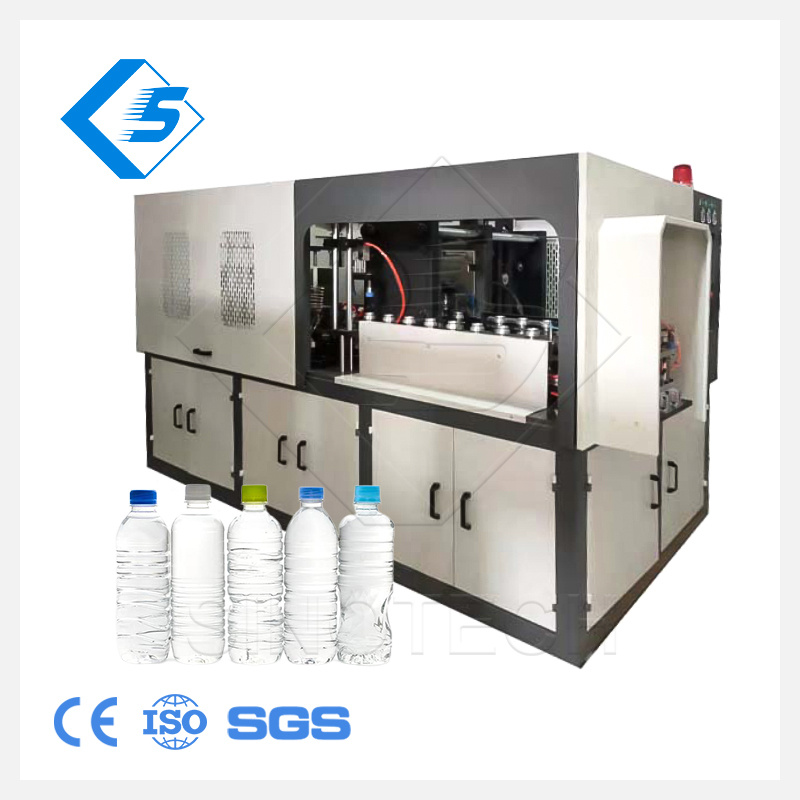
A Full Automatic PET Blow Molding Machine using all-servo motor drives offers distinct advantages. These drives control mold clamping, preform stretching, and bottle transfer operations. Servo systems provide higher precision, lower noise, and significantly less physical wear compared to traditional pneumatic systems. They offer closed-loop feedback, meaning the machine knows the exact position of every moving part at all times.
You must carefully evaluate the clamping force mechanism. Manufacturers typically offer toggle links or direct hydraulic/servo clamping. Toggle links multiply mechanical force efficiently but require precise lubrication. Direct servo clamping offers cleaner operation and faster cycle times. The right choice depends on your specific hygienic requirements and maintenance capabilities.
Table: Mechanical System Comparison
Feature
Pneumatic Systems
All-Servo Systems
Operational Noise
High (exhaust valves)
Low (smooth rotation)
Motion Precision
Moderate (fluctuates with air pressure)
Extremely High (closed-loop)
Maintenance Needs
Frequent seal replacements
Minimal (periodic lubrication)
Energy Draw
High (relies on continuous air)
Low (only draws power when moving)
Standardization of Critical Components
You must verify the origin of all critical parts. PLCs, sensors, valves, and servos act as the nervous system of your equipment. Ensure the manufacturer sources these from globally trusted brands. Companies like Siemens, Festo, Schneider, and Mitsubishi offer excellent global support networks.
Proprietary or obscure electronic components introduce severe implementation risks. If a localized circuit board fails, you might wait weeks for a replacement from overseas. Standardized components allow your maintenance team to source spare parts from local industrial suppliers. This simple verification step prevents catastrophic production delays.
Mold Compatibility and Changeover Agility
Modern beverage markets demand rapid product diversification. You need equipment that supports frequent SKU switching. Efficient changeover mechanisms protect your uptime during format transitions.
Quick-Change Mold Mechanisms
You should evaluate the exact time required for a full mold changeover. Modern systems allow a skilled operator to swap molds in under 30 to 45 minutes. Outdated designs might require several hours and multiple technicians. This downtime destroys your daily production targets.
Check if the vendor utilizes a drawer-type mold installation system. This mechanism allows operators to slide molds in and out laterally. It eliminates the need for heavy overhead cranes. Drawer systems improve factory safety and significantly accelerate the setup process. Always verify how the cooling water lines connect to the molds. Quick-disconnect fittings are mandatory for fast transitions.
Neck Size and Pitch Flexibility
Your machine must tolerate different neck finishes without requiring major mechanical overhauls. Confirm the machine handles transitions between a standard PCO 1881 neck and a 38mm wide mouth format.
Transitioning between neck sizes should not require a completely redesigned heating mandrel. It should also not require replacing the entire transfer star-wheel assembly. Modular gripping arms provide the best solution here. They allow you to swap only the contact points rather than the entire robotic arm. This flexibility future-proofs your investment against changing packaging trends.
Steps for Evaluating Changeover Agility
Ask the vendor for a video demonstrating a live mold swap.
Review the tool list required for a complete changeover procedure.
Verify the calibration process required after installing a new mold.
Check the software interface for pre-saved mold parameter recipes.
Vendor Support, FAT, and Implementation Realities
Structuring the procurement process correctly transfers risk back to the manufacturer. You must define clear accountability before making any final payments. Thorough testing and strong support contracts safeguard your operational success.
Structuring the Factory Acceptance Test (FAT)
You must demand a mandatory Factory Acceptance Test. This test should use your specific preforms and actual mold designs. The machine must operate at the maximum contracted speed for a continuous 8-hour shift before shipping. Running a machine for 30 minutes proves nothing about its thermal stability.
You need to establish clear penalty clauses in your purchasing contract. The vendor must meet agreed-upon BPH and scrap rate metrics during the FAT. If the machine fails, the vendor bears the cost of mechanical modifications. Never authorize shipment until the equipment passes this rigorous protocol perfectly.
Post-Sale Support and Training
You must assess the availability of technical support. Having English-speaking or local-language support engineers is critical for rapid troubleshooting. When a Automatic PET Bottle Blow Molding Machine stops at 2:00 AM, you need immediate phone assistance without language barriers.
Ensure the contract includes comprehensive on-site operator training. The vendor's engineers should train your staff on routine maintenance procedures. They must also cover common fault-code resolutions. Proper training empowers your internal team to handle minor errors independently. This reduces your reliance on expensive external service calls.
Conclusion
Selecting the right equipment extends far beyond comparing initial purchase prices. It requires rigorous auditing of component quality and energy efficiency mechanisms. You must also enforce strict vendor accountability through comprehensive testing protocols. Shortlist two to three qualified vendors based on these strict criteria. Request detailed technical specification sheets rather than glossy marketing brochures. Outline your specific preform and bottle parameters clearly from day one. Demand a transparent breakdown of expected energy consumption metrics. By following this structured approach, you secure a reliable production asset that drives long-term profitability.
FAQ
Q: What is the standard lifespan of an automatic PET blow molding machine?
A: With proper preventative maintenance and high-quality core components, industrial-grade machines typically operate efficiently for 10 to 15 years.
Q: How do I troubleshoot "white bottoms" (pearlescence) on blown PET bottles?
A: Pearlescence is usually caused by stretching the preform when it is too cold. This requires adjusting the heating profile in the IR oven or slowing the stretch rod speed.
Q: Do I need a low-pressure and high-pressure air compressor?
A: Yes. Fully automatic systems require low-pressure air (typically 8-10 bar) for mechanical movements and high-pressure air (up to 30-40 bar) for the actual bottle blowing process.
Q: Can one machine produce both water bottles and hot-fill juice bottles?
A: It depends on the machine's thermal tolerance. Hot-fill bottles require heat-resistant PET and specialized heat-set blow molding machines with oil-heated molds to prevent deformation during filling. Standard machines cannot do this.
We are a professional manufacturer of plastic machines and we have devoted ourselves to the development, research, and production of plastic machinery for more than 20 years.