You are here: Home / BLOGS / What Equipment Is Needed for a Complete PET Bottle Washing Recycling Line?
What Equipment Is Needed for a Complete PET Bottle Washing Recycling Line?
Views: 0 Author: Site Editor Publish Time: 2026-08-25 Origin: Site
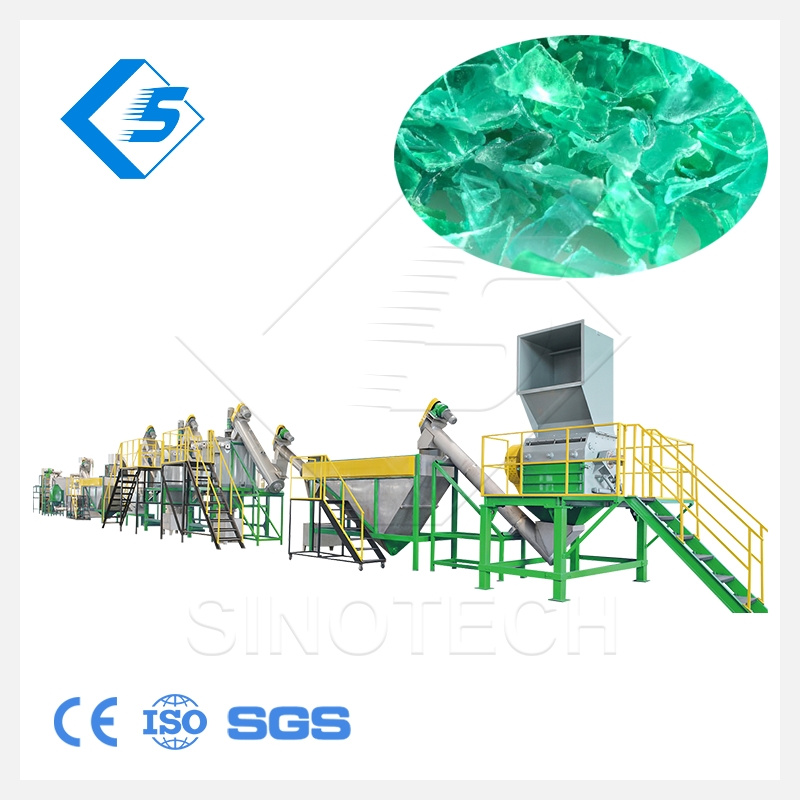
Transitioning post-consumer plastic bales into high-purity, market-ready rPET flakes requires more than standard shredding. It demands a highly calibrated, continuous process. Facility operators recognize this transformation as a major industrial challenge. Poor equipment selection inevitably leads to high contamination rates from residual glue, stubborn PVC, and unremoved labels. Substandard machinery also triggers excessive water consumption and frequent granulator downtime. These failures severely impact your overall operational efficiency.
We understand these daily production frustrations firsthand. This guide offers an evidence-based breakdown of the essential machinery required for a commercial-grade setup. Plant managers and investors can use this framework to confidently evaluate turnkey systems and modular upgrades. You will learn exactly how to configure each processing stage. We will show you how to maximize material purity, extend machinery lifespan, and sustain high throughput rates reliably over time.
Key Takeaways
A standard line consists of four critical stages: Pre-treatment (sorting/de-baling), Size Reduction (crushing), Deep Cleaning (hot/friction washing), and Drying/Separation.
The profitability of a **PET Flakes Washing Line** hinges on its ability to handle varying bale qualities while maintaining continuous throughput (e.g., 500kg/h to 3000+kg/h).
Long-term operational expenses (OpEx)—specifically water treatment, energy consumption, and wear-part replacement—often outweigh initial CapEx.
Procurement evaluation must prioritize material durability (e.g., 304 stainless steel in water zones) and localized spare part availability.
Mapping the technical flow is the first step in building a resilient facility. You cannot afford bottlenecks between machines. A complete PET Bottle Washing Recycling Line relies on sequential purification. Each stage must perfectly prepare the material for the next. Let us examine the four core stages in detail.
Stage 1: Preparation & Pre-Treatment
You cannot feed highly compacted plastic bales directly into a crusher. They contain hidden metals, abrasive sand, and tightly bound materials. Proper pre-treatment protects your downstream equipment.
De-Baler: This machine breaks apart compacted PET bales. It uses slow-rotating mechanical arms to loosen the plastic. It achieves this without damaging or puncturing the individual bottles.
Trommel Screen: The loose bottles enter a large rotating cylinder. The screen allows heavy contaminants to fall through. You will effectively remove sand, glass shards, stones, and loose metals. Keeping sand out of your granulator extends blade life exponentially.
Label Scrapper / Remover: This unit mechanically strips shrink-wrap and glued labels from the bottles. It uses abrasive friction and custom-angled knives. Removing PVC labels early is crucial. It prevents severe contamination during the final extrusion process.
Stage 2: Size Reduction
Once the bottles are loose and mostly label-free, they require size reduction. Uniform flake size dictates how well the material behaves in the washing tanks.
Wet Granulator / Crusher: This machine cuts whole bottles into uniform flakes. The target size usually ranges between 12mm and 18mm. The granulator utilizes a constant stream of water in the cutting chamber. The water acts as a critical coolant. It reduces blade friction and prevents the plastic from melting. Furthermore, the water provides a vigorous pre-wash to remove sugary residues immediately.
Stage 3: Separation & Deep Washing
This stage defines the final grade of your output. We must separate different polymer types and dissolve stubborn organic residues. Investing in a high-grade PET Flakes Washing Line setup here pays off massively.
Sink-Float Separation Tank: This long tank uses specific gravity to separate materials. Water has a specific gravity of 1.0 g/cm³. PET has a density of roughly 1.3 g/cm³, so it sinks. PP and PE caps have a density of around 0.9 g/cm³, so they float. Rotating drums skim the floating caps away while augers pull the sunken PET forward.
Hot Washer: Sinking is not enough. You must dissolve persistent glues, heavy oils, and stubborn organics. The hot washer uses boiling water (typically 85°C to 90°C). It mixes in caustic soda (NaOH) and specialized detergents. The flakes remain inside for 10 to 15 minutes. This harsh chemical bath breaks down the toughest contaminants.
High-Speed Friction Washer: The flakes exit the hot washer coated in caustic residue and loosened debris. The friction washer utilizes extreme speeds. The rotor typically spins above 1000 RPM. It mechanically scrubs the flakes against a fine mesh screen. This rapid action forcefully ejects dirty water and chemical residues.
Stage 4: Drying & Final Purification
You cannot extrude wet flakes. Moisture causes hydrolytic degradation during melting. You must bring the final moisture level down drastically.
Centrifugal Dewatering Machine: This unit extracts bulk surface water rapidly. It spins the flakes at high speeds, slinging moisture outward through a mesh screen.
Thermal Pipeline Dryer: The flakes then travel through a long pipeline. Hot air pushes them forward. This process brings moisture levels down to less than 1%. Fiber-grade and food-grade applications strictly require this ultra-low moisture limit.
Zig-Zag Classifier: The dry flakes fall through a zig-zag shaped chamber. A forced upward air current blows against them. Heavy PET flakes fall to the bottom. Fine dust and lightweight residual label flakes blow out the top. This elutriation process guarantees a dust-free final product before bagging.
Recycling Stages Overview
Processing Stage
Primary Equipment Focus
Operational Goal
Preparation
Trommel, Label Remover
Remove glass, sand, and PVC wrappers early.
Size Reduction
Wet Granulator
Cut material into uniform 12-18mm flakes safely.
Deep Washing
Hot Washer, Sink-Float
Dissolve glues and separate polyolefins (caps).
Drying
Pipeline Dryer, Classifier
Reduce moisture below 1% and remove fine dust.
2. Evaluation Criteria: Features vs. Output Quality
Not all machines perform equally. You must assess equipment specifications based on your desired end-product. A basic setup might produce fiber-grade flakes. However, reaching food-grade quality requires distinct mechanical tolerances.
Purity Tolerances (PPM Limits)
You must evaluate the system's guaranteed output quality. Ask manufacturers for specific parts-per-million (ppm) limits. Food-grade applications require exceptionally low PVC content, typically below 20 ppm. They also demand near-zero glue residues. If your label remover and hot washer underperform, your ppm levels will spike. This instantly downgrades your product.
Material Construction
Water-contact machinery faces severe abuse. Hot washers and sink-float tanks handle caustic chemicals daily. You must ascertain whether these units use industrial-grade 304 or 316 stainless steel. Standard carbon steel will rust rapidly in a hot chemical environment. Using high-grade stainless steel prevents rapid corrosion and ensures long-term structural integrity.
Throughput Scalability
You must differentiate between theoretical maximum capacity and sustainable operational capacity. Some vendors advertise peak batch limits. You need continuous-feed capabilities. A robust system handles 1000 kg/h continuously without overheating. Look for oversized motors and robust gearboxes that support uninterrupted 24/7 operation.
Automation & Sensor Integration
Modern plants minimize manual labor through smart controls. Assess the inclusion of automated chemical dosing. Manual chemical pouring leads to inconsistent washing. Look for optical sorters that detect and eject off-color plastics automatically. Finally, ensure the system features a centralized PLC control panel. Siemens or Allen-Bradley systems allow operators to monitor motor loads and water temperatures in real time.
3. Implementation Realities & Operational Risks
Equipment looks perfect on paper. However, factory floors present harsh realities. We must transparently address common bottlenecks and frequent failure points. Preparing for these risks separates successful facilities from struggling ones.
Blade Wear and Maintenance
Granulator blades dull surprisingly fast. Processing high volumes of rigid PET creates intense mechanical friction. Dull blades create excess plastic dust and reduce throughput.
Factor in the frequency of blade sharpening. Most high-volume facilities swap blades every 40 to 60 hours of run time.
Assess the ease of machine access. Can your maintenance team open the cutting chamber quickly?
Keep at least two extra sets of sharpened blades on site. This prevents prolonged downtime.
Water Management and Effluent
A high-capacity line requires hundreds of gallons of water per hour. You cannot simply discharge this dirty water. Failing to pair your washing line with a robust closed-loop wastewater treatment system is dangerous. It leads to severe environmental compliance violations. It also results in excessive municipal water costs. You must filter, balance the pH, and recirculate the water back into the friction washers.
Contamination Spikes
Incoming bales vary wildly. You will encounter PVC look-a-likes. Some bottles contain specialized barrier coatings, like oxygen scavengers. These alternate plastics disrupt sink-float dynamics because their densities mimic PET. Upgrading to a highly accurate Waste PET Bottle Recycling Machine requires complementary quality control. You must implement manual QC belts. Install bright lighting over the conveyor before the granulator. Alternatively, invest in Near-Infrared (NIR) optical sorting to catch invisible contaminants automatically.
Common Troubleshooting Steps for Contamination:
Check the Label Remover: If flakes show high PVC content, inspect the label scrapper knives for wear.
Monitor Sink-Float Density: Ensure the water remains free of heavy mud, which can alter specific gravity and cause PE caps to sink.
Audit Chemical Levels: If flakes feel sticky, increase the caustic soda concentration in your hot washer slightly.
4. Shortlisting Vendors: Procurement Next Steps
Selecting a manufacturing partner requires strict diligence. You are buying a long-term production ecosystem. Vetting suppliers aggressively prevents catastrophic integration failures later.
Factory Acceptance Testing (FAT)
Never buy equipment based solely on a catalog. You must insist on a Factory Acceptance Test (FAT). Bring a sample bale of your specific local feedstock to the vendor's test facility. Run it through their test line. Verify their throughput claims in person. Test the final flakes in a lab to ensure they meet the promised purity tolerances.
Turnkey vs. Modular Design
You must determine your integration strategy. A turnkey vendor provides a complete layout designed specifically for your facility's footprint. They take responsibility for the entire flow. Alternatively, you might integrate distinct machines from multiple suppliers. This modular approach can save initial capital. However, it drastically increases your integration risk. If the granulator outpaces the hot washer, you will create a massive bottleneck. Turnkey solutions usually offer safer synchronization.
Service Level Agreements (SLAs) & Parts
Machines break. Your vendor's response time dictates your survival. Vet suppliers based on the immediate availability of high-wear parts. You need access to screens, blades, and heavy-duty bearings at a moment's notice. Review their Service Level Agreements (SLAs). Ensure they provide comprehensive commissioning support. A reliable partner will send engineers to your site to calibrate the PLC system during the first week of operation.
Conclusion
Investing in a complete PET recycling line is an investment in output predictability. You control your market position by controlling your flake purity. Do not compromise on the separation and hot-washing stages. These specific zones dictate whether you sell standard fiber-grade material or premium food-grade flakes.
Start your procurement journey locally. Audit your typical feedstock carefully. Document your bale composition and measure your exact facility footprint. Then, request customized layout diagrams and technical proposals from shortlisted manufacturers. By demanding high material standards and robust pre-treatment, you will build a highly efficient, sustainable operation.
FAQ
Q: How much space is required for a standard 1000kg/h PET washing line?
A: A standard 1000kg/h line requires substantial floor space. You typically need an area of at least 30 meters in length and 8 meters in width. Vendors usually configure the layout in an L-shape or a U-shape to maximize space efficiency and accommodate maintenance walkways.
Q: What is the difference between a cold wash and a hot wash system?
A: A cold wash relies on ambient water friction to remove basic dirt, sand, and loose debris. A hot wash uses boiling water (85°C+) and caustic chemicals to actively break down stubborn industrial glues, sticky oils, and tough organic residues.
Q: Can a PET washing line process other plastics like HDPE?
A: While the granulators can crush multiple plastics, the sink-float calibration is specific to PET. PET sinks, while PE/PP floats. Processing HDPE requires completely different specific gravity settings and tailored friction wash intensities to address different contamination profiles.
We are a professional manufacturer of plastic machines and we have devoted ourselves to the development, research, and production of plastic machinery for more than 20 years.