You are here: Home / BLOGS / How To Choose A Blow Molding Machine for Plastic Bottles, Jerry Cans And Drums
How To Choose A Blow Molding Machine for Plastic Bottles, Jerry Cans And Drums
Views: 0 Author: Site Editor Publish Time: 2026-06-02 Origin: Site
Introduction
A bottle line, a jerry can line, and a drum line may all rely on blow molding, but the machine requirements are rarely the same. Buyers often compare output speed or price first, then discover later that the mold size, resin behavior, wall thickness control, or clamping force does not match the product. Choosing Blow Molding Machines correctly means starting with the container itself: its material, volume, shape, strength requirements, and production target. This helps avoid weak handles, unstable bottle necks, thin drum bottoms, and costly machine mismatches.
Start With the Container You Need to Produce
The product should define the machine, and Blow Molding Machines should be evaluated only after the container requirements are clear. A small PET bottle, a 5L detergent bottle, a 20L jerry can, and a 200L chemical drum may all be hollow plastic products, but they do not need the same machine structure. Their molds, cooling systems, clamping requirements, resin behavior, and downstream handling can be completely different. Before comparing Blow Molding Machines, define the container volume, shape, material, target weight, wall thickness range, cap or closure requirement, and expected output per hour.
Plastic Bottles Require Speed, Neck Accuracy and Stable Appearance
For plastic bottles, Blow Molding Machines usually require a balance of speed, precision, and appearance. Beverage bottles, water bottles, cosmetic containers, household chemical bottles, and pharmaceutical packaging each create different quality priorities. PET bottles often require Injection Stretch Blow Molding because the process supports clarity, lightweighting, and top-load strength. HDPE bottles, such as detergent or lubricant bottles, are more often made with Extrusion Blow Molding because the process handles flexible shapes and thicker wall profiles more easily.
When selecting Blow Molding Machines for bottle production, pay attention to bottle volume, neck finish accuracy, transparency, surface finish, cavity number, cycle time, and lightweighting target. A high-speed machine is useful only when the mold, resin, preform system, cooling, and downstream handling can support the same pace. If the bottle needs a tight cap fit, neck accuracy may be more important than headline output. If the bottle is transparent, heating control, resin quality, and mold finish become central to the decision.
Jerry Cans Need Strong Handles and Better Wall Thickness Control
For jerry cans,Blow Molding Machines must handle more than simple bottle geometry because these containers create stress points. The handle, shoulder, bottom corner, and side panels must all receive enough material during formation. A jerry can can look acceptable and still fail a drop test if the handle or bottom corner is too thin. This is why parison programming is a major selection factor when comparing Blow Molding Machines for HDPE jerry cans.
HDPE is commonly used because it offers chemical resistance, impact strength, and durability for detergents, lubricants, industrial liquids, fuel-related products, and agrochemical packaging. The resin alone, however, does not guarantee container strength. The machine must provide stable melt temperature, consistent plasticizing, controlled wall thickness, reliable mold closing, and repeatable cooling. For 10L, 20L, or 30L jerry cans, buyers should ask for wall thickness measurements from the handle, bottom corner, shoulder, and side panel instead of judging only the total product weight.
Drums Need Accumulator Head Capacity and Strong Mold Clamping
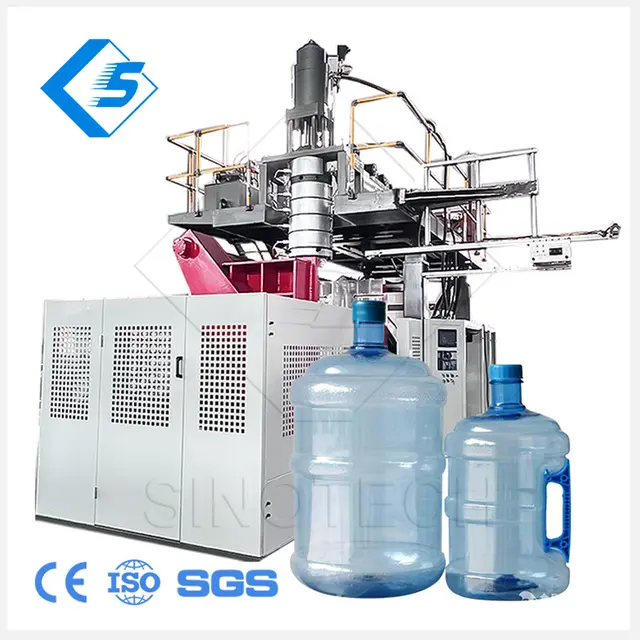
For drums, Blow Molding Machines require heavier structures than standard bottle or jerry can equipment. A large parison contains far more molten plastic than a bottle or jerry can, so it can stretch under its own weight before mold closing. This parison sag may cause uneven wall thickness, weak bottom sections, unstable product weight, or poor pinch-off quality. For this reason, drums often require an Accumulator Head Blow Molding Machine instead of a standard continuous extrusion system.
When evaluating Blow Molding Machines for 50L to 250L chemical drums, 200L industrial drums, or large container parts, focus on shot size, accumulator capacity, clamping force, mold size compatibility, cooling time, and pinch-off quality. Drum production is not just about forming a large hollow part. The container may need to survive stacking, transport vibration, liquid pressure, chemical exposure, and rough handling. A machine with insufficient accumulator capacity or weak mold clamping may produce a sample, but it may not maintain stable quality in continuous production.
Product Type
Common Material
Recommended Process
Key Machine Requirement
Main Risk
Plastic bottles
PET / HDPE / PP
ISBM / EBM / IBM
Speed, neck accuracy, cavity count
Poor clarity, unstable neck finish
Jerry cans
HDPE
EBM
Parison control, handle strength
Thin corners, leakage, weak handles
Drums
HDPE / HMW-HDPE
Accumulator Head EBM
Shot size, clamping force, cooling
Parison sag, weak bottom, long cycle
Choose the Right Blow Molding Process Before Comparing Brands
The process type should be confirmed before supplier comparison, because Blow Molding Machines are not interchangeable across all container types. Different Blow Molding Machines are built around different forming principles, and each process affects mold cost, resin compatibility, surface finish, cycle time, flash generation, and product strength. A supplier may offer several models with similar capacities, but the wrong process can create limitations that no small adjustment can solve. Decide first whether the product is best suited to Extrusion Blow Molding, Injection Blow Molding, Injection Stretch Blow Molding, or Accumulator Head EBM.
Extrusion Blow Molding Is the Practical Choice for HDPE Containers
Blow Molding Machines using Extrusion Blow Molding are often the practical choice for HDPE bottles, detergent containers, lubricant bottles, jerry cans, and many drums. The process extrudes molten plastic into a parison, closes the mold around it, and uses air pressure to form the final hollow product. It works well for containers with handles, irregular shapes, thick walls, and wider design flexibility.
EBM usually has lower mold cost than injection-based processes and can support many industrial packaging designs. The tradeoff is that EBM normally creates flash, so deflashing, trimming, and scrap handling must be included in the production plan. Strong performance depends on parison control, screw design, die head stability, mold cooling, and clamp movement. Buyers comparing Blow Molding Machines for HDPE containers should not ignore these process details.
Injection Blow Molding Fits Small Bottles With Precise Neck Finish
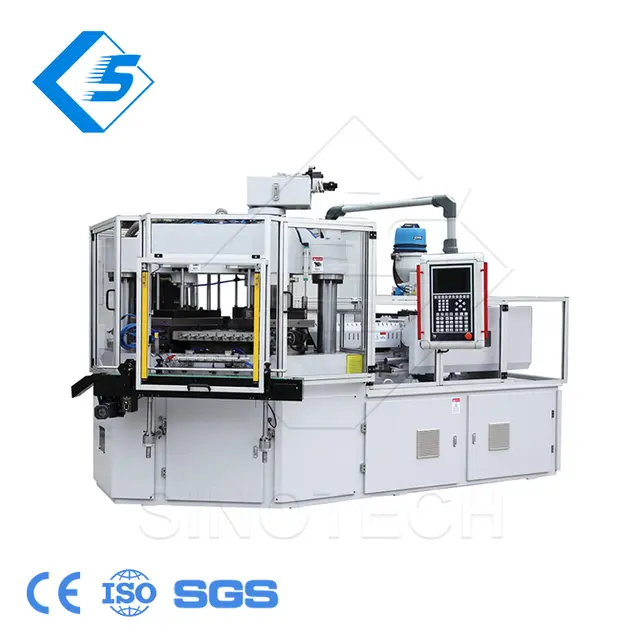
Blow Molding Machines based on Injection Blow Molding are better for small bottles where dimensional accuracy matters more than product size. The process first forms a preform by injection, then transfers it to a blow mold. Because the neck is injection molded, IBM can produce accurate neck finishes with minimal flash.
This process is often considered for pharmaceutical bottles, small cosmetic containers, medical packaging, and small bottles with strict closure requirements. It is usually not suitable for large jerry cans or drums because the size, wall thickness, and mold economics do not match the process well. IBM should be chosen when clean finish, repeatable neck dimensions, and small-container precision are more important than large product flexibility.
Injection Stretch Blow Molding Is Better for PET Bottle Clarity and Strength
Blow Molding Machines using Injection Stretch Blow Molding are widely used for PET bottles because they support clarity, strength, and lightweighting. The process starts with a PET preform, heats it, stretches it axially with a stretch rod, and blows it radially into the mold. This stretching improves material orientation, which helps produce bottles with better transparency and top-load performance.
For beverage bottles, water bottles, transparent cosmetic packaging, and lightweight PET containers, ISBM often makes more sense than standard EBM. The buyer should evaluate preform quality, oven heating control, stretch ratio, mold cooling, cavity count, and downstream handling. A high-output PET line is a system decision, not only a machine decision.
Accumulator Head EBM Is Necessary for Large or Heavy Products
Blow Molding Machines with Accumulator Head EBM become important when the parison is too heavy for stable continuous extrusion. Instead of allowing molten plastic to hang for too long, the accumulator stores a measured shot and pushes it out quickly. This helps reduce sagging and improves material distribution in large containers.
For industrial drums, large chemical containers, and thick-wall parts, accumulator capacity and shot control directly affect quality. Buyers should also review melt strength, clamp stability, cooling efficiency, and mold handling. Large products usually have longer cycles and higher resin cost per part, so one unstable cycle can waste far more material than a small bottle defect.
Check the Specifications That Affect Production Quality
Looking at a specification sheet can be overwhelming, but the real question is what matters for your bottles, jerry cans, or drums. Not all numbers impact the quality or consistency of the product. Focus on what determines wall thickness, sealing, mold alignment, and whether parts meet your strength and appearance standards.
For small bottles, neck accuracy, cavity count, and cooling efficiency are the details that affect cap fit and surface quality. For jerry cans, parison control, clamping force, and wall thickness at handles and corners are critical. A can may meet total weight targets but still fail if weak spots exist in stress points. Large drums need attention on accumulator capacity, shot size, cooling time, and mold stability because heavy parisons can sag and create uneven walls.
The resin you use changes how specifications matter. HDPE requires steady extrusion and melt strength; PET needs controlled heating and drying; recycled materials can behave inconsistently. Make sure the screw, temperature profile, and plasticizing system match your chosen material.
Before requesting a quote, confirm these points:
●Product size, volume, and weight targets
●Resin type and whether recycled material will be used
●Expected output and cycle time
●Mold size, weight, and cooling system
●Clamping force for the container type
●Shot or accumulator capacity for larger parts
●Parison controller settings
●Screw design suited to HDPE, PET, PP, or recycled resin
●Mold alignment, changeover, and future mold compatibility
●Needed auxiliary equipment like chillers, dryers, and leak testers
Checking these items first makes the specification sheet a useful tool rather than a confusing list of numbers. A machine is only as good as its fit to your container, material, and production plan.
Conclusion
Choosing Blow Molding Machines for plastic bottles, jerry cans, and drums starts with the product’s real production demands, not only machine price or output speed. Container volume, resin type, mold size, wall thickness control, clamping force, and future product flexibility all affect whether the equipment can run consistently over time.
SINOTECH Machinery Co., Ltd. supports manufacturers with blow molding equipment designed around practical container requirements, from smaller bottles to stronger jerry cans and industrial drums. A well-matched machine helps reduce waste, improve production stability, and turn machine investment into measurable operating value.
FAQ
Q: What are Blow Molding Machines used for?
A: Blow Molding Machines are used to produce hollow plastic products such as bottles, jerry cans, drums, containers, tanks, and packaging parts from materials like PET, HDPE, and PP.
Q: Which blow molding process is best for plastic bottles?
A: PET bottles usually need injection stretch blow molding for clarity and strength, while HDPE bottles often use extrusion blow molding for flexible shapes and chemical-resistant packaging.
Q: What machine is suitable for HDPE jerry cans?
A: HDPE jerry cans usually require extrusion blow molding with reliable parison programming, strong clamping, and stable wall thickness control around handles, corners, and bottom areas.
Q: Why do large drums need an accumulator head blow molding machine?
A: Large drums use heavy parisons that can sag during continuous extrusion. An accumulator head delivers the shot quickly, improving wall thickness distribution and bottom strength.
Q: What should I check before buying a blow molding machine?
We are a professional manufacturer of plastic machines and we have devoted ourselves to the development, research, and production of plastic machinery for more than 20 years.