
Views: 0 Author: Site Editor Publish Time: 2026-06-01 Origin: Site
Choosing between Extrusion Blow Molding and Injection Blow Molding often becomes difficult when a container looks simple on the outside but carries hidden production risks. A large detergent bottle, a handled jerry can, a cosmetic container, and a small medical bottle may all be hollow plastic products, yet they require very different control over size, wall thickness, neck finish, sealing, material behavior, and cost. Understanding where EBM or IBM performs better helps buyers avoid expensive tooling mistakes, unstable production, and containers that fail in real use.
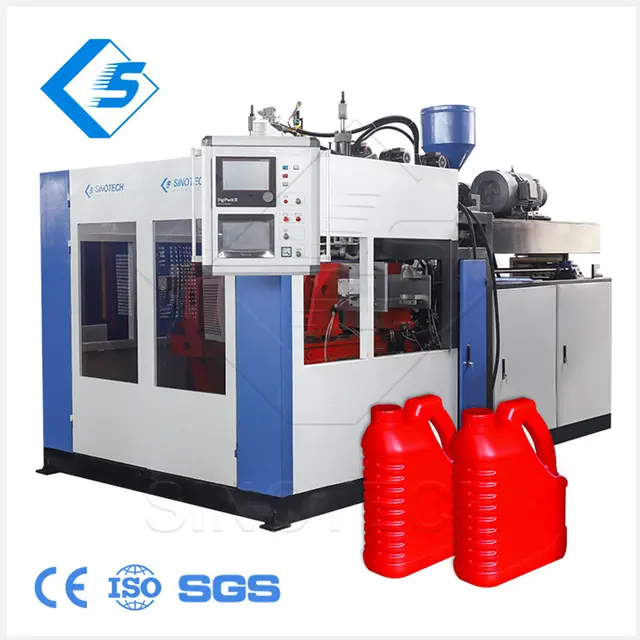
Extrusion Blow Molding is usually the stronger choice when the container is large, irregular, thick-walled, or designed with an integrated handle. The process starts by extruding molten plastic into a hollow parison. A mold closes around that parison, compressed air expands it into the cavity, and the cooled part is trimmed to remove flash.
This makes EBM highly useful for detergent bottles, jerry cans, lubricant containers, chemical drums, automotive fluid bottles, and industrial packaging. These products often need impact strength, capacity, and shape flexibility more than ultra-tight neck tolerance. A handled detergent bottle, for example, is not only a bottle with a cap. It also needs a hollow grip area, stable side walls, and enough strength to survive filling, transport, and consumer use.
Extrusion Blow Molding also gives manufacturers more freedom when product shapes change. If a brand wants a wider shoulder, deeper grip, thicker base, or different body profile, EBM tooling is often more flexible and less expensive to modify than IBM tooling. This matters for custom packaging, lower-volume products, and projects still moving through market testing.
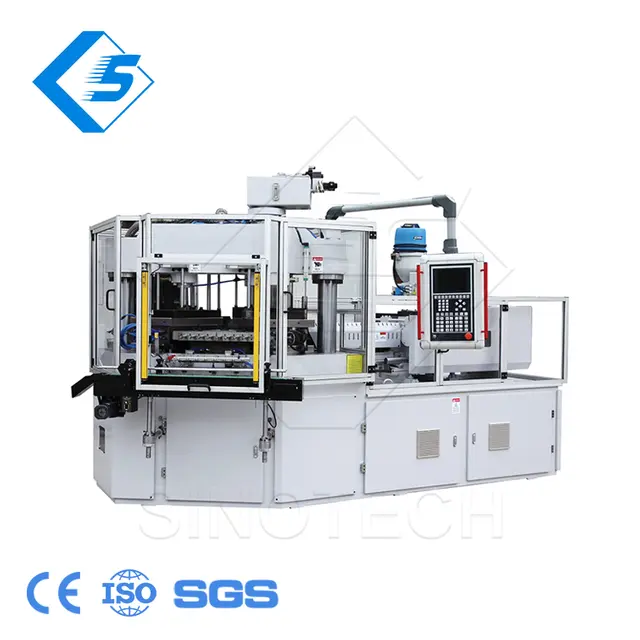
Injection Blow Molding is usually the better option when the bottle depends on precise neck finish, stable cap fit, and strong dimensional repeatability. IBM begins with an injection-molded preform around a core rod. Because the neck, thread, and sealing surface are formed in the injection stage, the process can achieve much tighter control than a blown neck in many EBM applications.
This is why Injection Blow Molding is commonly used for pharmaceutical bottles, eye drop bottles, nasal spray bottles, cosmetic containers, laboratory bottles, and high-end personal care packaging. In these products, small dimensional changes can lead to leakage, poor torque retention, unstable dosing, or packaging rejection. The bottle may be small, but the tolerance risk is high.
IBM also avoids flash trimming, which supports cleaner production and a more polished finish. For medical, cosmetic, and laboratory packaging, this can reduce secondary handling and improve consistency. The benefit is not only appearance. A cleaner and more repeatable process can also make quality validation easier.
Product geometry should be reviewed before comparing machine prices. Important details include container volume, shoulder shape, mouth opening, handle design, blow-up ratio, wall thickness target, and closure type. A large container with a hollow handle points toward Extrusion Blow Molding. A small bottle with a precision threaded neck often points toward Injection Blow Molding.
The simplest rule is this: if the body shape drives performance, EBM usually deserves first review. If the neck finish drives performance, IBM usually deserves first review. This rule does not replace sample testing, but it helps buyers avoid choosing a process based only on supplier preference or machine availability.
Product Requirement |
Better Process |
Reason |
Typical Examples |
Large capacity |
Extrusion Blow Molding |
Better for large hollow shapes |
Jerry cans, drums, lubricant bottles |
Integrated handle |
Extrusion Blow Molding |
Easier to form hollow handle structures |
Detergent bottles, chemical containers |
Tight neck tolerance |
Injection Blow Molding |
Injection-molded neck improves closure fit |
Eye drop bottles, pharmaceutical bottles |
Clean, flash-free finish |
Injection Blow Molding |
No deflashing step required |
Cosmetic and medical packaging |
Frequent design changes |
Extrusion Blow Molding |
Lower tooling risk and more flexibility |
Custom packaging projects |
Small precision bottle |
Injection Blow Molding |
Better repeatability and surface quality |
Nasal sprays, lab bottles |
Extrusion Blow Molding normally has a lower initial tooling barrier than IBM. The mold is usually simpler, and the process can be more forgiving when producing larger or less precision-critical containers. For startups, private-label packaging projects, industrial containers, or products that may change shape after the first production run, this lower mold investment can reduce financial risk.
The trade-off is post-processing. EBM often creates flash around the parting line, neck, base, or handle area. That flash must be trimmed, collected, ground, and sometimes fed back into production as regrind. Although regrind can reduce material loss, it also adds handling, energy use, quality checks, and process control work.
Operator skill can also affect EBM quality. Poor parison control may cause uneven wall thickness, thin corners, heavy bottoms, or weak handle areas. These problems may not appear in a showroom sample, but they can become expensive when production volume increases.
Injection Blow Molding usually requires a higher upfront investment because the system depends on a precision injection mold, blow mold, core rods, and accurate station transfer. The tooling must control the preform, neck finish, and final bottle shape with a high level of repeatability. Mistakes in mold design or core rod alignment can be costly to correct.
However, IBM can become more economical for high-volume small bottles. Since the process does not create the same flash trimming waste as EBM, it can reduce scrap and secondary labor. More importantly, Injection Blow Molding can reduce rejection risk in applications where neck tolerance, sealing consistency, and clean appearance are critical.
For millions of small pharmaceutical, cosmetic, or laboratory bottles, the higher tooling cost may be easier to justify. The buyer is not only paying for a machine. They are paying for fewer rejected bottles, more predictable closure fit, and a more stable production process.
A serious process comparison should focus on total cost of ownership. Machine price and mold price are only part of the calculation. Resin usage, regrind ratio, labor, cycle time, compressed air, cooling water, energy consumption, downtime, defect rate, maintenance, and spare parts all influence the real cost per approved bottle.
Cost Factor |
EBM Consideration |
IBM Consideration |
Tooling investment |
Usually lower |
Usually higher |
Material waste |
Flash and trimming must be managed |
Low scrap in stable production |
Labor |
May need trimming and more handling |
Often more automated |
Design flexibility |
Stronger for changing designs |
More limited after tooling |
Reject risk |
Linked to parison and trimming control |
Linked to preform and mold accuracy |
Best cost case |
Larger or changing containers |
High-volume small precision bottles |
Material behavior can push the decision toward one process even when the container shape seems flexible. Extrusion Blow Molding works well with resins that have enough melt strength to form a stable parison before the mold closes. HDPE is especially common because it offers a practical balance of toughness, chemical resistance, processability, and cost.
LDPE is often used when flexibility or squeeze performance matters. PP may be selected when higher heat resistance is required, although it can demand tighter process control. For large containers, chemical-resistant bottles, squeeze bottles, and thick-walled packaging, EBM often provides a wider processing window.
Injection Blow Molding is often selected when the material must support precision, stable shrinkage, smooth appearance, and controlled small-bottle production. PP, PETG, PS, and selected medical-grade resins can be suitable depending on product requirements. For cosmetic or medical packaging, the resin must support both appearance and functional performance.
Material choice in IBM is closely tied to the preform. If the preform is unstable, the final bottle will not be stable either. Neck finish accuracy, bottle weight, surface finish, and ejection behavior all depend on how the resin behaves during injection, cooling, blowing, and stripping.
Recycled content adds risk to both processes. PCR resin and regrind can affect color, odor, melt flow index, melt strength, shrinkage, clarity, and mechanical performance. A resin that works in a simple trial may fail after filling, capping, transport, chemical exposure, or drop testing.
Material validation should happen before full mold investment. This is especially important for food, cosmetic, medical, and regulated packaging. Buyers should not assume that a recycled resin approved for one container will behave the same way in another mold or process.
The final decision should start with the product requirement that cannot fail. For a large handled container, the main risks may be weak handle strength, poor wall thickness distribution, base leakage, or impact failure. For a small medical bottle, the main risks may be neck ovality, cap leakage, contamination, poor dosing, or unstable torque retention.
Choose Extrusion Blow Molding when size, body shape, hollow handles, thick walls, and lower tooling risk matter more than extremely tight thread tolerance. The supplier should prove parison control, pinch-off strength, cooling balance, trimming consistency, and impact performance.
Choose Injection Blow Molding when precision, clean production, sealing consistency, and repeatability matter more than mold flexibility. The supplier should prove core rod accuracy, preform stability, mold alignment, stripping control, cycle repeatability, and neck finish consistency.
Buyers should not rely only on machine specifications or generic demo bottles. Samples should match the actual resin, bottle size, cap system, wall thickness target, filling product, and expected production conditions. A sample that looks good when empty may fail after filling, capping, stacking, transport, or storage.
Real validation should include wall thickness measurement, leak testing, drop testing, top-load testing, cap torque testing, and supplier process review. For food, cosmetic, or medical packaging, documentation and compliance review should also be part of the decision. The goal is not to prove that one process can make a bottle once. The goal is to prove that it can make approved bottles repeatedly.
Choosing between Extrusion Blow Molding and Injection Blow Molding should start with the container’s real production risk, not only the machine type. EBM is usually stronger for larger containers, hollow handles, flexible shapes, and cost-sensitive projects, while IBM is better suited to small precision bottles that depend on neck finish, sealing consistency, clean production, and repeatability.
For manufacturers comparing both processes, SINOTECH Machinery Co., Ltd. can support process selection with suitable blow molding equipment, mold planning, and sample-based evaluation, helping buyers reduce trial-and-error and move toward more stable, efficient production.
A: Extrusion Blow Molding forms a parison first, while Injection Blow Molding forms an injection-molded preform. EBM favors larger hollow containers; IBM favors small precision bottles.
A: Injection Blow Molding is usually better because the neck finish is injection-molded around a core rod, giving stronger control over threads, sealing surfaces, and cap fit.
A: EBM often has lower tooling costs, especially for larger or changing designs. IBM costs more upfront but can reduce scrap and rejection in high-volume precision production.
A: Yes. EBM is commonly used for handled containers because the parison can form hollow shapes such as detergent bottles, jerry cans, lubricant containers, and chemical packaging.
A: EBM often uses HDPE, LDPE, and PP. IBM commonly uses PP, PETG, PS, and selected medical-grade resins for small bottles requiring stable dimensions.
A: No. Injection Blow Molding focuses on precision small containers, while Injection Stretch Blow Molding stretches PET preforms for stronger, clearer bottles, often used in beverage packaging.
